
How to park on a steep hill without rolling
By Rive News / Research desk | Rive News / Published October 25, 2026 at 9:00 AM PKT
Key takeaways
- Turn your front wheels so a rolling car meets the curb or the roadside, not traffic.
- Set the parking brake before you release the foot brake, then leave the car in Park or in gear.
- Without a curb, point the wheels toward the edge of the road so the car rolls off the road if it moves.
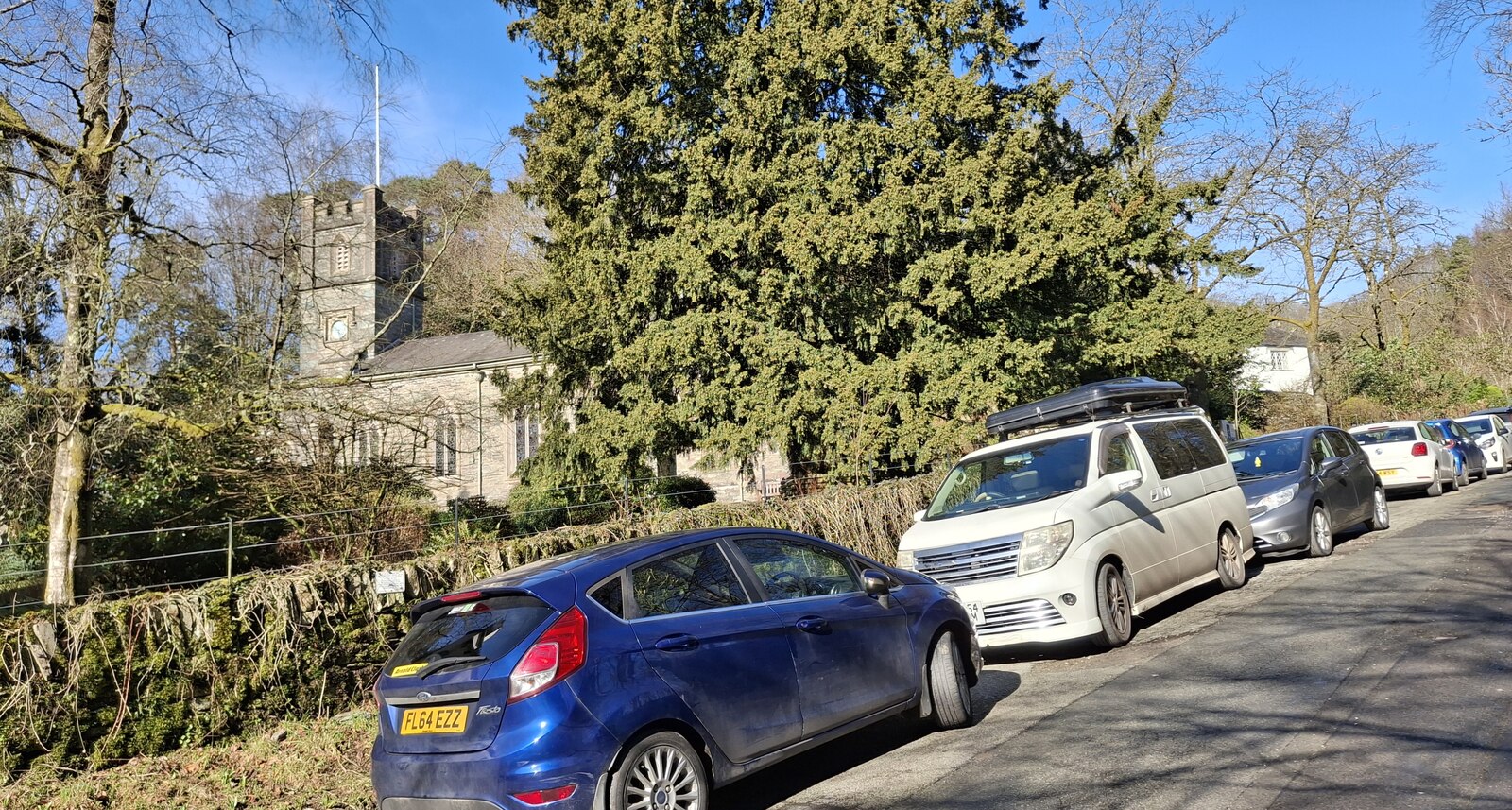
[Cars parked on a steep hill beside St Mary's Church, Rydal. Photograph: Gordon Brown]
Image Credits: Wikimedia Commons
Parking on a steep hill means parking against gravity. The slope constantly pulls the car downhill, so the parking brake, the transmission, and the angle of the front wheels all have to work as backups for each other.
No single one of them is enough on its own. A parking brake can weaken, a transmission pawl can slip, and straight wheels offer no resistance at all. This article explains parking on a steep hill, including which way to turn your wheels, how to use the parking brake and gear, what to do without a curb, and the mistakes that cause rollaways.
Which way to turn your wheels
The rule comes down to one idea: if everything else fails, the car should roll into the curb or off the road, never into traffic. That single idea produces every wheel direction below.
Facing uphill with a curb, turn the front wheels left, away from the curb. Then let the car roll back a few inches until the back of the front tire rests gently against the curb. The curb then acts as a block behind the tire.
Facing downhill with a curb, turn the front wheels right, into the curb. If the car rolls forward, the front tire meets the curb within inches and stops. This is the simplest case to remember, because the wheels point at the thing that will stop the car.
With no curb at all, turn the wheels right, toward the edge of the road, whether you face uphill or downhill. A car that rolls will then curve off the road instead of into the lane. According to DriveSmartBC's hill-parking guide, the same rightward rule applies in both directions when no curb is present.
One memory aid used by driving instructors is the letters UCLA: Uphill, Curb, Left, Away. It only covers the uphill-with-curb case, but that is the case drivers most often get wrong.
How to use the parking brake and gear
Wheel direction is only the last line of defense. The parking brake is the first. Set it firmly before you take your foot off the brake pedal, so the car's weight rests on the brake rather than on the transmission.
Order matters here. In an automatic, set the parking brake first and then shift into Park.
Engaging the brake first takes strain off the parking pawl, the small pin inside the transmission that locks the output shaft. Drivers who shift into Park first and then release the foot brake often feel a clunk when they shift out later. That clunk is the pawl unloading under the car's weight.
In a manual car, leave the car in gear after setting the parking brake. Use first gear when facing uphill and reverse when facing downhill, so the gear resists rolling in the direction gravity pulls. According to Square One's parking guide, this lets the transmission act as a second brake if the parking brake fails.
Before you get out, test the hold. With the parking brake set and the car in gear or Park, lift your foot off the brake pedal slowly.
The car should stay put or settle a fraction of an inch against the curb. If it creeps, press the brake again, set the parking brake harder, and re-check before leaving.
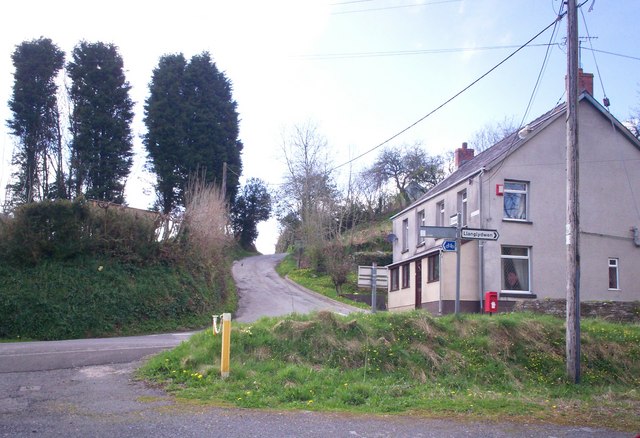
[A steep hill road past a post office. Photograph: welshbabe]
Image Credits: Wikimedia Commons
Parking without a curb
Country roads, gravel shoulders, and new housing streets often have no curb to catch a rolling car. The method still works, but it leans harder on the brake and the gear, so the checks matter more.
Turn the wheels toward the edge of the road, as described above. Then set the parking brake and leave the car in gear or Park, and confirm the car holds before you walk away. On a loose surface, chock a wheel with a rock or a purpose-made wheel chock if you carry one, placed on the downhill side of a tire.
Avoid parking on the steepest part of a slope when a flatter spot is a short walk away. A gentler grade means less force on the brake and less distance for the car to travel if something fails. It also makes getting back in and pulling away easier, since you are not fighting gravity from a standstill on a sharp incline.
Note that some cities fine drivers who park on hills without turning their wheels correctly. RepairPal's hill-parking guide notes that steep-hill cities such as San Francisco can cite drivers for wheels left straight on a slope. The fine is a minor reason compared with the safety one, but it is another reason to build the habit.
Leaving safely and common mistakes
Leaving a hill-parked car needs the reverse order of parking it. Get in, press the foot brake firmly, start the engine, and only then release the parking brake and shift into gear. Releasing the parking brake before your foot is on the brake pedal is how cars roll away with the driver half in the door.
The most common mistake is relying on Park alone in an automatic. Park is a lock, not a brake, and it was not designed to hold a car's full weight on a steep grade by itself.
The second mistake is skipping the parking brake entirely on short stops. Short stops are when habits form, and a slope that looks mild can still move a car once the transmission warms and the pawl settles.
A third mistake is turning the wheels the wrong way uphill. Drivers often point the wheels toward the curb out of instinct, thinking the curb will catch the car. Facing uphill, that instinct is backwards: the car rolls backward, so the wheels must point away from the curb for the tire to catch it.
Finally, never leave a car in neutral on a slope, even for a moment while you check something. Neutral removes the transmission's resistance entirely, leaving only the parking brake between the car and gravity.
How far should I park from the curb on a hill?
Park within about 30 centimetres, or 12 inches, of the curb, the same as on flat ground. DriveSmartBC's guide gives this distance for British Columbia, and it matches common practice elsewhere. Too far out leaves the tire unable to reach the curb if the car rolls.
Does the parking brake wear out from hill parking?
A parking brake is built for exactly this job, and normal use does not wear it out quickly. What weakens it is neglect: cables stretch and mechanisms seize when the brake sits unused for months. Using it every time you park keeps it working.
What should I do if my car starts rolling while parked?
Do not chase it or try to jump in front of it. Warn anyone nearby, and if you can reach the driver's door safely from the side, get in and press the foot brake. If the car is already moving fast, stay clear and let it stop on its own rather than risk being struck.
Is it safe to park on a hill in icy conditions?
Ice makes every part of the method less reliable, because tires can slide even with the wheels turned. Park on the flattest nearby spot when ice is possible, turn the wheels as usual, and avoid hills entirely if the surface is glazed.
The bottom line
Safe hill parking is a sequence, not a single trick. Turn the wheels so a roll ends at the curb or the roadside, set the parking brake before releasing the foot brake, and leave the car in Park or in gear.
Practice the sequence on a gentle slope first. Once the order is automatic, steep streets stop feeling like a gamble and start feeling routine.
Tags: parking, hill parking, driving safety
Rive News's research desk covers practical explainers across driving, work, and everyday science, checking each claim against published sources before writing.
Related
- Why do brakes squeak in the morning?
- How to jump start a car safely, step by step
- How to tell if brake pads need replacing before they fail
- How to drive safely in heavy rain without losing control
Subscribe for one practical explainer each morning.
Standards: facts checked against the sources listed above; corrections are published when an error is found.
Related stories
Why Does Tire Pressure Drop in Cold Weather?
Cold weather can cut tire pressure by 1 psi for every 10°F drop, thanks to the ideal gas law. Here is what happens inside the tire and what
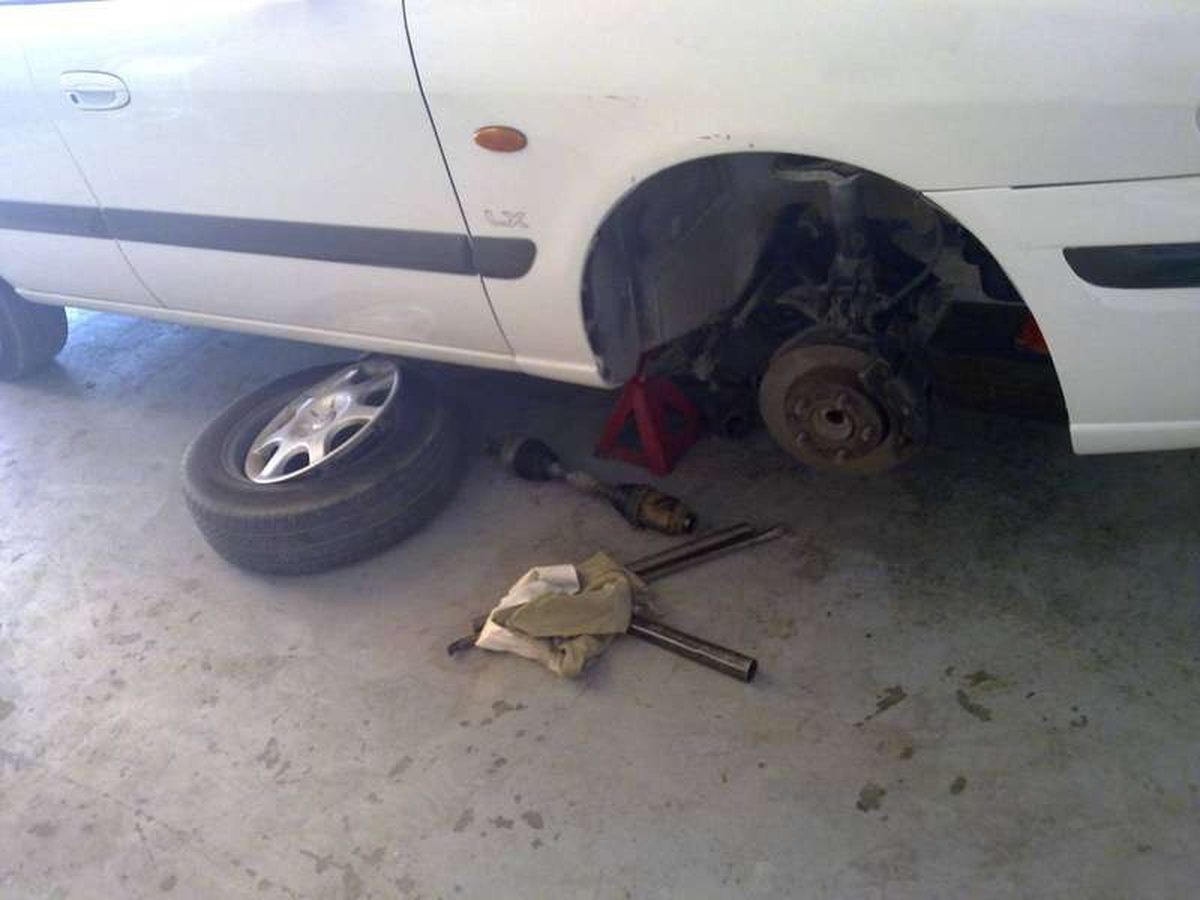
Why Do Brake Rotors Warp, or Do They Actually?
Mechanics rarely see a truly warped rotor. The shudder usually comes from uneven pad deposits a few thousandths of an inch thick. Here
How to Buy a Used Car Without Getting Scammed: The Checklist
Over 450,000 cars a year have rolled-back odometers, NHTSA says. This checklist covers VIN checks, title washing, and the inspection that