
Why Windshield Wipers Chatter and Skip Across Glass
Key takeaways
- Chatter is a stick-slip cycle: the rubber edge grabs the glass, releases, and vibrates instead of gliding.
- The three root causes are worn blade rubber, contaminated glass, and a bent or weak wiper arm.
- Diagnose in order: inspect the blade, deep-clean the glass, then check the arm angle and tension.
Few things ruin a rainy drive faster than wipers that skip, hop, and shudder across the windshield. That rhythmic chatter is not just annoying: it means the blade is losing contact with the glass, leaving streaks and smears right in your line of sight.
The good news is that chatter almost always comes down to one of three things: the blade, the glass, or the arm. Work through them in order and the fix is usually cheap.
This article explains the physics of the skip, the three root causes in detail, and the DIY fixes that actually work.
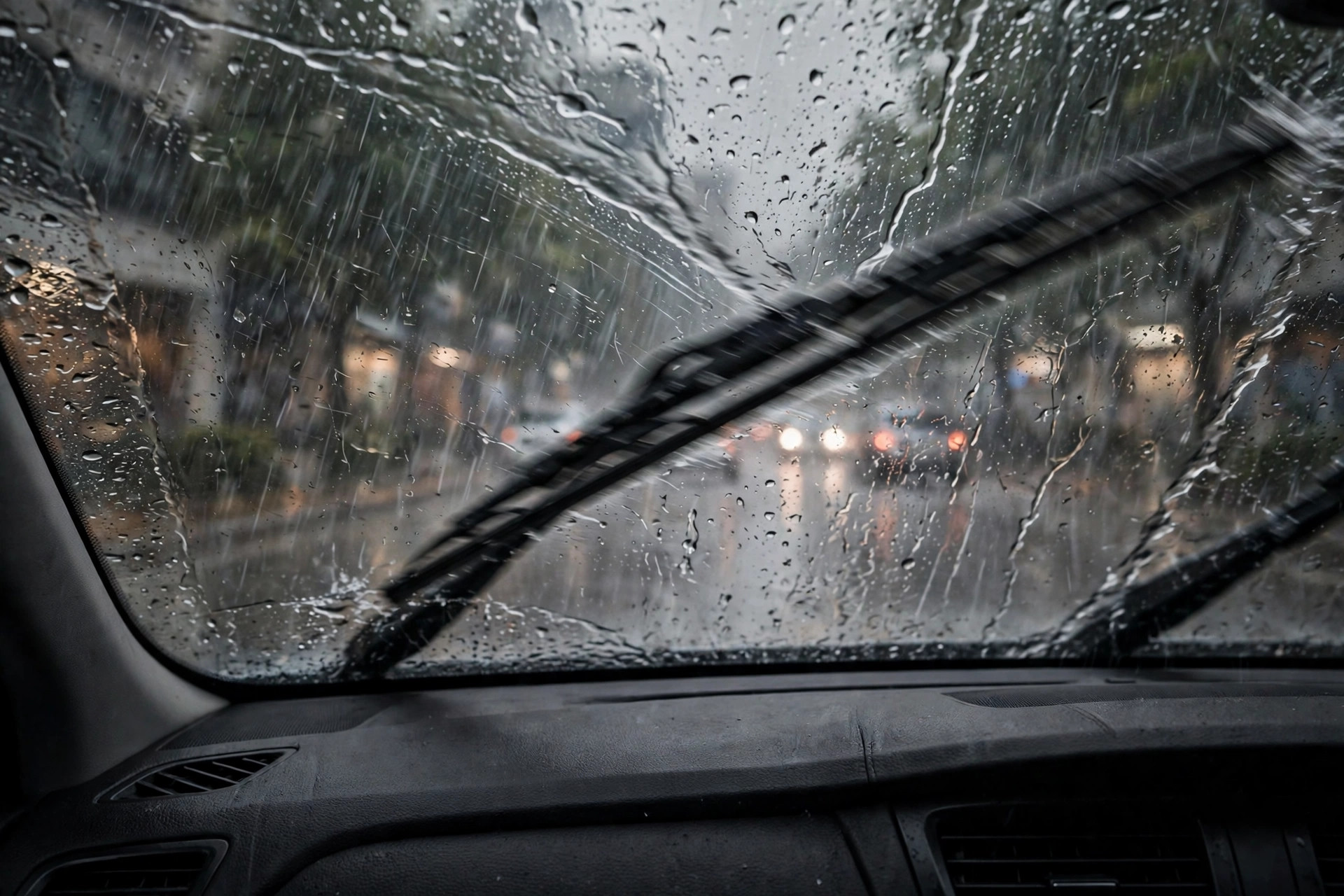
A wiper mid-sweep in heavy rain, where chatter shows up worst. Illustration: Rive News.
Image Credits: Original illustration, Rive News
What chatter actually is
A wiper blade is supposed to glide. Its thin rubber edge sweeps water aside with even pressure, reversing direction smoothly at each end of the stroke. Chatter happens when that glide breaks down into stick-slip: the rubber edge grabs the glass, the arm keeps pushing, the edge lets go with a snap, and the cycle repeats dozens of times per second.
That rapid stick-and-release is the vibration you hear and the hopping you see. The blade is momentarily airborne instead of wiping, so each pass leaves unwiped bands and streaks. Engineers treat it as a friction problem: either the friction between rubber and glass is too high, or the blade is striking the glass at the wrong angle.
Understanding which of those two forces is at fault tells you which fix to try first. Start with the blade, because it is the most common culprit and the cheapest to replace.
Cause 1: the blade rubber is worn out
The wiping edge lives a hard life. Ultraviolet light breaks down the polymer chains in the rubber compound, ozone attacks it chemically, and temperature swings do the rest. Parked cars bake windshields in summer heat, which accelerates the hardening, while winter cold stiffens the rubber temporarily.
Hardened rubber cannot do the two things a good blade must do. It cannot conform to the subtle curvature of the windshield, so pressure becomes uneven. And it cannot smoothly flip its edge at each end of the stroke, so the stiff edge drags, vibrates, and skips.
A visual inspection tells the story: look for small tears, nicks, or a rounded profile instead of a sharp edge. Run a finger gently along the rubber; gritty debris embedded in the edge tears the surface and amplifies the noise. Manufacturers generally recommend replacing blades every six to twelve months, and on cars parked outdoors in strong sun, the short end of that range is realistic.
Cause 2: the glass is dirtier than it looks
Even a brand-new blade can chatter on contaminated glass. A windshield that looks clean can carry a thin film of road oil, exhaust residue, tree sap, hard-water minerals, or wax from automatic car washes. Under a microscope it is a landscape of microscopic peaks and valleys that grab the rubber edge.
Hydrophobic glass treatments can cause the same problem when applied unevenly or left to wear patchy. The blade encounters varying resistance across the coating and starts hopping. A windshield sandblasted by years of road grit can also get rough enough to fight the blade.
The fix is decontamination, not just a splash of washer fluid. A strong glass cleaner or a water and rubbing alcohol solution cuts the oily film; a non-abrasive clay bar lifts embedded grime that chemicals miss.
Clean the blade's rubber edge too, since a dirty blade transfers grime back onto freshly cleaned glass with every pass. Drivers who wonder whether slower driving always saves fuel face the same kind of invisible-resistance problem on a different surface.
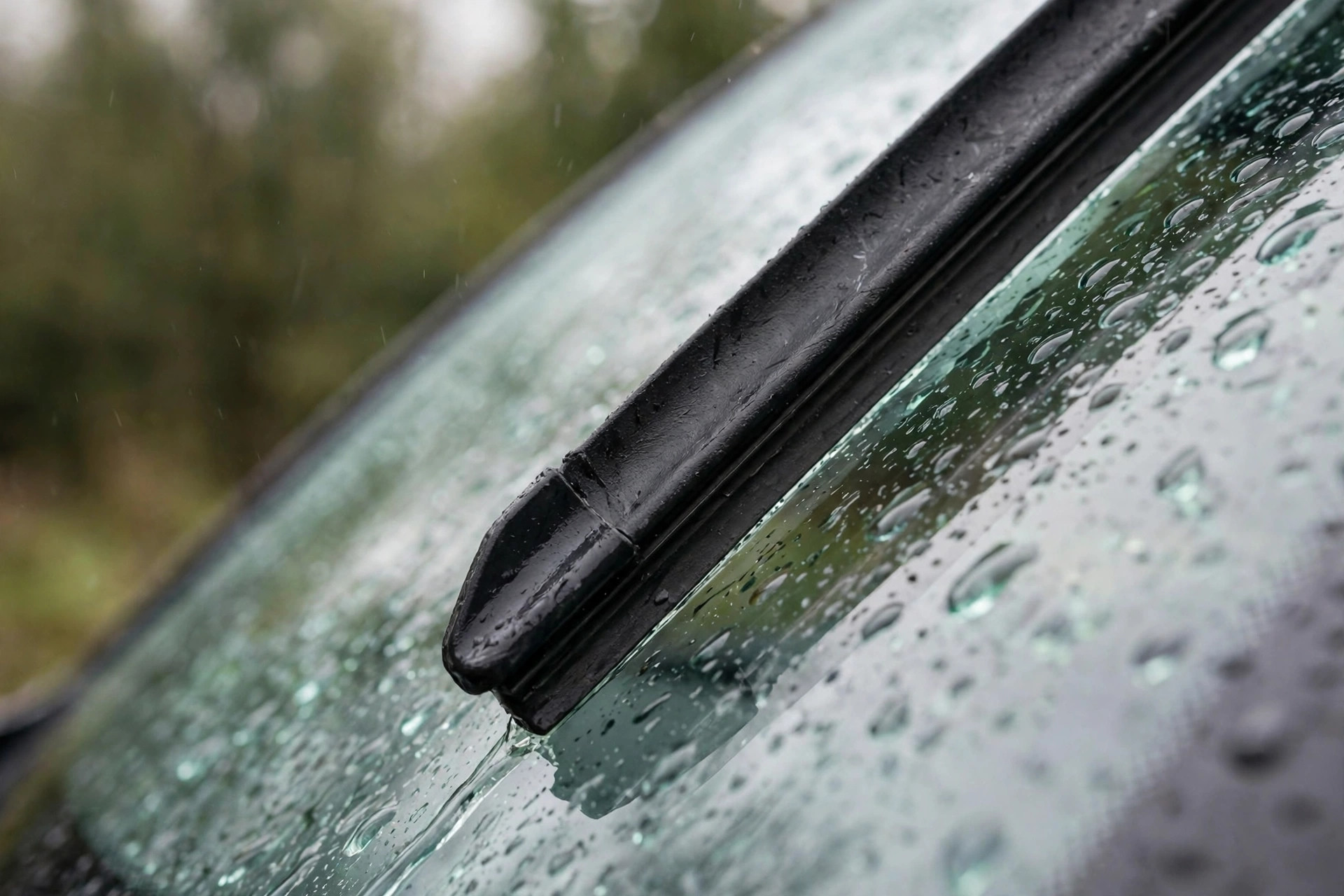
The blade edge must trail at a slight angle, like a squeegee, to glide instead of grab. Illustration: Rive News.
Image Credits: Original illustration, Rive News
Cause 3: the arm's angle or tension is off
If new blades on clean glass still chatter, the problem is mechanical. The wiper arm holds the blade against the glass with a spring, and it sets the blade's angle of attack.
The rubber squeegee needs to trail slightly, like a ski on snow. Blades are designed to operate with the rubber leaning roughly 15 to 30 degrees in the direction of travel, flipping smoothly at each end of the stroke so the sharp edge always trails. If the metal arm is bent, even slightly, from an ice-scraping incident or a car wash brush, the pitch goes wrong and the rubber folds over too far or snaps back, which recreates the stick-slip cycle on perfectly clean glass.
Spring tension matters as well. A fatigued spring applies too little downward force, letting the blade lift and skip at speed; excessive tension presses the blade too hard and increases friction. Check that the arm sits perpendicular to the glass and that the blade flips freely by hand through its pivot.
Less common mechanical suspects include a worn wiper transmission linkage, which causes uneven pressure, and the wrong blade length or frame style for the car. Rule out the big three first.
Frequently asked questions
Can brand-new wiper blades chatter?
Yes, if the glass is contaminated or the arm angle is wrong. New rubber on a filmed windshield or under a bent arm will skip exactly like old rubber. Always clean the glass when you fit new blades.
Do rain-repellent coatings cause chatter?
They can, when applied unevenly or allowed to wear patchy. A uniform, properly bonded coating usually wipes fine; the trouble starts when the blade crosses boundaries between coated and uncoated glass.
How often should wiper blades be replaced?
Every six to twelve months is the standard guidance. Cars parked outdoors in strong sun or extreme cold wear blades faster, so inspect the rubber edge at the start of each rainy season.
Is wiper chattering dangerous?
It reduces visibility, which makes it a genuine safety issue in heavy rain or at night. Chatter leaves unwiped bands and smears in the driver's line of sight, so it is worth fixing rather than tolerating.
The bottom line
Wiper chatter is a friction problem with three usual suspects: hardened blade rubber that can no longer flip and conform, a glass surface filmed with oil, wax, or minerals, or a wiper arm whose angle or spring tension is off. Diagnose in that order, blade, glass, arm, and you will fix most cases for the price of a glass cleaner or a fresh set of blades.
Latest in Automotive
- Why your car drifts right on crowned roads
- Why engine oil turns black so quickly
- Why your car smells like petrol when starting
Subscribe for one clear car-care explainer a week: maintenance without the upsell.
Related stories

Why Does Tire Pressure Drop in Cold Weather?
Cold weather can cut tire pressure by 1 psi for every 10°F drop, thanks to the ideal gas law. Here is what happens inside the tire and what
Why Do Brake Rotors Warp, or Do They Actually?
Mechanics rarely see a truly warped rotor. The shudder usually comes from uneven pad deposits a few thousandths of an inch thick. Here

How to Buy a Used Car Without Getting Scammed: The Checklist
Over 450,000 cars a year have rolled-back odometers, NHTSA says. This checklist covers VIN checks, title washing, and the inspection that