
Why Cake Recipes Need Changes at High Altitude: The Baking Science
Key takeaways
- Lower air pressure makes leavening gases expand faster, so cakes rise too quickly, outpace their structure, and collapse.
- Water boils cooler and evaporates faster up high, which dries out batters before the crumb sets.
- The standard fixes are less leavening and sugar, more liquid and flour, and a hotter oven to set the structure quickly.
A cake recipe that works perfectly at sea level can dome, crack, and collapse in Denver. Nothing about the ingredients changed. The air did.
Baking is a race between gases pushing a batter up and heat setting its structure in place. At altitude, thinner air lets the gases expand too aggressively while faster evaporation dries the batter, so the structure loses the race. This article explains the two forces at work, the adjustment charts bakers rely on, and how to adapt a sea-level cake for the mountains.
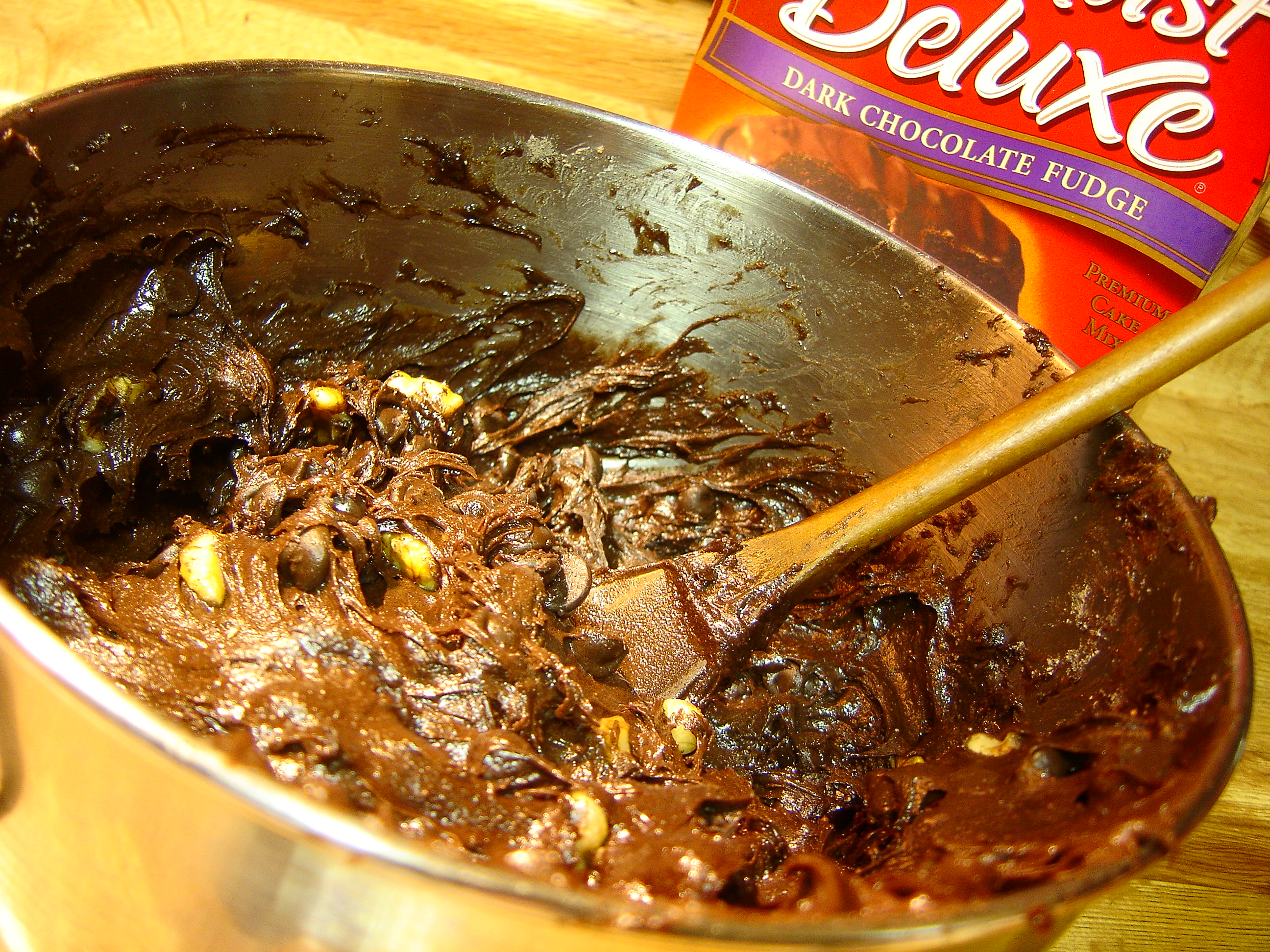
Mixing a cake batter, where leavening amounts that work at sea level turn excessive at altitude. Photograph: Andy Melton/Wikimedia Commons
Image Credits: Wikimedia Commons / Andy Melton, W.carter, Yemi Festus
Thin air changes the rules of rising
Almost everything strange about high-altitude baking traces back to lower atmospheric pressure. The USDA notes that pressure falls from 14.7 pounds per square inch at sea level to 12.3 at 5,000 feet and just 10.2 at 10,000 feet, roughly half a pound less for every 1,000 feet you climb.
That drop matters because baking powder, baking soda, and yeast all work by releasing gas. With less air pressure pushing back, those gases expand more easily and more quickly.
Batters rise fast, outpace the structure forming around them, and then fall. The classic result is a cake that domes dramatically in the oven and sinks into a crater as it cools, or bread that over-rises and tastes yeasty.
The second effect is evaporation. Because pressure is lower, water boils at a lower temperature: it boils at 212 F at sea level but only about 203 F at 5,000 feet, dropping a little under one degree for every 500 feet of elevation.
Moisture escapes the batter faster during baking, which leaves the crumb dry and makes the whole thing more prone to sinking. Sugar makes this worse, because as liquid evaporates, sugar concentrates and weakens the structure further.
Baking authorities generally set the "high altitude" line around 3,000 to 3,500 feet. Below that, most recipes work as written. Above it, the two forces, over-aggressive rise and faster drying, start to bite, and every standard adjustment targets one of them.
The four levers: less lift, stronger structure, more moisture, faster set
High-altitude baking comes down to four adjustments, and the first is the most important for cakes.
Less leavening is the single biggest fix. Since gases expand faster up high, you need less of them.
King Arthur Baking cuts baking powder and soda steeply with elevation: a recipe calling for 1 teaspoon uses 7/8 of a teaspoon at 3,000 to 5,000 feet, half a teaspoon at 5,000 to 6,500 feet, and only a quarter teaspoon at 6,500 to 8,000 feet. Taste of Home gives a simpler rule of the same shape: reduce each teaspoon of leavener by an eighth of a teaspoon at 3,500 feet and by a quarter teaspoon at 6,500 feet and up.
Either way, the direction is the same, and cakes that dome and sink are almost always a leavening problem first.
Less sugar comes next. Sugar weakens the crumb's structure, and as moisture evaporates at altitude, sugar concentrates and weakens it further. The standard move is to decrease sugar by about one tablespoon per cup, a figure King Arthur, Taste of Home, and Bob's Red Mill all land on.
More liquid and more flour rebuild what the thin air takes away. Extra liquid, one to two tablespoons per cup starting around 3,000 feet, offsets faster evaporation and keeps the crumb moist.
Some bakers count an extra egg as part of that liquid. Extra flour strengthens the structure so it can hold the rise: King Arthur advises one extra tablespoon per recipe starting around 3,500 feet, plus another tablespoon for each additional 1,500 feet. A higher-protein flour can help for the same reason.
A hotter oven finishes the job. Raising the temperature by 15 to 25 F, using the smaller bump for chocolate or delicate cakes, sets the cake's structure before it can overexpand and dry out. Because the oven is hotter, the cake is done sooner, so begin checking five to seven minutes early and expect to shave five to eight minutes off every 30 minutes of the original baking time.
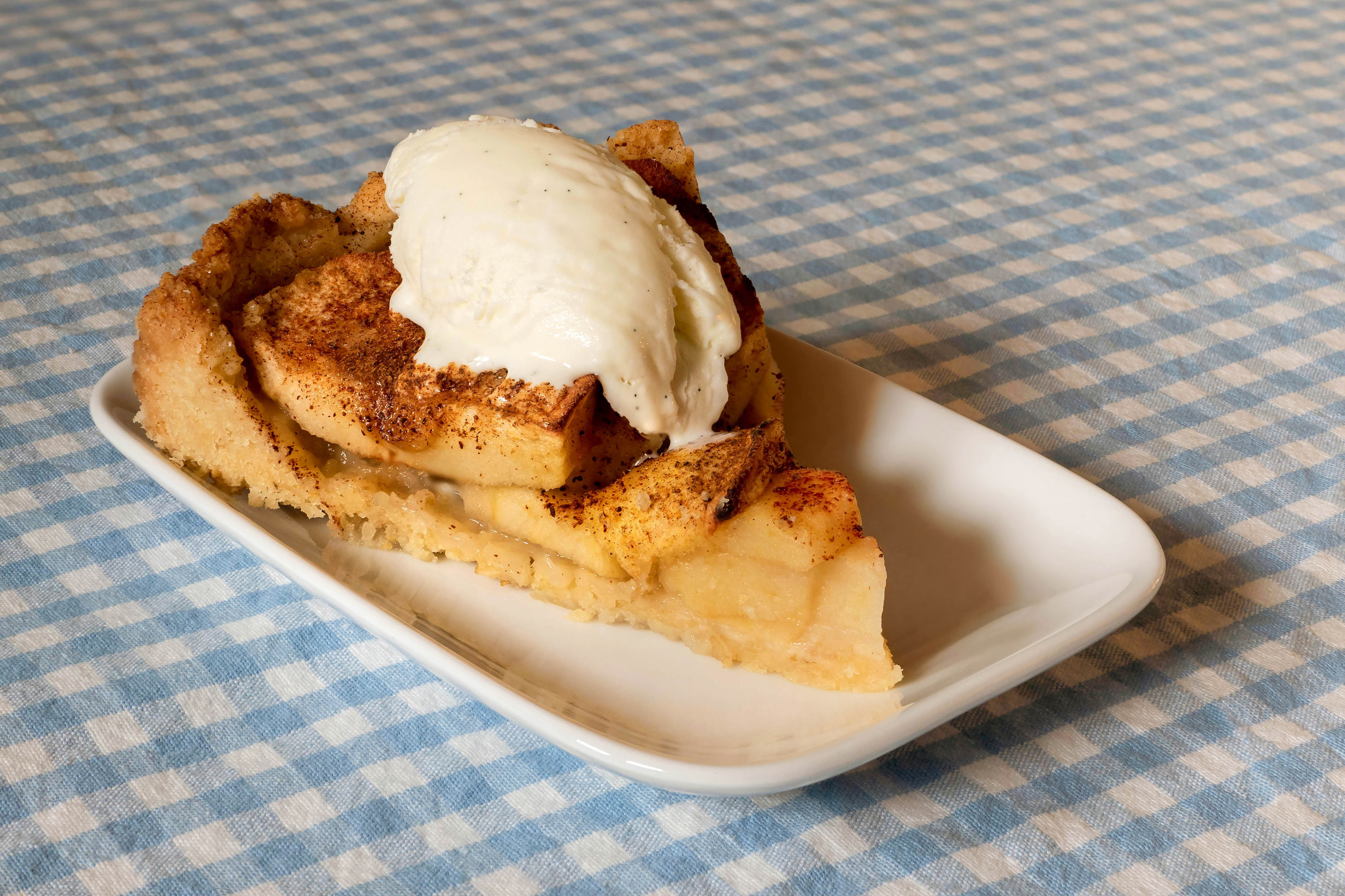
A finished cake with ice cream, the result bakers chase once altitude adjustments are dialed in. Photograph: W.carter/Wikimedia Commons
Putting it together on a real recipe
Suppose your sea-level layer cake uses 1 and 1/2 teaspoons of baking powder, 1 and 1/2 cups of sugar, and 1 cup of milk, baked at 350 F. Moving to 6,000 feet puts you in King Arthur's 5,000 to 6,500 band, so the leavening drops to about three quarters of a teaspoon and the sugar loses roughly 1 and 1/2 tablespoons.
Then add around 3 tablespoons of extra milk to offset evaporation, stir in an extra tablespoon or two of flour, and raise the oven to 365 to 375 F. Check for doneness early. That is the full four-lever conversion in one pass, and it is how test kitchens translate any sea-level cake.
Egg-heavy cakes need a lighter touch. For cakes leavened with whipped egg whites, beat only to soft peaks.
Stiff peaks hold more air, and that air expands too quickly at altitude, collapsing the cake before it sets. Do not overmix batters either, since extra mixing adds air the thin air will only exaggerate.
Cookies are the forgiving exception. They bake briefly, carry little water, and are high in fat, so altitude barely touches them.
The usual guidance is just a slight water increase and a small leavening cut above 3,000 feet. Yeast breads go the other way: cut yeast by about a quarter above 3,500 feet and expect a shorter rise, since fermentation gases expand just like chemical leaveners.
One more practical note: microclimates vary. King Arthur stresses that the adjustment that works for one mountain kitchen may not work for the one down the road, because humidity, ovens, and exact elevation all shift the numbers. Start with the recipe as written, note what goes wrong, and adjust from there.

Cake baking contest entries, where altitude-tested recipes face their toughest judges. Photograph: Yemi Festus/Wikimedia Commons
Frequently asked questions
At what elevation do cake recipes need adjusting?
Most bakers see meaningful changes starting around 3,000 to 3,500 feet, which is where authorities generally set the high-altitude line. Below that, sea-level recipes usually work as written.
Why does my cake rise and then collapse at altitude?
Lower air pressure lets leavening gases expand too fast, so the batter rises before its structure sets, then falls. Cutting the leavening is the single most important fix, since an over-inflated cake cannot hold its shape.
How much should I reduce baking powder at 5,000 feet?
King Arthur's chart drops 1 teaspoon of baking powder to half a teaspoon at 5,000 to 6,500 feet, and 1 and 1/2 teaspoons to three quarters. Taste of Home's simpler rule is a quarter-teaspoon cut per teaspoon at 6,500 feet and up.
Why increase the oven temperature for high-altitude baking?
A hotter oven, up 15 to 25 F, sets the cake's structure faster, before the batter can overexpand and dry out. Since the cake bakes faster, start checking for doneness five to eight minutes early.
Do cookies need the same adjustments as cakes?
No. Cookies bake briefly and are low in water and high in fat, so they are much less affected. A slight water increase and a small leavening reduction above 3,000 feet is usually enough.
The bottom line
Cake recipes need changes at high altitude because thin air makes leavening gases expand too fast while lower boiling points dry the batter out. The fix is a four-part trade: cut leavening and sugar, add liquid and flour, and bake hotter so the structure sets before it overexpands. Start with King Arthur's charts, watch what your oven actually does, and tune from there.
Latest in Food & Cooking
- Why Egg Whites Turn White When Heated
- Why Muffins Get Tough When You Overmix the Batter
- Why Coffee Tastes Stale Days After Grinding
- Why Cast Iron Needs Seasoning
Subscribe for weekly explainers on the science behind your food.
Related stories
Why Does Bread Go Stale Faster in the Refrigerator?
Bread goes stale faster in the fridge because starch recrystallizes fastest near 4°C. Here is the retrogradation science and the right way
Baking soda and baking powder: what's the difference?
Baking soda is pure sodium bicarbonate; baking powder adds two dry acids for double-acting lift. Learn when to use each, plus exact
What Is the Maillard Reaction in Simple Terms?
The Maillard reaction is the browning chemistry between amino acids and sugars above 140 C that creates the crust, color, and rich flavor