
Why cream whips into peaks when you beat it
By Rive News / Research desk | Rive News / Published October 29, 2026 at 9:00 AM PKT
Key takeaways
- Whipping forces air into cream, and partly joined fat globules build a network that traps those bubbles.
- Only cream with roughly 30 percent fat or more has enough fat to build a stable network.
- Cold fat is essential: warm cream stays liquid because its fat is too fluid to hold the structure.
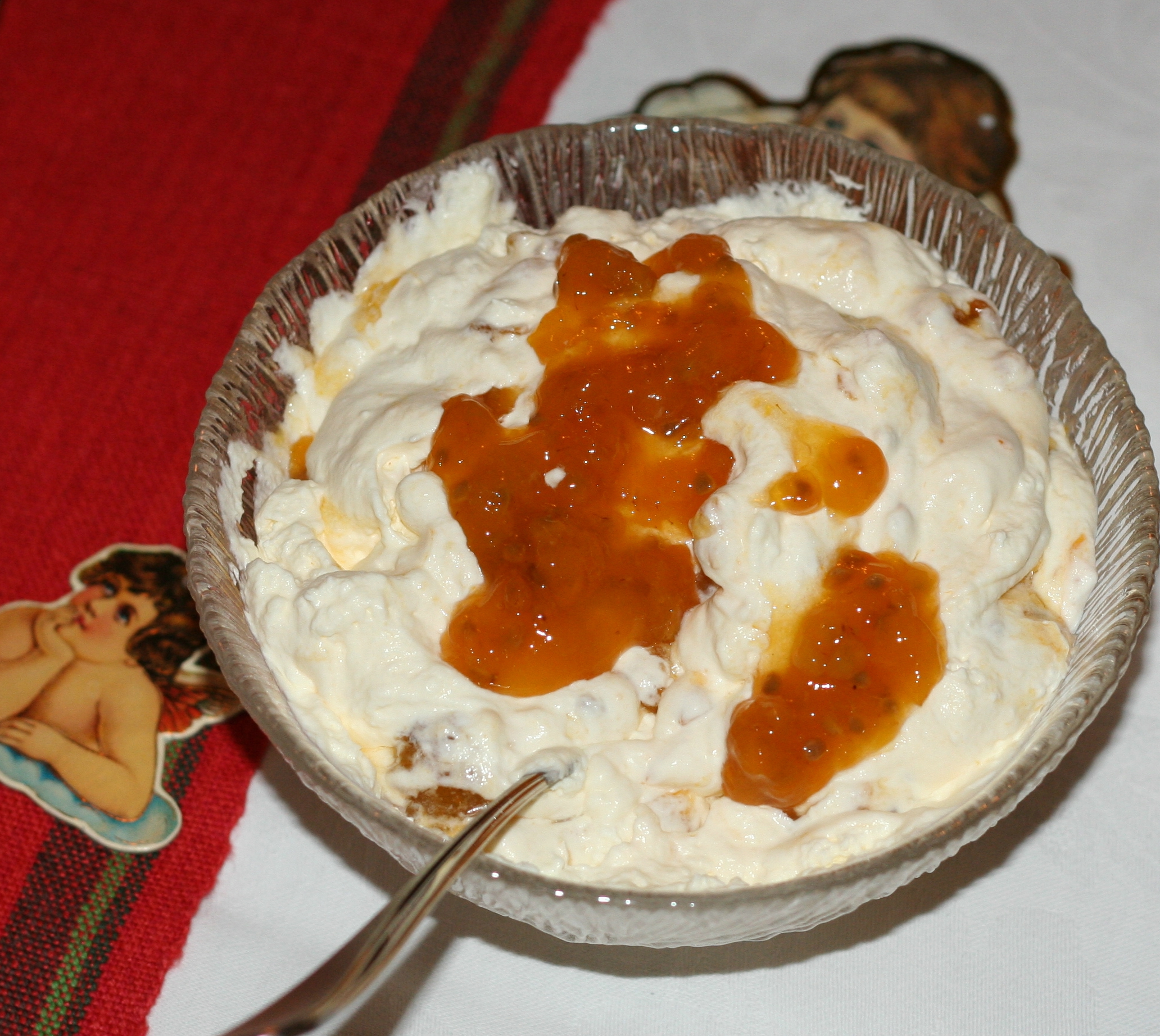
[Whipped cream served with cloudberries.] Photograph: color line
Image Credits: Wikimedia Commons
Cream whips into peaks because beating turns a liquid into a foam with a fat-built frame. The whisk folds air in, and the fat in the cream gathers around those air bubbles and holds them in place. When the frame is strong enough, the foam stands up on its own instead of collapsing back into liquid.
This article explains what cream is before whipping, how beating changes its fat, why fat content and temperature decide success, and what happens when you whip too far.
Cream is fat floating in water
Cream is a fat-in-water emulsion. Tiny fat globules float in a watery phase that also contains milk proteins and lactose.
In heavy cream, those globules are plentiful. In milk, they are sparse.
Indiana Public Media's A Moment of Science, published September 16, 2019, puts the gap in numbers. Whipping cream is 30 to 40 percent fat, while whole milk is about 4 percent fat. That gap is the whole reason one whips and the other does not.
Each fat globule wears a thin membrane made of proteins and phospholipids. That membrane normally keeps globules apart so they float freely. Whipping damages those membranes, and that controlled damage is what builds the foam.
Beating traps air, then fat builds the walls
A whisk or beater forces air into the cream as bubbles. On their own, those bubbles are fragile. They merge, rise, and pop, which is why plain frothy milk collapses within seconds.
As beating continues, fat globules collide. Their damaged membranes let them stick together partway, a process food scientists call partial coalescence.
The globules do not merge into one solid lump. Instead, they form a loose network that wraps around the air bubbles and props them up.
Milk proteins help too. They move to the boundary between air and liquid and form a thin film that stabilizes bubble walls.
But proteins alone cannot carry the structure. Indiana Public Media notes that milk proteins stabilize whipped cream, yet milk itself never holds peaks because it lacks enough fat to build the network.
The result is a foam with real structure. Air gives lightness, water gives body, and the fat network gives strength. Lift the whisk and the foam keeps its shape because the frame holds.
Soft peaks, stiff peaks, and the line between them
Whipping passes through stages. First the cream looks frothy with large bubbles.
Then the bubbles shrink, the cream thickens, and soft peaks appear that curl over when the whisk lifts. Keep beating and the peaks stand upright and hold their shape. Those are stiff peaks.
The difference is how much of the fat network has formed. Soft peaks have a partial network, so the foam still slumps a little.
Stiff peaks have a fuller network, so the foam stands firm. Sugar added after soft peaks form can help, since adding it too early weighs the developing foam down.
Life and Work's whipped cream guide reports heavy cream at about 36 percent milk fat, with whipping cream slightly lower. Both can work, but higher fat gives faster foam, sharper peaks, and better resistance to collapse. Half-and-half, at roughly 10 to 12 percent fat, has too much water and too little fat to build the frame.
Why cold matters as much as fat
The fat network only works if some of the fat is solid. Whipping damages globule membranes and lets partly solid fat stick together. Warm cream has fat that is too fluid to grip, so the network never forms properly.
That is why cream that refuses to whip is almost always cream that is not cold enough. Chilling the bowl and whisk helps too, since warm equipment warms the cream on contact. Salty and Clever's guide to broken whipped cream makes the same point: the mechanism depends on solid fat, and warm cream fails no matter how long you beat it.
Temperature also explains why whipped cream weeps over time. As the foam warms, fat softens, liquid drains out of the network, and bubbles merge and escape. Cold storage slows that decline, but no whipped cream holds forever.
Why milk and light cream never get there
Indiana Public Media states the milk test memorably: you could whip a bowl of milk all day and never get anything more than a light froth that would disappear almost immediately. The fat molecules in milk behave the same way as those in cream, but there are too few of them to stabilize the foam for more than a few seconds.
The same logic sets the fat floor. Below roughly 30 percent fat, there is not enough material to build the network, which is why half-and-half will not whip regardless of temperature or effort. Light cream near that boundary may thicken slightly, but it will not hold peaks.
This is also why low-fat "whipped toppings" from a can rely on other stabilizers and propellants rather than cream fat alone. They imitate the structure instead of building it from fat.
Overwhipping turns cream into butter
Keep beating past stiff peaks and the same process goes too far. Fat globules join fully instead of partly, squeeze the trapped air out, and separate from the watery phase. The solid mass is butter, and the liquid left behind is buttermilk.
Up to the grainy stage, the damage is partly reversible. Folding a little fresh unwhipped cream into the grainy mass by hand can re-suspend the fat and smooth the texture. Once full separation happens, there is no way back to whipped cream, though the butter itself is perfectly usable.
That one-way trip is a useful reminder of what whipping really is. It is controlled damage to fat membranes, stopped at the right moment. Too little damage gives froth, enough damage gives peaks, and too much damage gives butter.
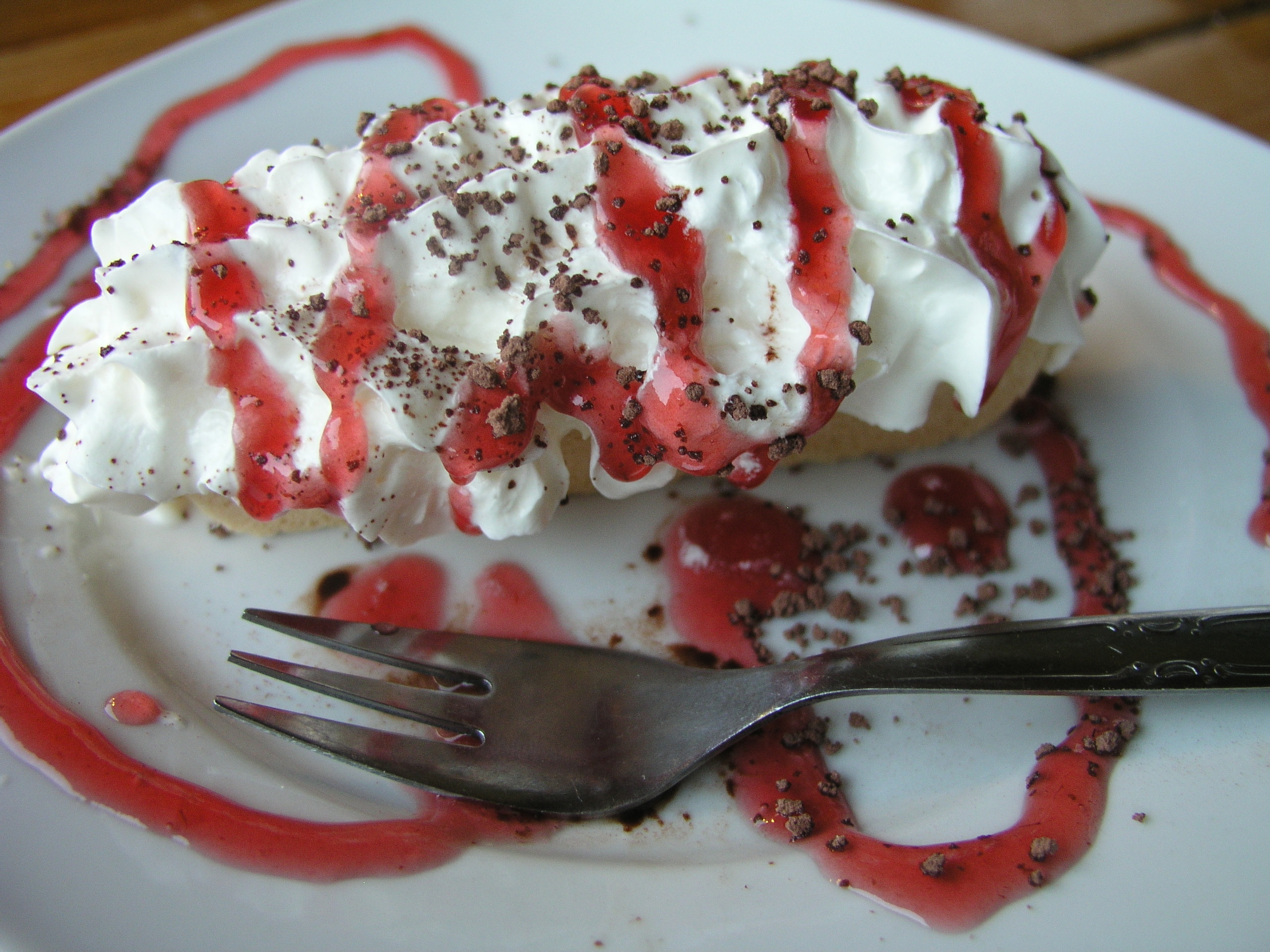
[A Czech cookie served with whipped cream.] Photograph: Nillerdk
Image Credits: Wikimedia Commons
Frequently asked questions
What fat percentage does cream need to whip
About 30 percent fat is the practical floor, and 36 percent or more whips most reliably. Heavy cream and whipping cream both clear the bar. Half-and-half, at roughly 10 to 12 percent fat, does not.
Why does my cream whip sometimes and not others
Temperature is the usual variable. Cream straight from the fridge whips, while cream left out on the counter often does not. A warm bowl or whisk can cause the same failure, as can cream below the fat threshold.
Should sugar go in before or after whipping
After the cream reaches soft peaks. Sugar added too early weighs down the developing foam and slows peak formation. Powdered sugar dissolves easily and is a common choice for sweetened whipped cream.
Can I rescue overwhipped cream
Sometimes, if it has only turned grainy. Fold in a splash of fresh cold cream gently by hand and the texture can smooth out. If the fat has fully separated into butter and liquid, the cream is finished as whipped cream.
The bottom line
Cream whips into peaks because beating traps air in a network of partly joined fat globules. That network needs enough fat, roughly 30 percent or more, and it needs cold, partly solid fat to grip. Milk fails on fat, warm cream fails on temperature, and overbeaten cream fails by going all the way to butter.
Stop at soft peaks for folding into desserts, and at stiff peaks for piping and topping. Either way, the peak is not magic. It is a fat frame holding air, built by the whisk and kept standing by the cold.
Tags: cream, baking, food science
Rive News is the research desk behind this article, covering everyday food science from published sources.
Related
- Why egg whites whip into foam but yolks never do
- Why whipped cream turns to butter if you overwhip
- Why milk curdles when heated or mixed with acid
- Why milk forms a skin when it is heated
Subscribe for one everyday food-science explainer in your inbox each week.
Rive News publishes explainers from named public sources; corrections are noted on the article page.
Related stories
Why Does Bread Go Stale Faster in the Refrigerator?
Bread goes stale faster in the fridge because starch recrystallizes fastest near 4°C. Here is the retrogradation science and the right way
Baking soda and baking powder: what's the difference?
Baking soda is pure sodium bicarbonate; baking powder adds two dry acids for double-acting lift. Learn when to use each, plus exact
What Is the Maillard Reaction in Simple Terms?
The Maillard reaction is the browning chemistry between amino acids and sugars above 140 C that creates the crust, color, and rich flavor