
Why Does Rice Get Mushy If You Lift the Lid While Cooking?
Key takeaways
- The lid traps steam that rice needs for even cooking and moisture balance.
- Lifting it releases steam and drops the pot temperature, causing uneven texture.
- Compensating with extra cooking time then turns the grains mushy.
Rice cooks in two ways at once: simmering water hydrates the grains from the bottom, and trapped steam finishes them from the top. Lift the lid, and you break the second half of that system. The rice that results is often mushy in some spots and chalky in others.
This article explains how the lid, steam, and temperature work together, why one peek causes so much damage, and how to keep rice fluffy.
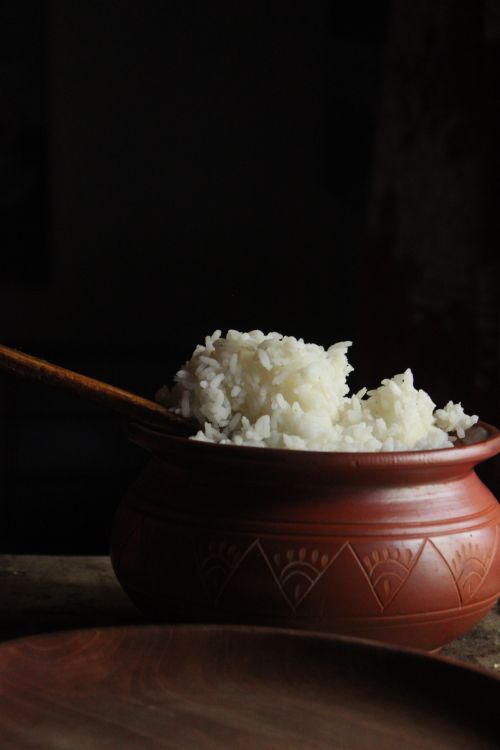
Image Credits: Pexels (free-use license)
What the lid actually does
Covering the pot creates a small, humid chamber. The lid traps steam rising from the simmering water, and that steam condenses on the lid and rains back down onto the rice. Rice Cooker Junkie describes it as a mini sauna for the grains: the trapped moisture penetrates each grain evenly and prevents the dry, crunchy texture of under-steamed rice.
The lid also holds the temperature steady. Rice starches need sustained heat to gelatinize, the process where starch granules absorb water and soften. Break the seal, and the temperature of the cooking environment drops immediately.
This balance is delicate. Too little steam gives chalky grains. Too much standing water gives mush.
The covered pot keeps the system in the narrow zone where grains come out distinct and tender.
Why one peek causes so much damage
When you lift the lid, the pressurized steam escapes in a burst. The Proper Kitchen explains that this release can lower the overall temperature of the pot and slow the cooking process, leaving some grains undercooked while others overcook.
The damage compounds. Steam does not instantly rebuild when you replace the lid; the pot must work its way back up. Each lift interrupts the steady window in which starch granules hydrate at full temperature.
Expert Reviews Best Rice Cooker notes a second effect: the top layer of rice, suddenly exposed to cooler air, stops cooking and starts drying, while the bottom layer keeps absorbing water. The result is a pot with two textures, dry on top and soggy below.
There is also a timing trap. Because the rice cooks more slowly after a temperature drop, cooks tend to leave it on the heat longer to compensate.
That extra time overcooks the bottom grains, which absorb too much water, burst, and release starch into the pot. Burst grains are the direct cause of the gummy, pasty texture people call mushy.
The other reasons rice turns mushy
Lid-lifting is one cause among several. The Times of India, quoting chefs, lists water ratio as the most common: too much water relative to rice produces mushy grains, while too little leaves rice undercooked. Different varieties need different ratios, so the same measure does not work for jasmine, basmati, and brown rice alike.
Surface starch is another factor. Rinsing rice before cooking removes the outer coating of loose starch, which leads to lighter, fluffier grains. Skip the rinse, and that loose starch dissolves into the cooking water and glues the grains together.
Residual heat matters too. Rice keeps cooking after the burner goes off, a process called carryover cooking. Leaving the pot on a hot burner or fluffing too early disrupts the grains while they are at their most fragile.
What to do if the rice is already mushy
If the damage is done, the Times of India reports several rescue methods from chefs and food-science sources. The simplest is to take the rice off the heat immediately and spread it in a thin layer on a large baking tray or plate. A larger surface area releases trapped steam faster and stops the grains from softening further.
Another approach is to return the rice to the stove over low heat with a slice of bread under the lid for two to four minutes. The bread absorbs excess moisture from the rice. Then remove the rice from the heat and let it sit for five minutes before serving.
For badly overcooked rice, repurposing beats rescuing. Mushy rice makes excellent fried rice, rice pudding, or congee, where the broken texture is an asset rather than a flaw.
How to get it right
Use a heavy-bottomed pot with a tight-fitting lid so heat distributes evenly and steam cannot leak around the edges. Bring the rice to a boil, then reduce to the lowest simmer that maintains gentle bubbling.
Then do the hard part: leave it alone. Do not lift the lid to check. Trust the timer.
When the time is up, remove the pot from the heat and let it rest, still covered, for at least five minutes so the moisture equalizes across the grains.
If your pot lid fits poorly, a clean kitchen towel folded under the lid can seal the gap and absorb dripping condensation.
FAQ
Does it matter how many times I lift the lid?
Yes. Each lift vents steam and drops the temperature, and the pot must rebuild both before cooking resumes properly. One quick peek is survivable; repeated checking is not.
Can I peek at the very end of cooking?
Late in the process the risk is lower because most of the water is absorbed. Even so, many cooks prefer to listen for the change in sound, from bubbling to a faint crackle, rather than opening the pot.
Is rinsing rice really necessary?
It helps noticeably. Rinsing removes loose surface starch that would otherwise make the cooking water gummy. The Times of India cites chefs who call it a key step toward lighter, fluffier rice.
Why does my rice cooker make better rice than my pot?
A rice cooker automates exactly this process: it seals the chamber, manages the temperature curve, and switches to a warm rest without any lid lifting. The pot method works just as well when the lid stays on.
The bottom line
Lifting the lid vents the steam and drops the temperature that rice needs for even cooking. The grains then cook unevenly, and the extra time you add to compensate turns them mushy. Keep the lid sealed, trust the timer, and rest the rice off the heat.
Latest in Food & Cooking
- How does a slow cooker keep food safe all day
- Why pancakes come flat instead of fluffy
- How to keep avocados from turning brown
- How to tell if cooking oil has gone bad
Subscribe for one practical food-science explainer every morning.
Related stories
Why Does Bread Go Stale Faster in the Refrigerator?
Bread goes stale faster in the fridge because starch recrystallizes fastest near 4°C. Here is the retrogradation science and the right way
Baking soda and baking powder: what's the difference?
Baking soda is pure sodium bicarbonate; baking powder adds two dry acids for double-acting lift. Learn when to use each, plus exact
What Is the Maillard Reaction in Simple Terms?
The Maillard reaction is the browning chemistry between amino acids and sugars above 140 C that creates the crust, color, and rich flavor