
How salt draws moisture out of vegetables in cooking
By Rive News / Research desk | Rive News / Published October 26, 2026 at 9:00 AM PKT
Key takeaways
- Salt creates a saltier zone outside vegetable cells, and water moves toward it by osmosis.
- As cells lose water they lose turgor pressure, so tissue wilts and softens.
- Removing water before cooking helps vegetables brown instead of steam.
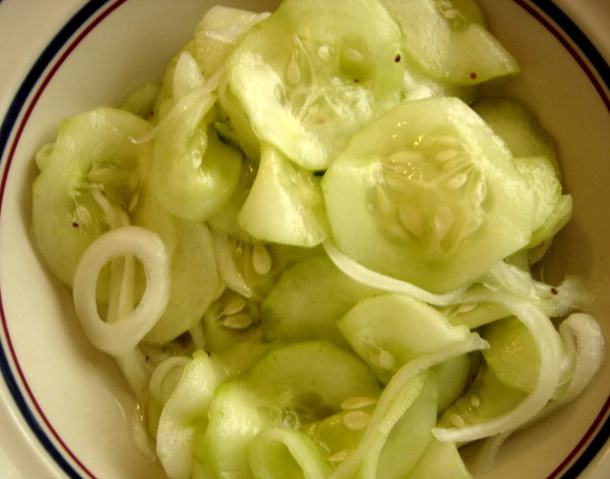
[Sliced pickled cucumbers, a dish where salt has already drawn water from the vegetable.] Photograph: Wikimedia Commons contributor
Image Credits: Wikimedia Commons
Sprinkle salt on sliced cucumber and within minutes the surface turns wet. Leave salted eggplant for half an hour and a puddle forms underneath. The salt did not melt the vegetable.
It pulled water out of it.
This article explains how salt draws moisture out of vegetables, including osmosis, turgor pressure, and what happens in the pan. It also covers why cooks salt some vegetables in advance, when to salt and when to wait, and how the same process preserves food.
The setup: two zones, one membrane
A vegetable is mostly water held inside cells. Each plant cell is wrapped in a membrane that lets water pass through but blocks most larger molecules. Inside the cell, the fluid contains dissolved sugars, minerals, and other compounds at a modest concentration.
Outside the cell, before salting, the concentration is similar.
Salt changes that balance. When salt dissolves on a cut surface, it forms a concentrated solution outside the cells. Now the outside is saltier than the inside, and nature moves to even things out.
Water is the thing that can move, so water crosses the membrane from inside the cell to the saltier outside.
DongA Science describes the same process in kimchi making: when vegetables are soaked in a high-concentration saltwater solution, moisture is drawn out of the vegetable tissues, causing the active cells to wilt. The principle is osmosis, defined there as solvent moving from the lower-concentration side to the higher-concentration side across a semipermeable membrane, until the two sides approach equilibrium.
Turgor pressure: why crisp goes soft
Fresh vegetables feel crisp because their cells are full of water pressing outward. That internal water pressure, called turgor pressure, pushes the cell membrane against the cell wall and keeps the tissue firm. It is the same pressure that keeps a lettuce leaf upright and a cucumber slice snappy.
When salt draws water out, turgor pressure falls. The cell membrane pulls away from the wall, the cell shrinks, and the tissue loses its stiffness. Biology Insights describes this as the macroscopic version of turgor loss: cells that once held their shape under internal water pressure are now deflated, which is why salted cucumber goes limp and salted cabbage wilts.
The change is partly reversible. If you rinse salted slices and soak them in fresh water, some firmness returns as cells partially rehydrate. Biology Insights notes the recovery is never complete, because some cells have been damaged and the tissue structure has been permanently altered.
That is why a salted cucumber never quite returns to its original snap.
Why the water keeps coming
Osmosis does not stop after the first drops appear. As long as the outside stays saltier than the inside, water keeps moving out. The process slows as the two sides approach equilibrium, when concentrations inside and outside become more balanced.
Several factors set the speed. A stronger salt concentration creates a bigger difference and pulls water faster. A longer time lets more water leave.
Temperature matters too: warmer conditions speed movement, though too much heat softens the vegetable for other reasons. Cut size matters as well, because thin slices expose more cell surface to salt than thick chunks do.
That is why recipes give times, not just amounts. Salted eggplant or zucchini slices typically sit for about 30 minutes before cooking, long enough for a useful amount of water to leave but short enough that the vegetable is not ruined. Kimchi cabbage, by contrast, is brined far longer: DongA Science reports that experts recommend brining cabbage for kimchi in a 15 to 20 percent saltwater solution for about 6 to 8 hours, which wilts the cabbage thoroughly before seasoning.
What salt does besides pulling water
Water loss is the headline, but salt changes vegetable tissue in a second way. Plant cell walls are held together partly by pectin, a substance whose strength depends on calcium and magnesium ions. When salt is added, sodium ions from the salt can replace some of those calcium and magnesium ions in the pectin, which weakens the bonds that hold cells together.
That is one reason salted vegetables soften even beyond what water loss alone would explain, and why vegetables cooked in salted water soften faster than those cooked in plain water. Heat breaks down the same structures further, so salt and heat together produce the tender texture cooks want in some dishes and avoid in others.
Salt also draws water out of microbes on the vegetable surface, which is why the same process preserves food. Fiveable's food science summary of osmotic dehydration notes that food soaked in a hypertonic solution, one saltier than the food itself, loses water to the surrounding liquid, which lowers water activity and improves shelf stability. Pickling, brining, and curing all exploit that effect.
In the pan: why drier vegetables brown better
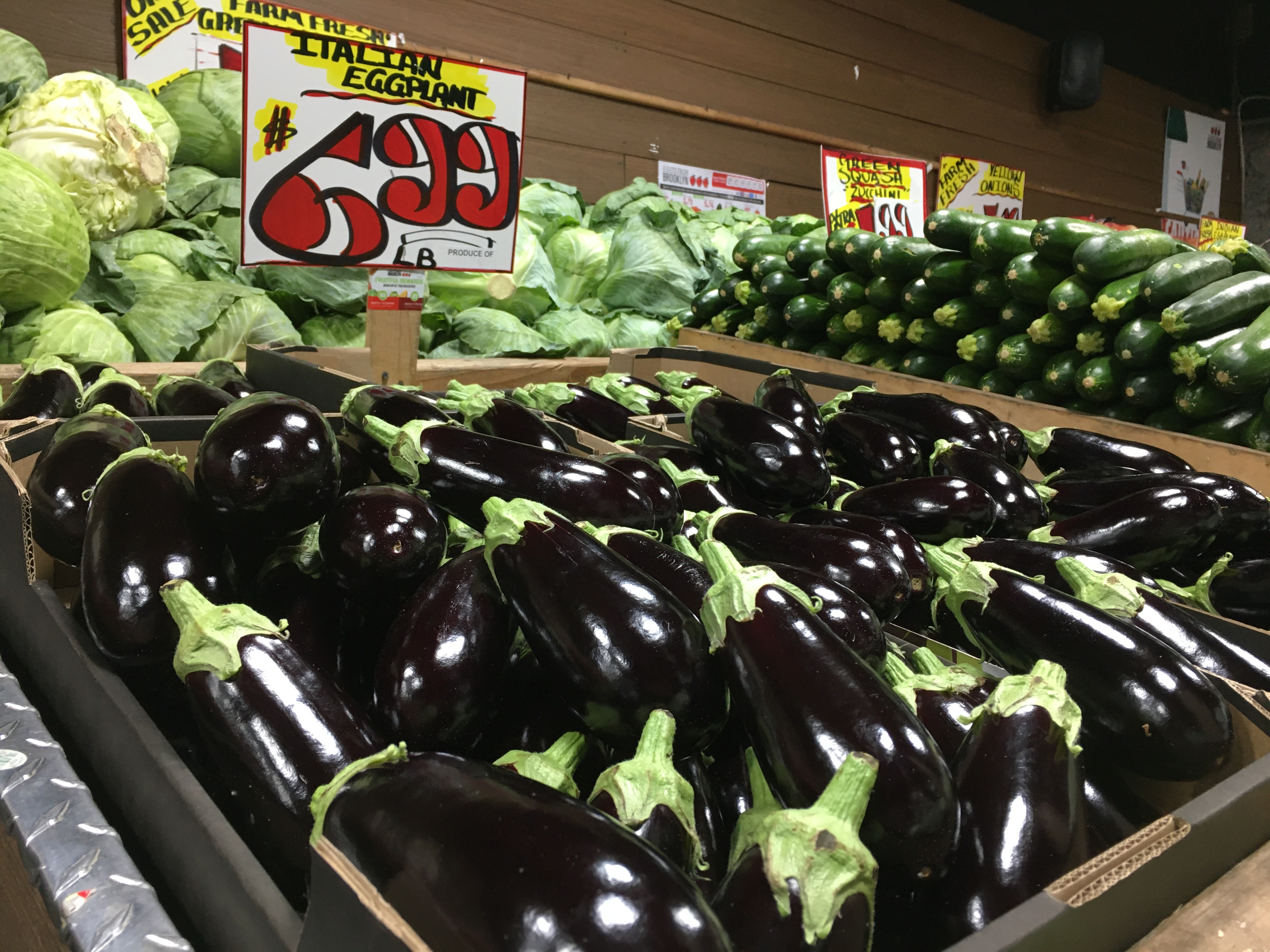
[Eggplants on sale, a vegetable cooks often salt in advance to remove water before frying.] Photograph: Wikimedia Commons contributor
Image Credits: Wikimedia Commons
The most practical reason cooks salt vegetables in advance is browning. A wet vegetable surface steams before it fries. Water must boil off before the surface can pass the boiling point and brown, and while that water is leaving, the vegetable is effectively steaming in its own liquid.
Removing water first changes the cooking. Salted and drained eggplant or zucchini hits hot oil drier, so it fries and browns instead of steaming. The texture improves too: less water means a firmer, less soggy result.
The same logic explains why salting cabbage for coleslaw matters. Unsalted cabbage releases water into the dressing after mixing, diluting it and leaving the slaw swimming. Pre-salted and drained cabbage holds its dressing better, because much of the free water is already gone.
There is a trade-off. Water carries some water-soluble nutrients, including vitamin C and B vitamins, out with it, though the loss in a normal salting step is small. Salted vegetables also absorb some salt, so seasoning later in the recipe should be adjusted.
Taste before adding more.
When to salt early, and when to wait
Salt early when you want water out before cooking. Eggplant and zucchini for frying, cabbage for kimchi or coleslaw, and cucumbers for salads all benefit from advance salting and draining. In these cases, water is the enemy of texture.
Salt late when you want to keep water in. Leafy greens for a quick sauté, mushrooms you want to keep plump, and vegetables going into a soup where the liquid is part of the dish do not need advance salting. In a soup, the water that leaves the vegetable simply joins the broth, so there is nothing to gain by pulling it out first.
A simple test: if the recipe would suffer from a puddle, salt early and drain. If the recipe keeps the liquid anyway, salt when you season the dish. And if you are unsure, salt a small test batch and watch what happens in ten minutes.
The puddle tells you everything.
Does salt pull water out of all vegetables?
Yes, in principle, because all vegetable cells have semipermeable membranes and water inside. The speed and visible effect vary with cut size, salt amount, time, and how much water the vegetable holds.
Why do salted vegetables taste less bitter?
In eggplant, part of the effect is water removal: bitter compounds leave with some of the water that is drained away. The bigger effect is texture and browning, which change how the vegetable eats rather than removing all bitterness.
Can you undo salting by rinsing?
Partly. Rinsing removes surface salt, and soaking in fresh water lets cells reabsorb some water. The tissue never fully returns to its original crispness, because some cells and structures have been permanently altered.
Is the water that comes out just water?
Mostly water, with small amounts of dissolved sugars, minerals, and water-soluble vitamins. That is why the drained liquid tastes faintly of the vegetable and why heavily salted batches should be drained rather than cooked in their own liquid.
The bottom line
Salt draws moisture out of vegetables by osmosis. Dissolved salt makes the outside of the cells saltier than the inside, water crosses the membrane toward the saltier side, cells lose turgor pressure, and the tissue wilts and softens. The same process helps vegetables brown in the pan, keeps coleslaw dressing from thinning, and preserves food by starving microbes of water.
Use it deliberately. Salt early and drain when water would ruin texture. Salt late when the liquid belongs in the dish.
Either way, the puddle under the slices is not a mystery. It is water following salt, one cell at a time.
Tags: food science, cooking techniques, vegetables
Rive News's research desk covers food science and cooking, drawing on food science references and published kitchen science.
Related
- Why do you salt eggplant before cooking?
- How does salt preserve food?
- Why do onions make you cry?
- How to fix an oversalted dish
Subscribe to the Rive News newsletter for one practical explainer each week.
Rive News publishes research-based explainers; facts are checked against public sources before publication.
Related stories
Why Does Bread Go Stale Faster in the Refrigerator?
Bread goes stale faster in the fridge because starch recrystallizes fastest near 4°C. Here is the retrogradation science and the right way
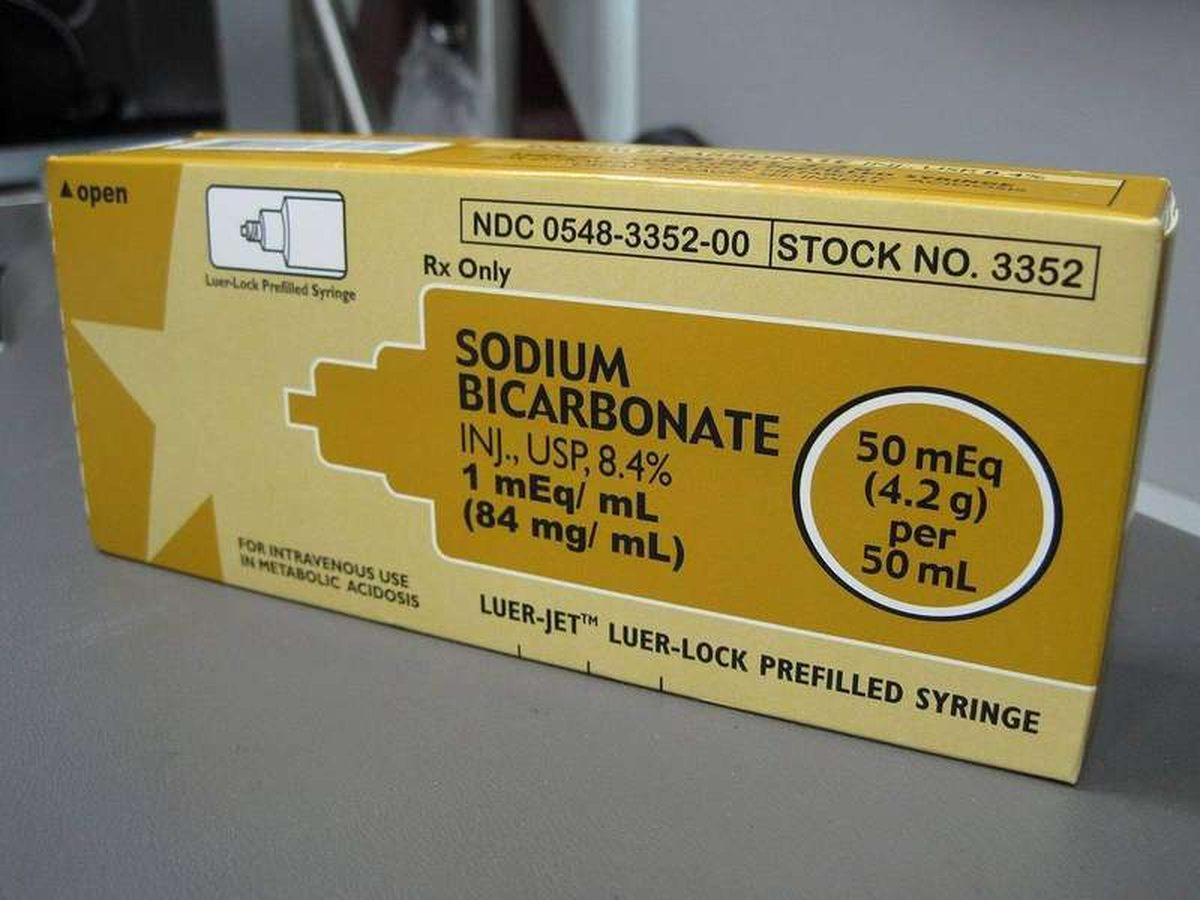
Baking soda and baking powder: what's the difference?
Baking soda is pure sodium bicarbonate; baking powder adds two dry acids for double-acting lift. Learn when to use each, plus exact
What Is the Maillard Reaction in Simple Terms?
The Maillard reaction is the browning chemistry between amino acids and sugars above 140 C that creates the crust, color, and rich flavor