
Why salt on watermelon tastes sweeter than plain
By Rive News / Research desk | Rive News / Published October 28, 2026 at 9:00 AM PKT
Key takeaways
- Salt does not add sugar, yet watermelon tastes sweeter because bitterness gets pushed aside.
- Small amounts of salt can sharpen sweet perception and trigger saliva, which adds juiciness.
- A pinch per slice is enough, since too much salt drowns the fruit flavour entirely.
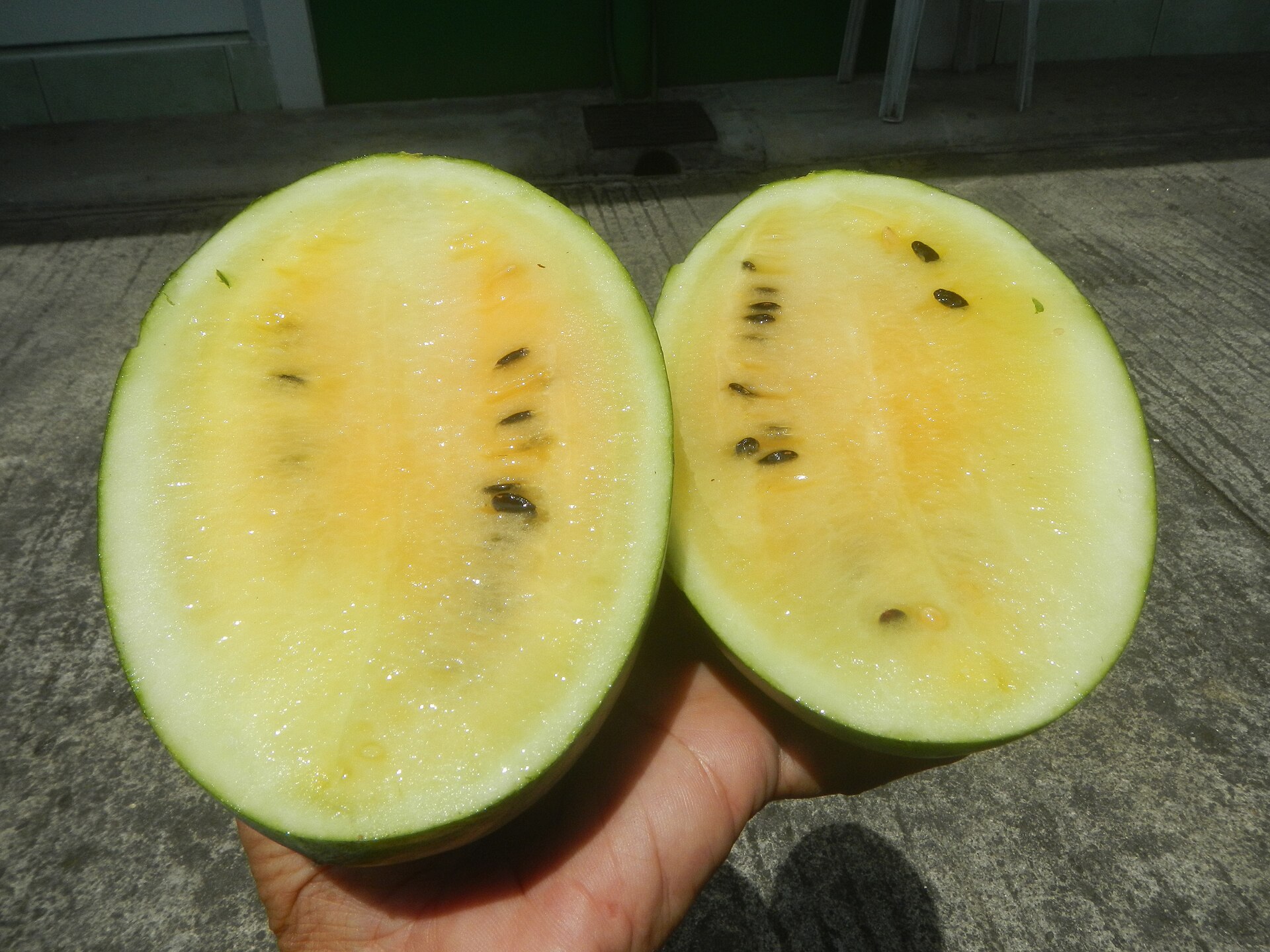
[A yellow-fleshed watermelon cut in half.] Photograph: Wikimedia Commons contributor
Image Credits: Wikimedia Commons
Salt on watermelon looks like a mistake to anyone trying it for the first time. The fruit is already sweet, so adding a savoury seasoning seems pointless. Yet the slice that follows often tastes sweeter, juicier, and more vivid than the plain slice before it.
The effect is not magic and it adds no sugar. Salt changes how taste buds report flavour, and it changes how much saliva reaches the fruit. This article explains that shift, including bitterness suppression, sweet receptor effects, juiciness, how much salt to use, and where the habit comes from.
The short answer: salt edits flavour, not sugar
Watermelon flavour is a balance, not a single note. Southern Living describes the fruit as carrying bitter, sweet, and sour notes at once, with a high water content that keeps each note subtle. The bitter notes are strong enough to hold the sweet ones back, while the sour notes keep the bitter ones in check.
Salt tips that balance. It dampens bitter flavours, a trick cooks also use with leafy greens and Brussels sprouts. With bitterness quieter, the sugars already in the melon stand out more clearly to the tongue.
Nothing about the fruit itself changes in that moment. The sugar content stays the same, the water content stays the same, and no new sweetness is created. What changes is the signal that reaches the brain, and that signal reads as sweeter.
Bitterness suppression is the main lever
Everyday cooking leans on this effect constantly. A pinch of salt in a tomato sauce, a chocolate cake, or a fruit salad rarely makes the dish taste salty. It makes the other flavours easier to notice by pulling competing bitter notes down.
Watermelon benefits more than most fruits because its flavour is dilute. The fruit is about 92 percent water, according to NewsPoint, so its sweetness arrives in a gentle form rather than a concentrated hit. When bitterness is suppressed, that gentle sweetness has room to register.
The same principle explains why the trick fails when overdone. A heavy hand of salt stops suppressing bitterness in the background and becomes the dominant flavour instead. Baking Bites warns that too much salt drowns out the melon sweetness, leaving a salty slice that needs replacing with a fresh piece.
What taste science adds to the story
Beyond bitterness, salt appears to act directly on sweet perception at low levels. NDTV Food reports a 2023 study published in eLife which found that chloride ions from salt can interact with sweet taste receptors, enhancing sweetness perception and reducing bitterness at low concentrations.
That finding matters because it separates two effects that are easy to confuse. Suppressing bitterness removes a mask, while receptor interaction sharpens the sweet signal itself. Both push in the same direction, which is why a tiny amount can feel surprisingly powerful.
Salt also works through contrast. Baking Bites notes that a salty-sweet contrast lets the melon sweetness stand out, since the tongue notices the change from salty surface to sweet flesh. Southern Living makes a similar point: where salt hits the flesh, sweetness concentrates at the surface, so the first contact already sets up the next bite.
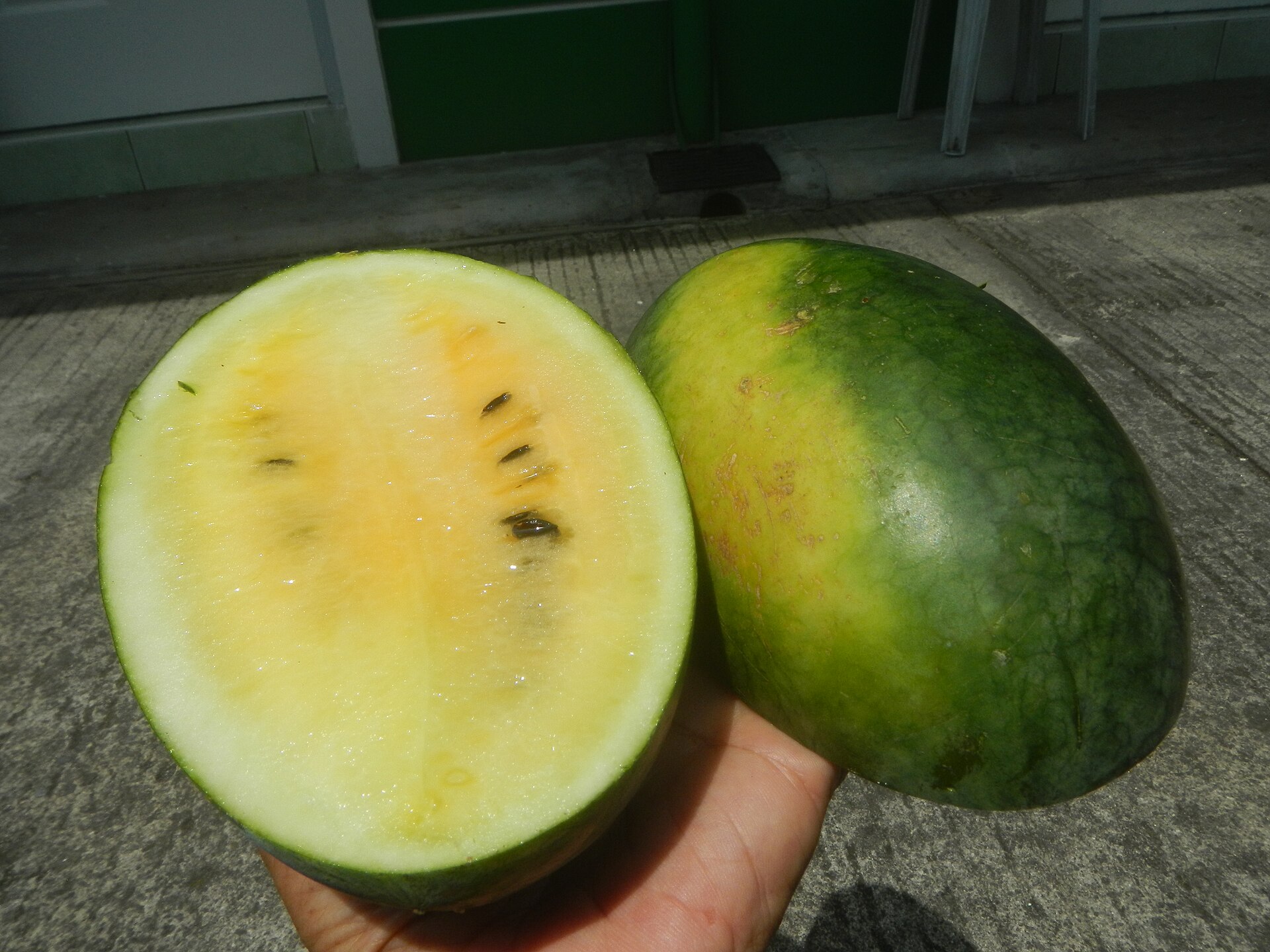
[A halved yellow watermelon beside its other half.] Photograph: Wikimedia Commons contributor
Image Credits: Wikimedia Commons
Why salted melon also seems juicier
Taste is only half the story. Salt activates the salivary glands, so the mouth produces more saliva after a salted bite. Southern Living links that extra saliva directly to a juicier impression, even though the fruit holds the same water as before.
Salt also draws a little moisture to the surface of the cut flesh. Eurweb, citing Woman's World, notes that salt pulls moisture to the surface, giving each bite a juicier texture. The surface moisture meets the tongue first, which reinforces the sense of a wet, refreshing slice.
Together, these effects explain why people describe salted watermelon as more refreshing, not just sweeter. More saliva, surface moisture, and a clearer sweet signal combine into a single impression of a better slice.
How much salt, and which kind
A pinch is the right unit here. Eurweb suggests about one-eighth of a teaspoon per slice as plenty, and notes that this stays well within the daily recommended limit of 2,300 milligrams of sodium for most healthy people.
Scatter the salt evenly rather than piling it in one spot. An even scatter gives every bite the same contrast, while a clump turns one bite salty and leaves the rest plain. Let the slice sit for a minute or two after seasoning so the salt can dissolve into the surface moisture.
Coarse salt is easier to control than fine table salt. Baking Bites prefers a coarser sea salt or kosher salt, since table salt makes it easy to over-salt, while coarse flakes give a stronger salty-sweet contrast with less salt overall. Flaky salt also dissolves more slowly, so the contrast lasts across the bite.
Where the habit comes from
Salting fruit is an old habit in several food cultures. In Mexico, chili-lime salt is sprinkled on mango, pineapple, and watermelon.
In parts of Asia, salt goes on green mango and guava for the same balancing reason. In the southern United States, salting watermelon has been a summer table habit for generations.
Each tradition found the same lever independently. Salt makes under-ripe or mild fruit taste more like itself, and it makes sweet fruit taste sweeter. The habit survived because it works on the tongue, not because cooks agreed on a theory for it.
Modern pairings build on the same idea. Feta cheese with watermelon gives a salty-sweet contrast with extra richness, while a squeeze of lime adds sour brightness beside the salt. Both work because they add contrast without burying the melon.
When to skip the salt
Salt is not right for every slice or every eater. People watching sodium intake should count even a pinch, and anyone who prefers the plain flavour of a very ripe melon may find salt unnecessary. A perfectly ripe, deeply sweet melon already has little bitterness to suppress.
Very cold melon also needs less help. Chilling dulls flavour generally, so a cold slice may benefit from salt, while a room-temperature slice at peak ripeness may not. Taste a plain bite first, then decide whether the slice needs anything at all.
Children and guests deserve a plain option too. Salt is easy to add and impossible to remove, so serving salt on the side keeps the choice with the eater.
Frequently asked questions
Does salt actually add sweetness to watermelon?
No, salt adds no sugar and changes no sugar in the fruit. It suppresses bitter notes and sharpens sweet perception, so the sugars already present taste stronger. The fruit itself is chemically the same, but the flavour signal reaching the brain is different.
How long should salt sit on watermelon before eating?
A minute or two is enough. That short rest lets the salt dissolve into surface moisture and spread evenly. Leaving it much longer draws out more water and can soften the flesh, which trades a crisp bite for a wetter one.
Can I use flavoured salt or chili salt on watermelon?
Yes, and both are traditional in different regions. Chili-lime salt adds heat and sourness beside the salty-sweet contrast. Keep the total amount small, since extra flavours can overpower a mild melon faster than plain salt does.
Does salted watermelon help with hydration?
Watermelon already hydrates well because of its high water content. A pinch of salt adds a small amount of sodium, an electrolyte lost in sweat. That does not turn the fruit into a sports drink, but on a hot day the combination is a reasonable snack, not a medical rehydration plan.
The bottom line
Salt makes watermelon taste sweeter by editing flavour, not by adding sugar. It quiets bitter notes, sharpens the sweet signal at low levels, and brings saliva and surface moisture into play.
Use a pinch, scatter it evenly, and taste before adding more. The best slice is the one where salt disappears into the background and the melon itself takes over.
Tags: watermelon, salt, taste, flavour
Rive News's research desk covers food science and everyday cooking questions, checking each claim against published sources before writing.
Related
- How salt draws moisture out of vegetables
- How salt preserves food
- Why pasta water needs salt
- Why you salt eggplant before cooking
Subscribe for one food science explainer each week.
Rive News publishes researched explainers with named sources and a corrections note on every article.
Related stories
Why Does Bread Go Stale Faster in the Refrigerator?
Bread goes stale faster in the fridge because starch recrystallizes fastest near 4°C. Here is the retrogradation science and the right way

Baking soda and baking powder: what's the difference?
Baking soda is pure sodium bicarbonate; baking powder adds two dry acids for double-acting lift. Learn when to use each, plus exact

What Is the Maillard Reaction in Simple Terms?
The Maillard reaction is the browning chemistry between amino acids and sugars above 140 C that creates the crust, color, and rich flavor