
Why do carrots fork and grow weird shapes in home gardens?
Key takeaways
- Forking happens when something damages or blocks the carrot's growing tip, forcing the root to split into two or more prongs.
- The most common causes are stones and compacted soil, root-knot nematodes, crowding, and fresh manure.
- Misshapen carrots are still safe and tasty to eat. Chop them up and nobody will know the difference.
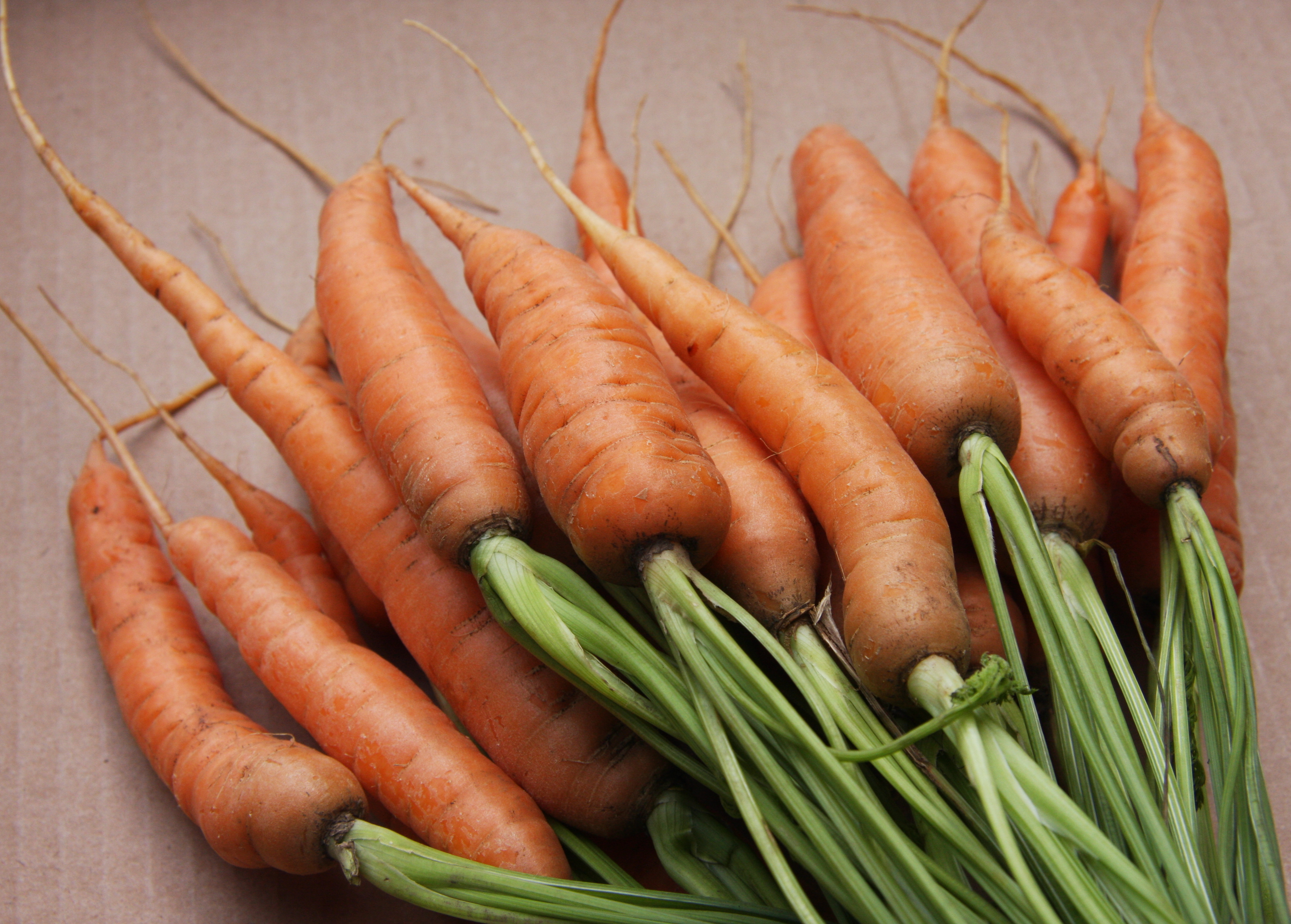
A carrot is a taproot, which means the part you eat is one thickened central root growing straight down into the soil. When that downward growth gets interrupted, the root tip splits and each piece keeps growing on its own.
That split is what gardeners call forking. The result can look like a pair of legs, a twisted knot, or a gnarled hand with extra fingers. This article explains what forking is, the seven main causes of weird carrot shapes, how to prevent them, and whether forked carrots are safe to eat.
What forking is and why it happens
Every carrot starts life with a single growing point at the tip of its young root. As long as that tip can push downward through loose soil, the root stays straight and smooth.
Problems begin when the tip hits an obstacle or gets damaged. The plant responds by sending out side roots around the blockage, and each side root thickens into its own prong. As the World Carrot Museum's growing FAQ puts it, forking "is caused by anything that impedes root growth," including stones, nematodes, or heavy, compacted soil.
Timing matters. Damage early in the season produces dramatic multi-pronged roots. Damage later, when the root is nearly full size, tends to cause smaller kinks and bumps instead.
The seven causes of weird carrot shapes
1. Stones, clods, and debris in the soil
A carrot tip cannot push through a pebble. It goes around it instead, and the detour becomes a permanent fork.
This is the simplest cause and the easiest to fix. Before sowing, work the bed 8 to 12 inches deep and pick out stones, sticks, and hard clods. Raised beds filled with sifted soil mix solve the problem almost entirely.
2. Compacted or heavy soil
Clay-heavy or trampled soil acts like a wall. The young root cannot penetrate it, so it branches sideways in search of an easier path.
Carrots need what growers call friable soil: loose, crumbly, and well drained. If your bed forms a hard crust after rain, the carrots underneath are struggling. Adding compost and keeping feet off the bed both help.
3. Root-knot nematodes
These are microscopic roundworms that live in the soil and feed on plant roots. Almost 90 nematode species are associated with carrot development, according to Gardening Know How, and the root-knot group (Meloidogyne species) does the most damage to home growers.
Juvenile nematodes enter the root tip and inject chemicals that scramble the plant's cell growth. Utah State University Extension reports that this feeding causes the root to become forked, distorted, or stunted, with swollen galls as the key sign of their presence. Above ground, affected plants look yellowed and stunted, with stubby foliage that may wilt.
Warm-climate nematode species become active once soil passes about 15 degrees Celsius, while cool-climate species wake up near 8.5 degrees, according to an Australian vegetable industry guide. In mild regions, pressure can therefore start early in spring.
4. Crowding and poor thinning
Carrot seedlings that grow shoulder to shoulder push each other sideways. The roots tangle and deform as they compete for space.
The World Carrot Museum recommends thinning seedlings to about an inch apart once the tops reach roughly three inches tall. It feels ruthless to pull up healthy seedlings, but skipping this step is one of the most common reasons home carrots come out stubby and twisted.
5. Fresh manure or excess nitrogen
Fresh animal manure in the bed does two kinds of damage. Lumps of it act as physical obstacles, and the nitrogen surge pushes the plant to grow lots of side roots instead of one strong taproot.
Use only well-rotted compost or manure that was added the previous season. The rule of thumb is simple: rich, lumpy, freshly manured beds grow forked carrots.
6. Transplanting seedlings
Carrot roots resent being moved. If the taproot tip breaks during transplanting, the plant branches around the wound.
This is why every growing guide says to sow carrot seed directly where it will grow. Unlike tomatoes or lettuce, carrots almost never recover cleanly from a move. Sow fresh, viable seed (how to test old seeds before planting) straight into the prepared bed.
7. Uneven watering
Letting the bed dry out and then soaking it causes growth spurts that crack or kink the root. Garden writer Linda Ly of Garden Betty lists inconsistent moisture among the preventable causes of deformed carrots, alongside soil and spacing problems.
Mulching lightly and watering steadily keeps growth even. Aim for soil that stays consistently moist, never soggy and never bone dry.
How to prevent forking next season
Start with the bed. Dig it deep, remove stones, and mix in finished compost until the soil feels loose in your fist. The same loose mix you would use when you repot a houseplant works well for carrots too.
If your native soil is heavy clay, a raised bed 10 to 12 inches deep is the most reliable fix.
Rotate your crops. Nematode populations build up when carrots or related vegetables grow in the same spot year after year. Gardening Know How recommends crop rotation and fallow periods as the first line of defense, and notes that soil solarization for four to six weeks can knock nematode numbers down in warm weather.
Thin on time, even if it hurts. Sow directly, water evenly, and keep fresh manure away from the carrot bed. There are currently no nematode-resistant carrot varieties for home growers, though trials are underway, so good soil practice is the whole game for now.
Are forked carrots safe to eat?
Yes. A forked carrot is a cosmetic problem, not a food safety problem. The root is perfectly edible, and many gardeners find the odd shapes taste no different from straight ones.
Carrots with nematode damage are edible too, though the affected parts can turn woody and need more peeling and trimming. Ly puts it plainly on Garden Betty: misshapen carrots are still completely edible, so chop them up and no one will be the wiser.
One practical note: forked and knotted roots trap more soil, so wash them thoroughly and check the crevices. Supermarkets reject these shapes, which is one reason most store "baby" carrots are actually full-size carrots cut and polished into two-inch pieces.
Your ugly carrots are simply the ones the machines left behind. Cold storage suits carrots fine, unlike basil, which turns black in the fridge.
Frequently asked questions
Why are my carrots short and stumpy instead of long?
Short, stumpy roots usually point to shallow, compacted, or rocky soil that stopped downward growth early. Deep, loose beds and longer-season varieties fix most cases.
Do forked carrots taste different?
No. Shape has no reliable effect on flavor. Bitterness and woodiness come from heat stress, bolting, or harvesting too late, not from forking.
Can I still eat carrots damaged by root-knot nematodes?
Yes, after trimming the galled and woody parts. The nematodes are microscopic soil organisms, not something that infects people.
Will forking happen again in the same bed?
It can, especially if nematodes or compaction caused it. Rotate carrots to a fresh bed, solarize the old one in summer, and rebuild the soil before planting carrots there again.
The bottom line
Forked carrots happen when the growing tip hits trouble: stones, hard soil, nematodes, crowding, fresh manure, transplant damage, or erratic water. Fix the soil, thin the seedlings, and rotate the bed, and next season's harvest will come out much straighter. Either way, the weird ones eat just as well.
Tags: carrots, vegetable gardening, soil health, root vegetables
Rive News's research desk covers practical science and home growing, citing public extension and gardening sources.
Latest in Gardening
- How often should you really repot a houseplant
- Why do plant leaves get dusty and does it matter
- Why do herbs die on windowsills but thrive outside
- How to test if old seeds are still viable before planting
Get one practical growing tip every morning. Subscribe to the Rive News newsletter.
Related stories

What Is Companion Planting and Does It Work?
Marigolds work as a nematode cover crop, but the basil flavor claim failed repeated tests. An honest evidence review of what companion

Determinate vs. indeterminate tomatoes: growth, pruning, and harvest differences
Determinate tomatoes grow to a set size and ripen all at once, while indeterminate types vine all season. That one difference shapes

How to improve clay soil for gardening
Gypsum will not fix ordinary clay soil, say extension experts. What actually works: 2 to 3 inches of compost, mulch, better drainage,