
How plants move water from soil to leaves
By Rive News / Research desk | Rive News / Published October 28, 2026 at 9:00 AM PKT
Key takeaways
- Water travels upward through dead, hollow xylem tubes, pulled mainly by evaporation from leaves.
- Hydrogen bonds between water molecules keep the rising column unbroken against gravity.
- Root pressure helps at night, but it cannot replace transpiration in a large plant.
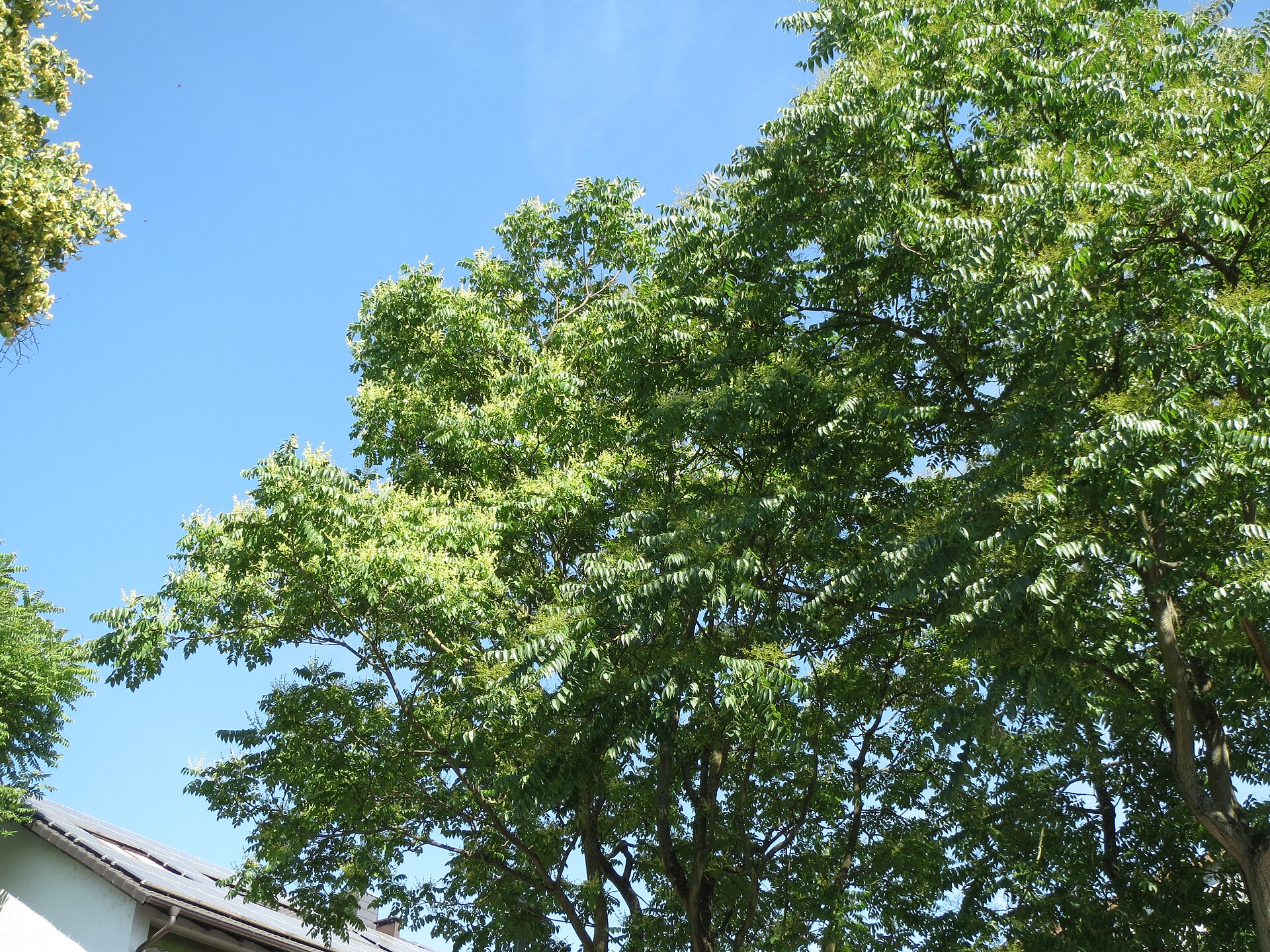
[A tall tree canopy spreads overhead, its leaves catching sunlight. Photograph: Blondinrikard Fröberg]
Image Credits: Wikimedia Commons
A plant moves water from soil to leaves through a plumbing system built from dead cells. The pipes are called xylem vessels, and they run without a break from the roots, up the stem, and into every leaf vein.
No pump sits at the bottom of this system. The pull comes from the top, where water evaporates from the leaves.
This article explains that journey in order, including root uptake, the xylem highway, transpiration pull, cohesion and adhesion, and what happens when the column breaks.
How water enters the roots
Water enters through root hairs, which are tiny extensions of root surface cells. Their small size matters because they add a large absorbing area in contact with soil particles and the thin films of water around them. According to the NC State introductory biology text, water can only enter through these root hairs before it is pulled up through the xylem.
Movement into the root starts with osmosis. Water moves from soil, where it is relatively plentiful, into root cells, where dissolved substances lower its free energy.
The water then crosses the root cortex, a layer of cells beneath the surface, and reaches the xylem in the centre of the root. From there, the route is a single connected network all the way to the leaves.
Roots also take up dissolved minerals along the way. Some minerals enter passively with the water stream, while others are moved into root cells using energy.
The xylem highway
Xylem is made of dead, hollow cells joined end to end. The two main cell types are tracheids and vessel elements, and both are empty tubes by the time they work. Their walls are strengthened with lignin, a tough polymer that stops the tubes from collapsing when water inside them is under tension.
Think of the xylem as a bundle of very narrow straws running the length of the plant. In a tree, these straws sit inside the wood, and new ones form each growing season.
The narrowness of the tubes is part of the design. Narrow tubes give water more wall surface to grip, and that grip helps the column resist gravity.
Wider tubes would carry more water, but they would also be easier to block with air bubbles, as explained below. Plants balance that trade-off differently by species, which is one reason some plants cope with drought better than others.
Transpiration pull, the main engine
Transpiration is the loss of water vapour from a plant, mostly through stomata, the small pores on leaves. When a stoma opens to let carbon dioxide in for photosynthesis, water vapour escapes at the same time. That loss lowers the water content of the leaf cells just inside the pore, and those cells then draw water from the nearest xylem vessels.
Each molecule of water that evaporates tugs on the molecule below it. The NC State text describes this as the transpiration-adhesion-cohesion tension model, and it names transpiration as the primary driving force. The effect is strongest on sunny, breezy days, when evaporation is fastest and the plant needs the most carbon dioxide.
This pull explains a puzzle that surprises many gardeners. A tall tree has no heart and no motor, yet it lifts water tens of metres into the air.
The answer is that the lift is distributed along the whole column, not produced at one point. Evaporation at thousands of leaves adds up to a steady upward drag.
Stomata give the plant some control over the process. In dry air or drought, the pores close to slow water loss, which also slows photosynthesis. The plant trades growth for survival, and that trade is visible as slower growth and, in extreme cases, wilting.
Cohesion and adhesion hold the column together
Cohesion is the attraction between water molecules, caused by hydrogen bonds. Adhesion is the attraction between water molecules and the walls of the xylem vessels. Together, they keep the rising water in one unbroken thread instead of a series of separate drops.
Cohesion does the long-distance work. When the top molecule leaves through a stoma, the hydrogen bond to the molecule below it pulls that molecule upward, and the effect passes down the chain. Adhesion does the support work, gripping the column to the vessel walls and resisting the downward drag of gravity.
The difference between the two forces is easy to test in a glass. Water climbs slightly up the side of a narrow glass tube because adhesion pulls it up the wall, while cohesion holds the surface together. In a plant, the same pairing works inside tubes far narrower than any drinking straw, which makes the effect much stronger.
This model also explains why the column can fail. If tension grows too high, air can be sucked into a vessel and form a bubble, a process called cavitation.
The bubble breaks the chain, and that vessel stops carrying water. Plants can route around blocked vessels through neighbouring ones, but widespread cavitation causes wilting even when water is available at the roots.
[A dense green canopy fills the frame, the leaves where transpiration pulls water upward. Photograph: Blondinrikard Fröberg]
Image Credits: Wikimedia Commons
Root pressure and the night shift
At night, stomata mostly close and transpiration nearly stops. The pull from the leaves fades, but water still moves, thanks to root pressure. Root cells keep pumping minerals into the xylem, and water follows by osmosis, pushing gently upward from below.
Root pressure is weak compared with transpiration pull, and it cannot lift water to the top of a tall tree. Its visible sign is guttation, the small drops of water that appear at leaf edges on cool, humid mornings. Those drops are xylem sap forced out of special pores, and they show the night system working.
Root pressure also helps refill vessels that cavitated during the day. With tension low at night, air bubbles can dissolve back into the water, restoring flow before morning. This nightly repair is one reason a plant that wilted in afternoon heat often looks fresh again by dawn, provided its roots are healthy and the soil holds water.
Why tall trees set the limit
The tallest living tree, a coast redwood named Hyperion, stands 115.6 metres tall, according to Salli F. Dymond writing in Frontiers for Young Minds. Every needle at its top must receive water lifted from roots at ground level, through the same cohesion-tension system that serves a garden tomato.
Height brings a hard cost. The taller the column, the greater the tension needed to hold it up, and the closer the plant comes to cavitation.
Research on coast redwoods shows daytime water potentials at the tops of trees over 100 metres are extremely negative, a sign of strong drought stress at the crown. Photosynthesis slows with height for the same reason, which sets a practical ceiling on how tall trees can grow.
Coast redwoods cheat the limit in one way. Their leaves and bark can absorb coastal fog water directly, a process called foliar uptake, which refills the top of the column without a full lift from the roots.
That extra source helps explain how they reach heights other trees cannot. For most garden plants, though, the lesson is simpler: the higher the leaf, the harder the lift, and the more the plant depends on healthy roots and moist soil.
What this means for watering
The science points to a few practical rules. Water deeply rather than lightly, so moisture reaches the root zone where uptake happens. Light sprinkling wets only the surface, and the deeper roots stay dry while the plant still loses water from its leaves.
Water in the morning when possible. The plant then has a full day of transpiration ahead, and the soil surface dries before evening, which also discourages slugs. Evening watering is not harmful by itself, but wet leaves overnight suit fungal disease, so aim water at the soil, not the foliage.
Watch the plant, not the calendar. Wilting in afternoon heat can be a normal response to high transpiration, and the plant may recover by morning.
Wilting that persists into the morning, or yellowing that spreads, points to a root or water problem worth checking. If you want a quick check, the finger test for overwatering versus underwatering helps separate the two.
Container plants deserve extra care because their root volume is small. They dry out faster, and their xylem columns are shorter but no less dependent on steady water.
Check pots by weight as well as by sight, since the surface can look dry while the centre is still wet, or the reverse. Related reading on why soil dries on top but stays wet below explains that trap.
Frequently asked questions
Do plants push water up from the roots?
Mostly, no. Transpiration pull does the main work during the day, with root pressure adding a small push at night. A pump at the bottom could not lift water to the top of a tall tree.
Why do plants wilt if the soil is wet?
Wilting means leaves are losing water faster than roots can supply it. Root damage, waterlogged soil, or widespread cavitation in the xylem can all break the chain.
In heat, a plant may also wilt in the afternoon and recover by morning, which points to transpiration outpacing uptake rather than dry soil. The guide to why plants wilt in heat even when soil is moist covers that case.
Does a plant lose most of the water it absorbs?
Yes. The large majority of water taken up by roots leaves again through transpiration.
Only a small share stays in new growth or takes part in photosynthesis. That high turnover is why steady soil moisture matters more than occasional deep soaking followed by drought.
Can a cut stem still draw water?
Yes, for a while. A cut flower stem draws water up its xylem by the same cohesion and capillary action, which is why keeping cut flowers alive longer in a vase depends on a clean cut and fresh water. Air entering the cut end can block vessels, so re-cutting the stem under water helps.
The bottom line
Water moves from soil to leaves as one connected column, pulled from the top by transpiration and held together by cohesion and adhesion. Roots provide the entry point, xylem provides the pipes, and stomata control the pace.
Root pressure covers the night shift and helps repair the system. When any link fails, the plant shows it quickly, which is why deep watering, healthy roots, and steady soil moisture matter more than any single watering trick.
Tags: plant science, watering, xylem, gardening basics
The Rive News research desk covers plant science and practical gardening, summarising published research for home gardeners without claiming field trials of its own.
Related
- Why plants wilt in heat even when soil is moist
- How to tell overwatering from underwatering with the finger test
- Why soil dries on top but stays wet below
- Why your indoor herbs die even when you water them
Subscribe for one practical gardening explainer each week.
Rive News standards: facts are checked against public sources listed above; corrections are welcomed and applied promptly.
Related stories
What Is Companion Planting and Does It Work?
Marigolds work as a nematode cover crop, but the basil flavor claim failed repeated tests. An honest evidence review of what companion
Determinate vs. indeterminate tomatoes: growth, pruning, and harvest differences
Determinate tomatoes grow to a set size and ripen all at once, while indeterminate types vine all season. That one difference shapes
How to improve clay soil for gardening
Gypsum will not fix ordinary clay soil, say extension experts. What actually works: 2 to 3 inches of compost, mulch, better drainage,