
Why Succulents Stretch Tall and Pale Indoors: Etiolation Explained
By Rive News | Research desk | Rive News | Published October 12, 2026 at 09:00 AM PKT
Key takeaways
- Succulents stretch tall and pale indoors because of etiolation. In low light, the plant pours its energy into stem growth to reach a stronger light source.
- Stretched growth is permanent and will not shrink back, even after you move the plant to a brighter spot.
- The real fix is beheading: cut off the compact top, let it callous for days, replant it, and give it at least 6 hours of bright light daily.
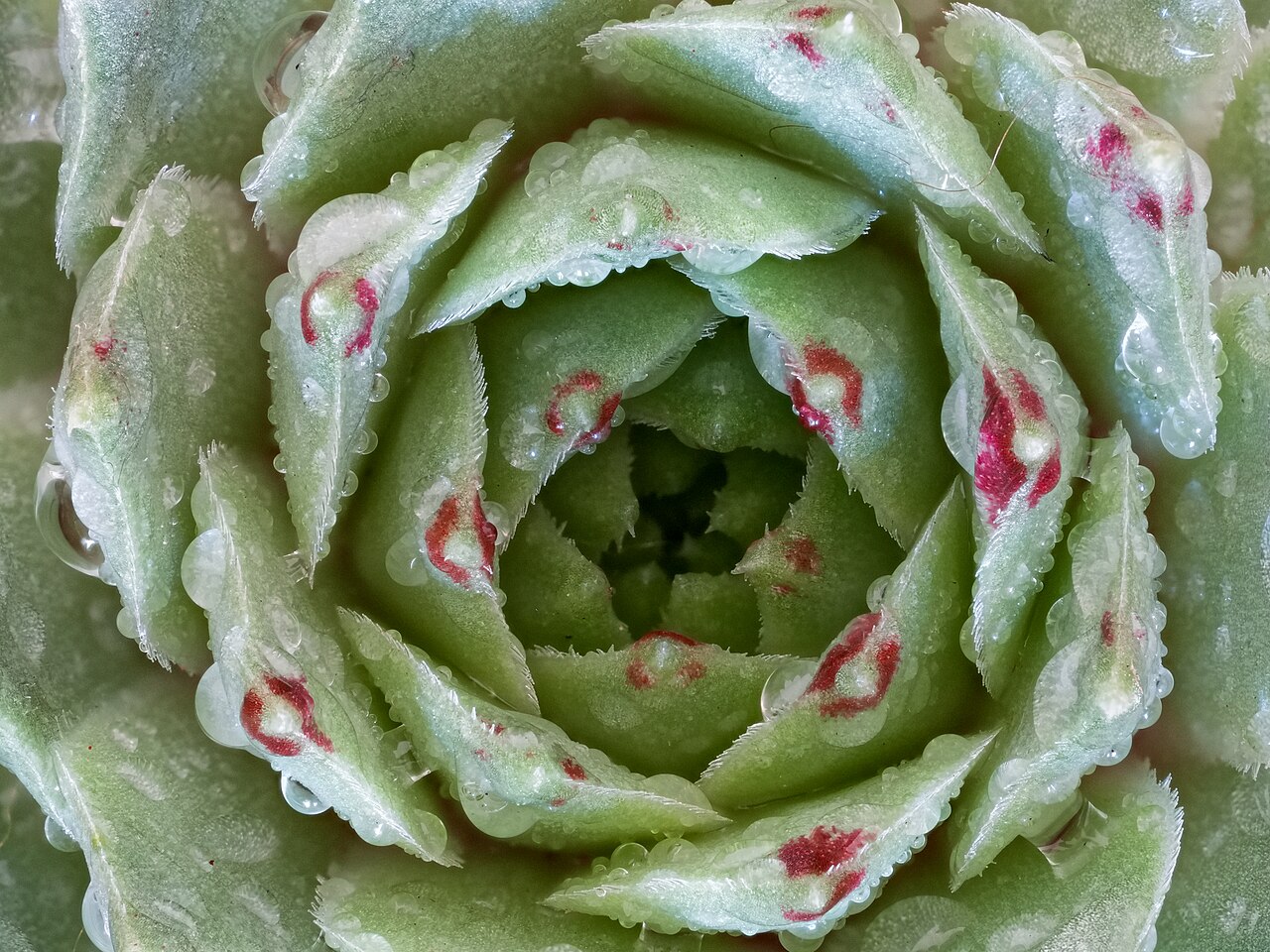
A compact, healthy echeveria rosette, the growth habit these plants keep only when they get enough light. Photograph: Timothy A. Gonsalves/Wikimedia Commons
Image Credits: Wikimedia Commons
Succulents are desert plants built for intense, unobstructed sunlight. They often get 10 to 12 hours of it a day in their native habitats. Indoors, even a spot near a bright window gives them a fraction of that light. Glass and walls filter out most of the usable energy.
When light falls too low, succulents switch to survival mode. Instead of staying compact, they stretch their stems upward toward the nearest light source. They space their leaves far apart and lose their color in the process. Botanists call this stretching etiolation.
This article explains why succulents stretch tall and pale indoors. It covers what etiolation actually does to the plant, why the paleness happens, how to fix stretched growth, and how to prevent it.
What is etiolation?
Etiolation is a plant's growth response to insufficient light. The word describes what you see. Stems elongate rapidly, the gaps between leaves widen, new leaves come in smaller and thinner, and the whole plant goes pale and lanky.
For a succulent, this is a calculated trade. The plant senses where the strongest light is. It allocates its remaining energy into growing the stem taller as fast as possible, reaching for that light. Blooming Backyard describes it as survival mode. Rather than shriveling and dying, the plant stretches in search of enough sunlight to photosynthesize.
The trigger is simply a light deficit. Most common succulents need at least 6 hours of bright light every day, according to Better Homes & Gardens. They do best in a sunny, south-facing window. A desk across the room, a north-facing sill, or a dim office shelf can all fall far short of that threshold. That holds even when the spot looks bright to human eyes. Seedlings suffer the same problem indoors, as our guide to fixing leggy seedlings explains.
Note that not all tall growth is etiolation. Some species, like string of pearls or certain sedums, naturally grow long and trailing as they mature. If your plant's spacing between leaves is normal and the color is vivid, it may just be growing the way it is supposed to.
Why do they turn pale too?
The paleness is the second half of the story. Succulents get their pink, purple, red, and blue-green colors from pigments that respond to strong light and mild stress, often called stress coloring. Under desert sun, these pigments act like sunscreen, shielding the plant's tissues.
In dim indoor light, the plant has no reason to make those pigments, so they fade. New growth comes in washed-out green or yellowish. The vibrant edges and blush that made the plant attractive at the store disappear.
Pale growth is also weaker growth. Stretched stems are soft and thin. The widely spaced leaves have less plumpness than healthy ones. A badly etiolated plant can topple under its own weight or snap at the stem. That is why serious stretching needs attention even though it looks harmless at first.
If your plant's leaves are pale and dropping rather than stretched, the cause may be different. Yellowing leaves on houseplants point to watering or nutrient issues, covered in our guide to why houseplant leaves turn yellow and drop.
Can stretched growth go back to normal?
This is the hard truth that matters most: no. Once a succulent stem has stretched, those cells are permanently elongated. Moving the plant to a sunnier spot will not shorten the existing stem or close the gaps between the leaves.
Blooming Backyard states this directly. There is no way for the growth to return to normal once it occurs. Moving the plant to sun will not shorten the stems. Etvio's guide says the same, calling it the honest truth nobody tells you: you cannot shrink a stretched succulent back to its original shape.
But the plant is not doomed. New growth that appears after you fix the light will come in compact and colorful. The stretched portion stays as it is, or you remove it with the reset method below.
How to fix a stretched succulent
Since you cannot un-stretch the plant, the fix is a reset. Behead the healthy top, replant it, and propagate the leftovers.
Step 1: cut off the compact top
Use clean, sharp scissors or a craft knife. Cut the stem where growth is still relatively compact, just below a set of leaves, as the Oudtshoorn Courant's garden guide recommends. The cutting should include a healthy rosette or cluster of leaves.
Step 2: let the cut end callous
Set the cutting on newspaper in a shaded, dry spot for a couple of days. The wound needs to seal and form a dry callous. Planting a fresh, wet cut invites rot. That is the main way these rescues fail.
Step 3: replant in fresh, gritty soil
Once calloused, plant the cutting in well-draining succulent soil. Hold off on watering for a few days, then water sparingly. Keep it in bright light from day one so the new growth starts compact.
Step 4: propagate what is left
The leftover stem, leaves, and the original rooted base can all become new plants. Cut the bare stem into sections, each with a few leaf nodes, and let them callous the same way. Individual leaves can be laid on soil to root. Leave the original stump in its pot too. It will often sprout new offsets from the base.
This multiplication is a feature, not a consolation prize. One stretched plant routinely becomes three or four healthy ones.
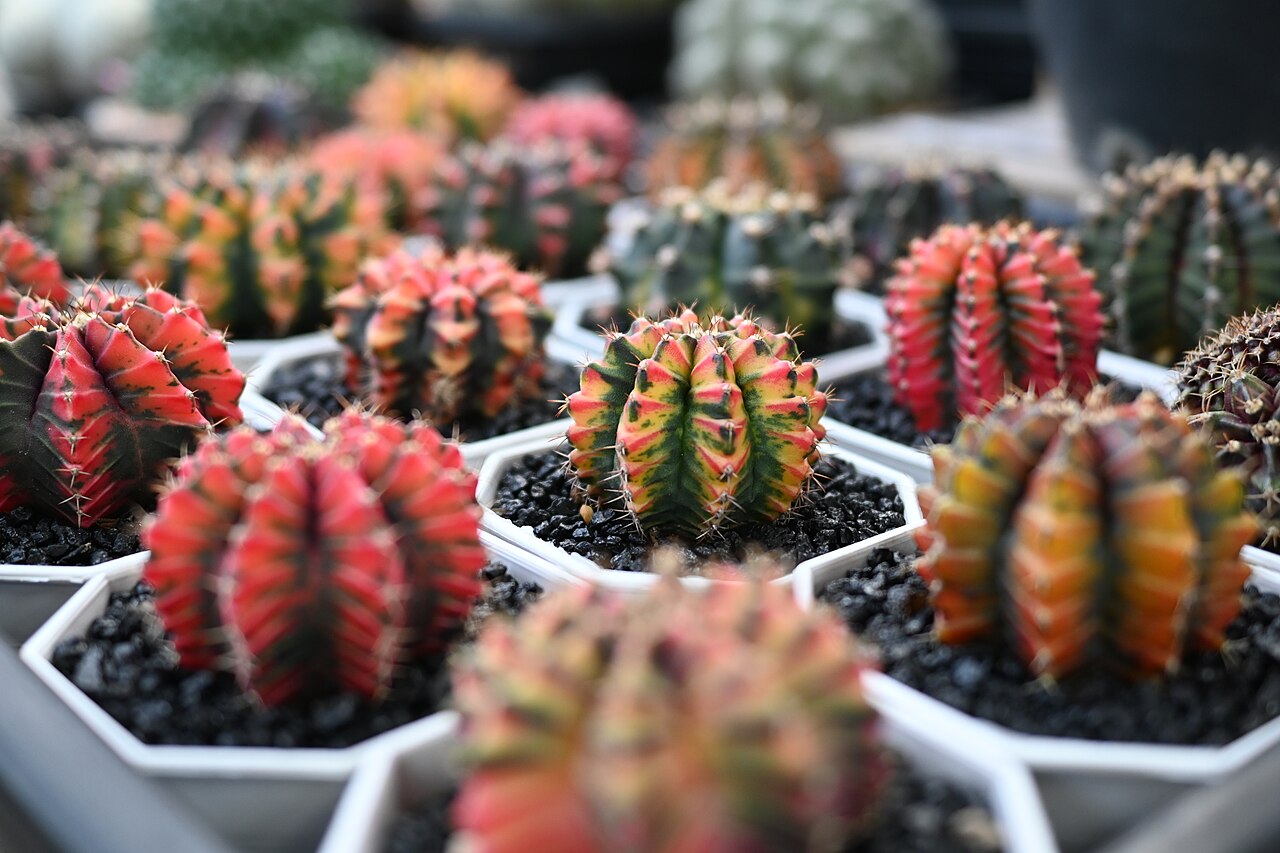
Colorful, compact cacti in individual pots. Strong light keeps the vivid colors and tight growth that stretched indoor plants lose. Photograph: PattayaPatrol/Wikimedia Commons
Image Credits: Wikimedia Commons
How to prevent stretching
Prevention is straightforward and mostly about light placement.
Give it real light, not room light. Six hours of bright light daily is the minimum Better Homes & Gardens cites. South-facing windows are the best indoor option. A plant that sits a few feet from a window gets dramatically less light than one on the sill.
Rotate regularly. Turn the pot every few days so all sides get equal exposure. This keeps the plant growing straight instead of leaning toward one direction.
Add a grow light. Where natural light is limited, a full-spectrum grow light close to the plant supplements what the window provides. This is the standard fix for office desks and north-facing rooms. Our guide to starting seeds indoors without grow lights covers what windows alone can and cannot do.
Keep watering in check. Overwatering weakens succulents. It can contribute to lanky, floppy growth on top of the light problem. Let the soil dry out completely between waterings and use a pot with drainage holes. The same finger test used to check plant watering works for succulents: water only when the soil is dry well below the surface.
Acclimate before blasting it with sun. A plant that has been in dim light for months can sunburn if moved straight into harsh afternoon sun. Shift it to brighter spots gradually over a week or two.
Frequently asked questions
Is my stretched succulent dying?
Probably not. Etiolation is a stress response, not death. The plant is alive and adapting. It looks unhealthy, and weak stems can break, but once you fix the light and reset the growth, succulents recover well.
How fast will the new growth look normal?
New leaves that form in adequate light will come in compact and correctly colored within a few weeks of the reset. The old stretched portion never improves, which is why beheading is standard advice.
Can I just move it outside?
Often yes, and outdoor sun is the best fix of all. Transition gradually: start with morning sun and increase exposure over 7 to 14 days. Watch for sunburn, which shows up as brown or bleached patches on leaves that grew up indoors.
Why did my succulent stretch even though it is by a window?
Windows are dimmer than they look. Glass filters a large share of usable light energy. A plant set back from the glass or behind a curtain may be getting a fraction of what it needs. If stretching continues, move the plant onto the sill or add a grow light.
The bottom line
Succulents stretch tall and pale indoors because low light triggers etiolation, a survival response that pours energy into reaching for a brighter spot. The stretched growth cannot be reversed, but the plant is far from finished. Behead the healthy top, let it callous, replant it, and give it at least 6 hours of bright light a day. New growth will come in compact and colorful, and the leftovers will give you new plants for free.
---
Topics: succulents, etiolation, leggy succulents, indoor plants, plant care, houseplants
Author bio: Rive News's research desk compiles science explainers from peer-reviewed studies and primary sources. It covers fitness, health, food, and everyday science for curious readers.
Latest in gardening
- Houseplant Leaves Turn Yellow and Drop? Here's Why
- Indoor Plants With Brown Leaf Tips: Causes and Fixes
- Overwatering vs Underwatering: The Finger Test
Subscribe to the Rive News newsletter for one science-backed explainer in your inbox each morning.
Copyright 2026 Rive News. Articles are written from public sources with named attribution. Report errors via the contact page.
Related stories

What Is Companion Planting and Does It Work?
Marigolds work as a nematode cover crop, but the basil flavor claim failed repeated tests. An honest evidence review of what companion plant

Determinate vs. indeterminate tomatoes: growth, pruning, and harvest differences
Determinate tomatoes grow to a set size and ripen all at once, while indeterminate types vine all season. That one difference shapes pruning

How to improve clay soil for gardening
Gypsum will not fix ordinary clay soil, say extension experts. What actually works: 2 to 3 inches of compost, mulch, better drainage, and a