
Why paint takes longer to dry on humid days
By Rive News / Research desk | Rive News / Published October 28, 2026 at 9:00 AM PKT
Key takeaways
- Paint dries when water or solvent evaporates from the wet film into the surrounding air.
- Damp air already holds much water vapour, so it accepts less moisture and drying slows.
- Above about 85 percent relative humidity, most manufacturers advise against painting at all.
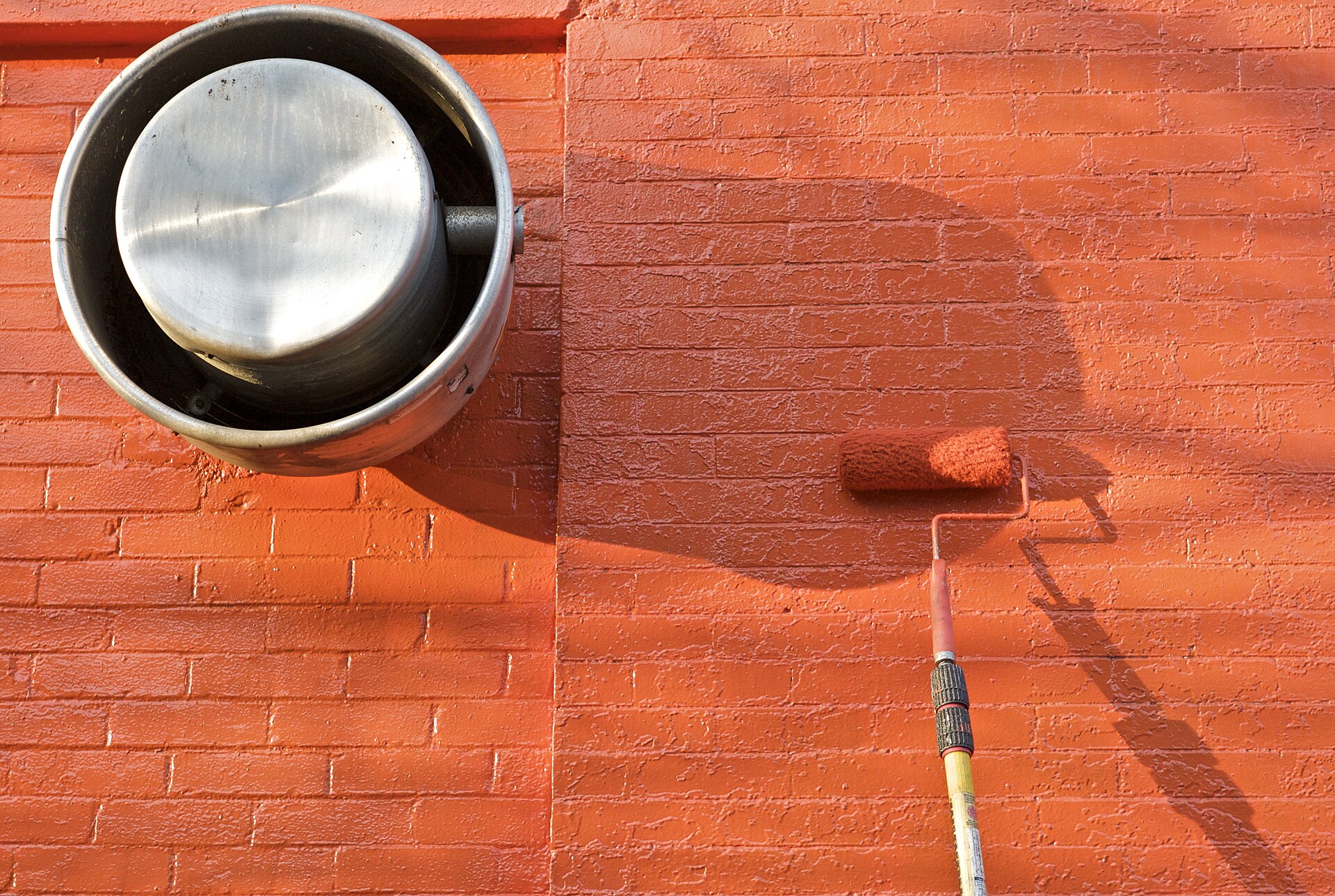
[A paint roller resting against a freshly painted brick wall.] Photograph: Wikimedia Commons contributor
Image Credits: Wikimedia Commons
Paint drying is, at its simplest, a drying problem. A coat of paint is mostly liquid carrier plus solid pigment and binder, and the liquid has to leave before the solids can form a hard film.
This article explains why humid air slows that process, including what happens inside latex paint, what happens inside oil-based paint, and what can go wrong when a coat stays wet too long. It also covers the practical checks that keep a humid-day paint job sound.
What drying actually means
Drying and curing are two different stages, and confusing them causes many paint problems. Drying means the liquid carrier has left the film enough that the surface feels dry to the touch.
Curing means the binder has hardened into its final durable film. For latex paint, curing involves coalescence, the stage where tiny binder particles fuse into one continuous layer.
Oil-based paint cures differently, through oxidation, a chemical reaction with oxygen in the air. That reaction builds a cross-linked network over days rather than hours.
A coat can feel dry while still being far from cured. Recoating or hanging items too early can dent, peel, or mark a film that has not yet hardened.
Why humid air slows evaporation
Evaporation depends on how much moisture the air can still accept. Warm, dry air has room for more water vapour, so water leaves the paint film quickly.
Humid air is already close to saturation. With less room for extra vapour, water leaves the film slowly, and the coat stays wet for longer.
Relative humidity expresses this as a percentage. At 40 to 50 percent relative humidity, conditions suit most interior painting, according to guidance summarised by Prime Home and Garden.
At around 70 percent relative humidity, latex paint can take roughly twice as long to dry and recoat as it does in ideal conditions, the same source reports. Above 85 percent relative humidity, painting is generally discouraged because the film may never harden properly.
How latex paint responds to damp air
Latex and acrylic paints rely almost entirely on water evaporation to dry. That makes them the most sensitive paint type to humidity.
When the water leaves slowly, the binder particles stay apart for longer. Coalescence is delayed, so the film stays soft and vulnerable to dust, drips, and sagging on vertical surfaces.
Damp conditions can also cause surfactant leaching in latex paint. Water-soluble ingredients rise to the surface before curing finishes, leaving sticky, tan, or glossy streaks, according to Engineer Fix.
Darker, heavily tinted colours show this effect more clearly. The streaks are a finish defect, not just a cosmetic quirk, because they signal that film formation was disturbed.
How oil-based paint responds
Oil-based, or alkyd, paint does not dry by water evaporation. It cures through oxidation and polymerisation, a chemical process that builds hardness over time.
Humidity still interferes with that process. Engineer Fix reports that excess moisture can leave an oil-based coat tacky or gummy for longer and prevent it from reaching full hardness.
Oil-based paint also needs roughly one to two weeks to cure fully, even in good conditions, according to Prime Home and Garden. Humid air stretches that timeline rather than replacing it with a quick fix.
The polymer-skin nuance
There is one genuine nuance to the simple evaporation story. Research covered by FYFD in January 2024 found that paint evaporation can stay largely independent of humidity up to about 80 percent.
The reason is a thin polymer layer that forms at the surface as water leaves. That viscoelastic layer hinders further evaporation, so the drying rate stops tracking humidity so closely.
This does not mean humidity is irrelevant. It means the slowdown is not a simple straight line, and other humidity effects, such as poor coalescence and condensation, still damage the finish.
[A painter holding a brush and a paint can.] Photograph: Wikimedia Commons contributor
Image Credits: Wikimedia Commons
Temperature, airflow, and surface temperature
Humidity is only one of three drying controls. Temperature sets how fast molecules move, and airflow carries vapour away from the surface.
A cool wall below 10 degrees Celsius can stall curing, while a wall above about 29 degrees Celsius can dry so fast at the surface that it cracks or shows lap marks, according to Finns Painting.
Ventilation matters because still air near a wet wall becomes saturated quickly. A fan or open window replaces that damp pocket with drier air, restoring the evaporation gradient.
A dehumidifier does similar work in a closed room. It pulls moisture from the air, giving the paint film somewhere for its water to go.
What goes wrong when paint stays wet
A long wet period exposes the film to dust and debris. Particles that land on a tacky surface become part of the finish.
Sagging and running are more likely on vertical surfaces while the film stays fluid. Poor adhesion can follow when moisture lingers between the coat and the surface beneath it.
If the surface temperature falls near the dew point, moisture can condense directly onto fresh paint. Engineer Fix notes that this condensation reintroduces water into the film and disrupts film formation.
Blistering and peeling can appear later when trapped moisture is heated. A finish that looked acceptable on the day can fail weeks later for this reason.
How to check conditions before painting
A cheap hygrometer gives a useful reading before work starts. Aim for 40 to 60 percent relative humidity for interior work, the range Finns Painting describes as giving the most consistent results.
Check the paint can label too, since manufacturers set their own limits. The label's recoat time assumes conditions near its recommended range, not a damp basement in summer.
Feel the wall as well as reading the air. A cold wall in a warm, humid room invites condensation, even when the room reading looks acceptable.
When readings sit above 85 percent relative humidity, waiting is usually cheaper than repainting. The coat applied in bad conditions may need stripping rather than touching up.
Practical steps on a humid day
Apply thinner coats rather than one heavy coat. Two light coats level better and dry faster than a single thick layer.
Extend the wait between coats beyond the label minimum. On humid days, waiting at least 2 to 4 hours between coats is a common rule of thumb, according to painting guidance summarised by Painter Near Me.
Run a fan, open a window, or switch on a dehumidifier. Air movement matters as much as temperature, because it keeps replacing saturated air at the wall surface.
Avoid painting late in the day when temperatures will fall overnight. Falling temperatures raise relative humidity and push surfaces toward the dew point.
When to stop and wait
Stop when the hygrometer reads above 85 percent and stays there. Stop too when condensation appears on windows or cold surfaces in the room.
A tacky coat that has not dried after a full day is a warning sign. Adding another coat on top traps the problem rather than solving it.
Let the existing coat dry fully, then assess adhesion before recoating. Sanding a soft film only smears it, so patience here saves rework.
Frequently asked questions
Does humidity affect oil-based paint as much as latex paint?
Oil-based paint is less dependent on evaporation, since it cures by oxidation. Humidity still slows its hardening and can leave it tacky, but the effect works through surface chemistry rather than trapped water.
How long does latex paint take to dry in high humidity?
A coat that dries to the touch in 1 to 2 hours in good conditions can take 3 to 6 hours above 70 percent relative humidity, according to Finns Painting. Recoat times stretch by a similar margin, so always check the film by touch and by the label.
Can a dehumidifier fix a humid painting day?
A dehumidifier helps by lowering room humidity and restoring the evaporation gradient. It works best with airflow, since still air near the wall still saturates even when the room average improves.
Why does paint feel sticky days later in damp weather?
Sticky paint usually means coalescence or curing never finished. Trapped moisture, surfactant leaching, or a coat applied over a damp surface can all leave a film soft long after application.
The bottom line
Paint dries slowly on humid days because damp air cannot accept much more water vapour. Latex paint feels this most, since it depends on evaporation, while oil-based paint cures more slowly through disrupted oxidation.
The practical answer is to measure humidity, paint thin coats, move air, and wait out conditions above 85 percent. A delayed start costs hours, while a failed film costs a full repaint.
Tags: paint drying, humidity, interior painting
Rive News's research desk covers everyday science and home topics from published sources, with no invented experts or first-hand claims.
Related
- Latex vs oil-based paint: what is different today
- What primer actually does that paint does not
- How to store paint so it stays usable for years
- Why paint peels off bathroom walls
Subscribe to Rive News for one plain-English explainer each day.
Rive News follows a published standards policy: no invented facts, quotes, or statistics, and every number traces to a cited source.
Related stories
Why Your Faucet Keeps Dripping After You Turn It Off
A dripping faucet is usually a worn washer, O-ring, or cartridge that can no longer seal. One drip per second wastes over 3,000 gallons
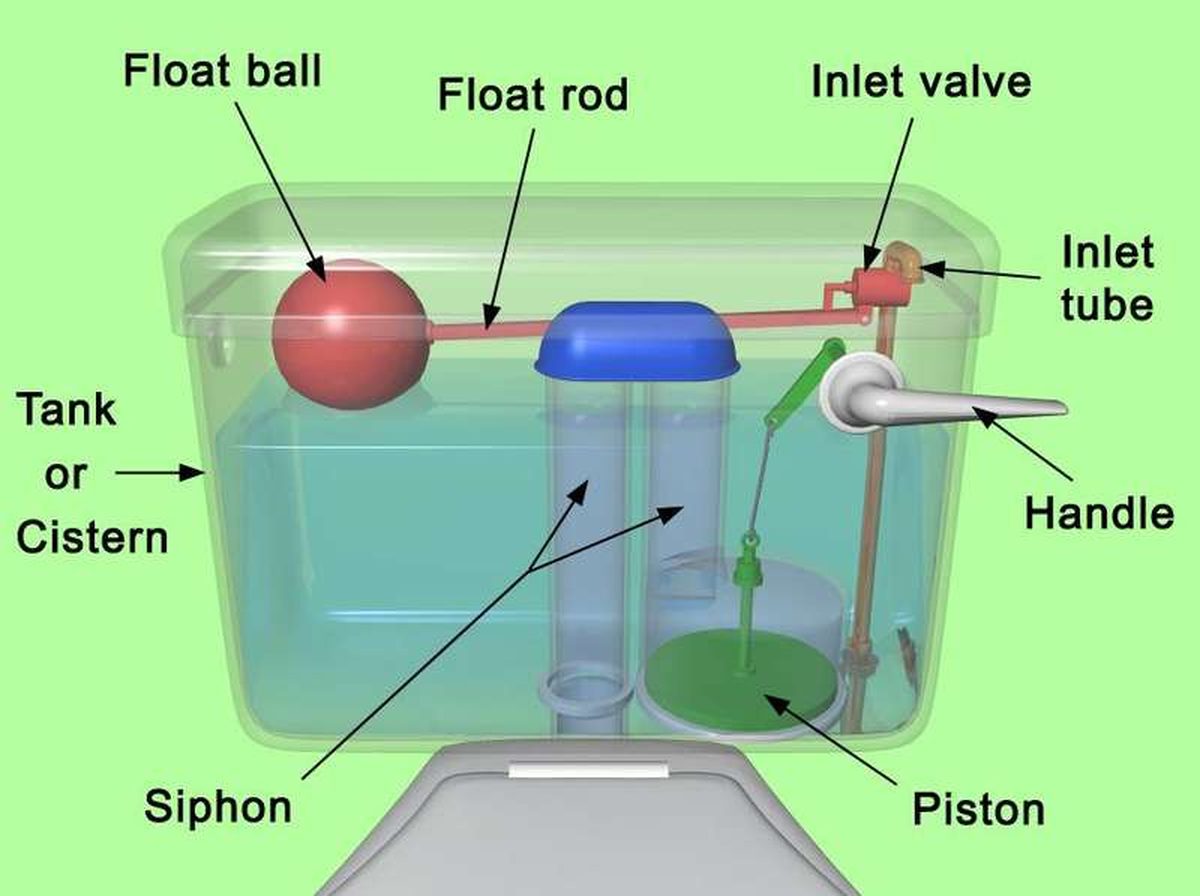
How to fix a running toilet without a plumber in 30 minutes
A running toilet can waste 200 gallons of water a day. Diagnose the flapper, float, or fill valve in two minutes, then fix it yourself
How to hang heavy shelves on drywall safely
Studs first, toggle bolts second, plastic anchors never for heavy loads. Weight ratings, installation steps, and mistakes that bring