
Why wooden cutting boards warp over time at home
By Rive News / Research desk | Rive News / Published October 28, 2026 at 9:00 AM PKT
Key takeaways
- Wood absorbs and releases moisture, swelling when wet and shrinking as it dries.
- Warping happens when one side gains or loses moisture faster than the other.
- Drying a board upright on its edge keeps both faces exposed to air.
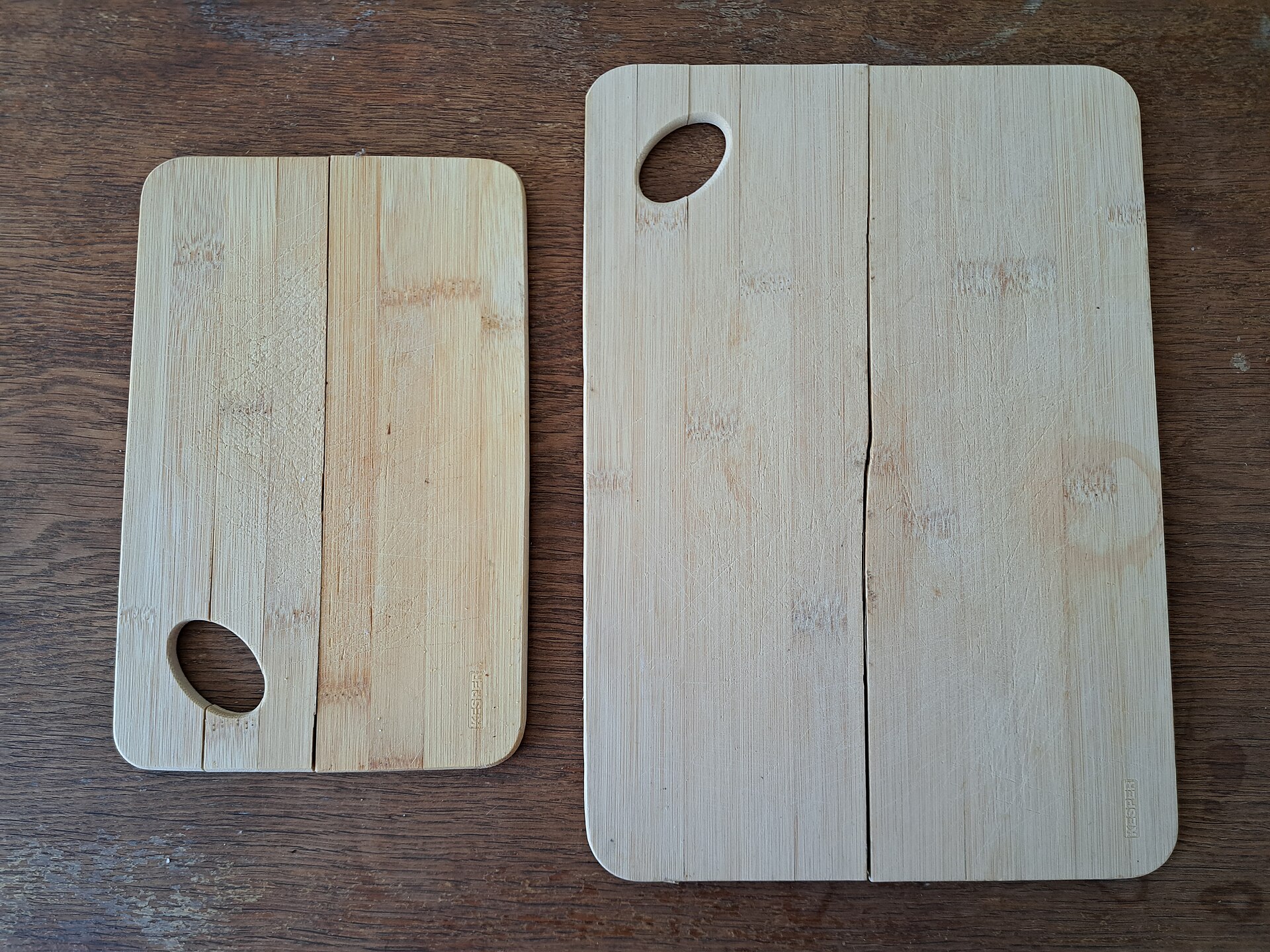
[Two wooden cutting boards lying on a table.] Photograph: Wikimedia Commons contributor
Image Credits: Wikimedia Commons
A wooden cutting board starts flat and ends up rocking on the counter. The change looks sudden, but it builds up through many small cycles of wetting and drying.
This article explains why wooden cutting boards warp over time, including how wood moves with moisture, how grain direction changes the risk, and which daily habits bend a board fastest. It finishes with care steps that keep a good board flat for years.
Wood is never truly still
Wood is hygroscopic, meaning it absorbs moisture from its surroundings and releases it again. Family Handyman explains that as humidity rises, the moisture content of wood rises and the wood expands.
As humidity falls, moisture content falls and the wood shrinks. This balance point has a name: equilibrium moisture content, or EMC.
A cutting board lives in the worst possible cycle for this behaviour. It gets soaked during washing, then dries in kitchen air, then gets soaked again at the next meal.
Each cycle moves the wood slightly. Over months and years, uneven cycles add up to a visible bend.
Why uneven moisture bends a board
Warping is rarely about total wetness. It is about one side changing faster than the other.
Family Handyman puts it plainly: wood warps when its moisture content changes unevenly, so one part dries faster than another and the drier area shrinks first. That difference creates stress across the board.
A board left flat on a counter while damp dries from the top only. The exposed face shrinks while the underside stays wet, and the board cups upward at the edges.
The reverse happens when a wet board sits near a heater. The hot side dries fast and pulls the board out of shape before the other side catches up.
Soaking is the extreme version. A board left in a sink absorbs water deep into its fibres, and the later drying stage is rarely even.
Cupping, bowing, and twisting
Warping takes several shapes, and each one points to a different moisture pattern. Cupping curls the edges upward across the width of the board, like a shallow bowl turned upside down.
Bowing curves the board along its length, lifting the centre or the ends. Twisting lifts one corner while the opposite corner dips, so the board rocks diagonally.
Cupping is the most common cutting-board shape. It follows directly from one face drying faster than the other, which is exactly what happens when a damp board lies flat.
Twisting usually signals a more uneven history, such as one corner repeatedly staying wet. It is also the hardest shape to correct, since the stress runs in two directions at once.
Grain direction changes everything
Not all wood moves equally. Wood moves much more across the grain than along it, and it moves more across flat-sawn boards than quarter-sawn ones.
Family Handyman reports that quarter-sawn lumber shrinks and expands about half as much as flat-sawn lumber. The cut direction matters because it changes how the growth rings sit in the board.
This is why good cutting boards are built from strips rather than a single slab. Cornerstone Woodcraft explains that makers cut a slab into strips, then rearrange them with alternating grain direction to compensate for natural wood movement.
A single slab would curve freely with every moisture cycle. A strip board fights itself: each strip pulls a little, but its neighbours pull back.
End-grain boards take this further by exposing the cut ends of the fibres. They still move with moisture, but the construction spreads the stress more evenly.
The dishwasher problem
Dishwashers combine the three worst conditions for wood: long soaking, high heat, and detergent. The board absorbs water through its whole thickness, then dries unevenly in a hot, enclosed space.
The Kitchn is direct on this point, noting that a wooden board should never go in the dishwasher. Hand washing limits both the soaking time and the heat exposure.
DIYs, citing a research engineer at the United States Department of Agriculture Forest Products Laboratory in Madison, Wisconsin, reports that water is the single biggest enemy of a wood cutting board. The more water wood soaks up, the more likely it is to warp or split along glue lines as it dries.
Wet wood is also softer than dry wood. A soaked board scars faster, and deep knife grooves hold moisture and food residue, which speeds further damage.
[A sliced loaf resting on a cutting board in a kitchen.] Photograph: Wikimedia Commons contributor
Image Credits: Wikimedia Commons
Oiling helps, but it is not the main fix
Board oil slows water absorption by filling surface pores. It does not waterproof the wood, and it does not stop moisture movement entirely.
A well-oiled board absorbs less water per wash, so each cycle moves the wood less. That is a real benefit, but it cannot rescue a board that is soaked daily and dried flat.
The Kitchn identifies drying position, not oiling, as the key habit. After hand washing, the board should be towel-dried, then stood on its edge so air reaches both faces.
Mandy Cook of John Boos and Company told The Kitchn that wood is a breathable material that expands and contracts with moisture content and atmospheric conditions. Standing the board upright matters because it lets both sides lose moisture at a similar rate.
How to flatten a warped board
Minor cupping can sometimes be reversed by rewetting the dry side and letting the board dry evenly under weight. The goal is to equalise moisture, not to force the wood flat while it is still unevenly wet.
Place the board with the concave side down on a damp towel for a short period, then stand it upright to dry. Check progress over a day rather than forcing it in an hour.
Clamping a warped board flat while it dries can help mild cases. The board should be clamped between flat surfaces with even pressure, and left until fully dry.
Severe warping, cracking along glue lines, or a board that rocks badly even after drying is usually beyond home repair. A board that cannot sit flat is a safety problem, since a knife needs a stable surface.
Daily habits that keep a board flat
Hand wash with warm water and a small amount of soap, then rinse quickly. Never leave the board soaking in the sink while other dishes wait.
Towel-dry both faces right after washing. Then stand the board on its edge in a rack or leaning against a backsplash, with air on both sides.
Store boards upright rather than stacked flat in a damp cupboard. Stacking traps moisture between boards and repeats the one-sided drying problem.
Keep boards away from radiators, stoves, and direct sun. Heat speeds drying on one side only, which is the fastest route to a new warp.
Oil the board when the surface looks pale or dry, following the maker's instructions. Re-oiling is maintenance, not a cure for a board already bent by soaking.
Frequently asked questions
Can a warped cutting board be fixed?
Mild cupping can sometimes be corrected by equalising moisture and drying the board flat under weight. Severe twisting or cracking along glue lines usually cannot be fixed at home, and the board should be replaced if it rocks during use.
Should cutting boards be stored flat or upright?
Upright storage is better, since air reaches both faces and moisture leaves evenly. Flat stacking traps dampness between boards and encourages cupping.
Does the type of wood affect warping?
Yes, species and cut both matter. Dense, stable woods move less, and quarter-sawn boards move about half as much as flat-sawn boards, according to Family Handyman. Construction matters too, since strip boards resist warping better than single slabs.
Why does my board warp even though I oil it?
Oil slows absorption but does not stop moisture movement. Soaking, dishwasher use, or drying flat can overwhelm an oiled surface, since the underlying wood still swells and shrinks with moisture changes.
The bottom line
Wooden cutting boards warp because wood moves with moisture, and kitchen use guarantees uneven moisture. One face dries faster than the other, the drier side shrinks first, and the board bends.
The fix is mostly about drying: hand wash, towel-dry, and stand the board upright. A board treated that way still ages, but it stays flat far longer than one left soaking or drying face-down.
Tags: cutting boards, wood care, kitchen
Rive News's research desk covers everyday science and home topics from published sources, with no invented experts or first-hand claims.
Related
- How to stop a wooden chopping board from sliding
- Why doors swell and stick in humid weather
- What is the ideal indoor humidity level
- How to reduce humidity in a room without a dehumidifier
Subscribe to Rive News for one plain-English explainer each day.
Rive News follows a published standards policy: no invented facts, quotes, or statistics, and every number traces to a cited source.
Related stories
Why Your Faucet Keeps Dripping After You Turn It Off
A dripping faucet is usually a worn washer, O-ring, or cartridge that can no longer seal. One drip per second wastes over 3,000 gallons
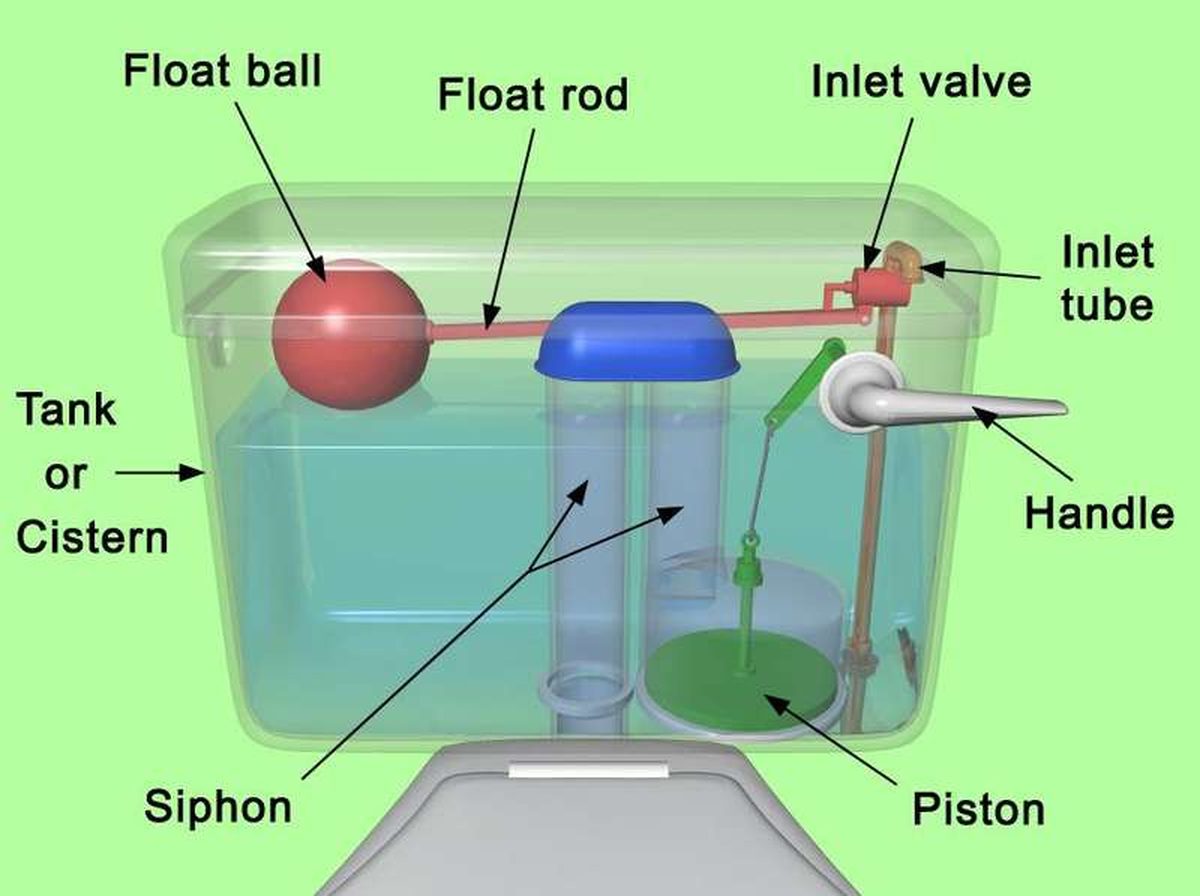
How to fix a running toilet without a plumber in 30 minutes
A running toilet can waste 200 gallons of water a day. Diagnose the flapper, float, or fill valve in two minutes, then fix it yourself
How to hang heavy shelves on drywall safely
Studs first, toggle bolts second, plastic anchors never for heavy loads. Weight ratings, installation steps, and mistakes that bring