
Why Does Coffee Keep Some People Awake but Make Others Sleepy?
Key takeaways
- Caffeine never gives you energy; it only blocks adenosine, the brain chemical that signals tiredness.
- Your CYP1A2 gene decides how fast your liver clears caffeine: fast metabolizers clear it in 2.5 to 3 hours, slow ones take 5 to 6.
- When caffeine wears off, built-up adenosine floods the receptors and causes the crash that can feel like sleepiness.
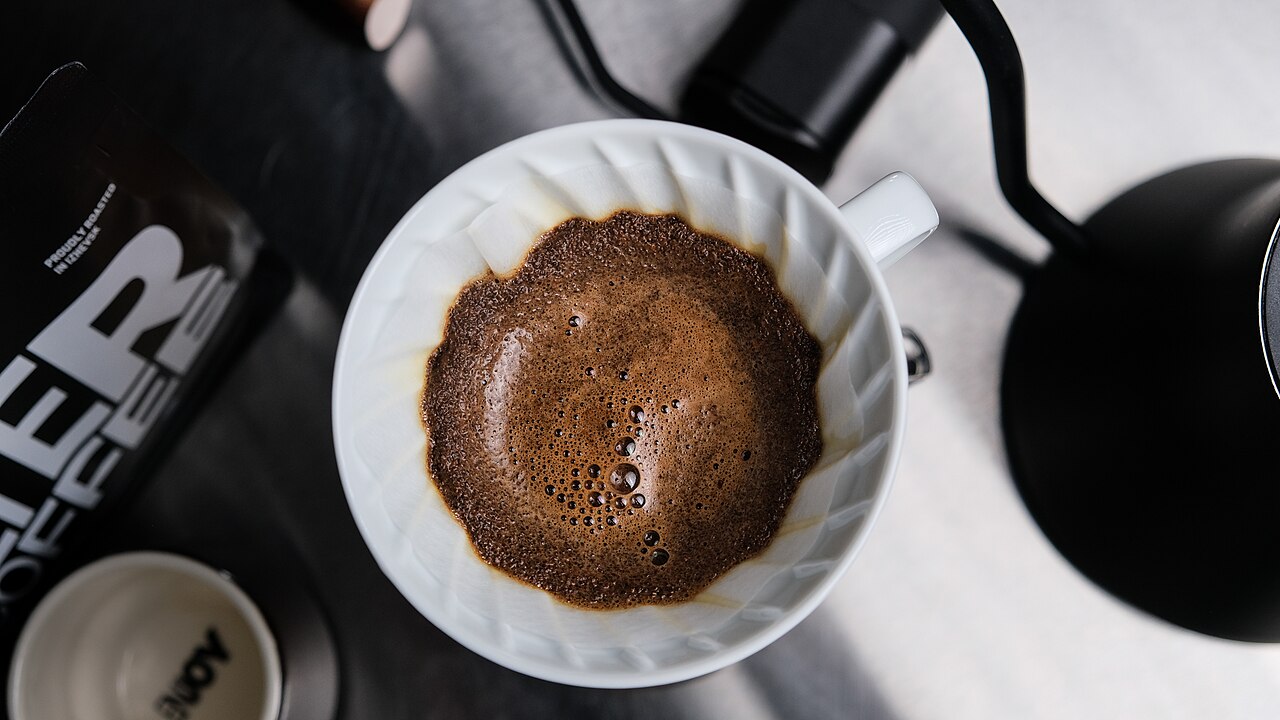
A pour-over coffee mid-bloom, seen from above. The same cup can wire one person and relax another. The difference is in the drinker's genes, not the beans. Image: Wikimedia Commons
Image Credits: Wikimedia Commons
Coffee is famous for keeping people awake, yet some people drink a cup and feel drowsy within the hour. Both reactions are real, and neither means the coffee is broken.
The split comes down to how caffeine works in the brain, how fast your liver clears it, and how your brain has adapted to regular use. Genetics plays a bigger role than most people expect.
This article explains what caffeine actually does, why the crash happens, which genes set your response, how tolerance changes the picture, and what it means for your daily cup.
What caffeine actually does
Caffeine does not give you energy. That is the first thing to get straight.
Through the day, a molecule called adenosine builds up in the brain as your cells burn fuel. Adenosine binds to its receptors and slowly makes you feel drowsy.
Caffeine has a similar shape, so it sits on those same receptors without switching them on, as GenesWellness explains. Adenosine cannot do its job, and you feel more alert.
So caffeine is a blocker, not a battery. It hides the tiredness signal instead of removing the tiredness.
Once swallowed, caffeine is absorbed within about 45 minutes. Then the liver gets to work clearing it, and that is where people start to differ.
The crash: why coffee can make you sleepy
Here is the paradox. While caffeine blocks adenosine, your brain keeps making more of it. The tiredness signal piles up behind the blocked receptors.
When the caffeine wears off, typically 3 to 6 hours after the cup, all that accumulated adenosine floods the now-open receptors at once. The result is a rebound crash that can feel worse than the tiredness you had before the coffee.
This adenosine rebound is the top explanation for coffee-induced drowsiness, according to the breakdown at RevoTale. The crash is biochemical, not psychological.
Regular drinkers get a harsher version. Chronic caffeine use makes the brain grow extra adenosine receptors, a process called upregulation. More receptors mean more landing spots for adenosine when the caffeine clears, so the crash hits deeper and faster.
Sleep debt makes it worse. If you are already sleep-deprived, caffeine only masks the fatigue for a short while, and the underlying exhaustion breaks through quickly. Sweetened drinks add a second problem: the sugar rush fades and drags your energy down with it.
Your genes set the speed
The biggest genetic lever is CYP1A2, the gene for the liver enzyme that breaks down caffeine. About 95 percent of caffeine is cleared through this one enzyme, according to GenesWellness.
Common variants split people into fast and slow metabolizers. Fast metabolizers, with the AA genotype at a variant called rs762551, clear caffeine in roughly 2.5 to 3 hours. Slow metabolizers, with the CC genotype, take 5 to 6 hours, as AskMyDNA reports.
That single difference explains the midnight-espresso divide. A fast metabolizer can drink coffee in the evening and sleep fine, while a slow metabolizer drinking the same cup at lunch may still be wired at midnight.
A second gene, ADORA2A, controls how strongly the brain reacts to caffeine. It codes for the adenosine A2A receptor, one of caffeine's main targets. In a controlled study of 102 adults, variants in ADORA2A were linked to the anxiety people felt after a 150 mg dose, roughly a strong mug of coffee, according to the research summarized by GenesWellness.
Sensitivity and metabolism are different things. You can clear caffeine at a normal speed yet still feel shaky after one cup, or clear it slowly without much anxiety. Some people have both traits at once.

Roasted coffee beans. The caffeine inside is identical in every cup; how fast your liver clears it is what differs from person to person. Image: Wikimedia Commons
Tolerance changes the deal over time
Tolerance changes the deal over time
Drink coffee daily and the stimulating effect shrinks. This is tolerance, and it is the brain adapting to the constant blockade.
With more adenosine receptors grown in response, your baseline tiredness signal gets louder. You start needing coffee just to feel normal, and a missed morning cup can bring a rebound headache as blood vessels dilate.
This is also why long-time drinkers sometimes feel sleepy right after coffee. The dose that once overpowered the adenosine signal now barely covers the extra receptors. The crash arrives sooner and hits harder.
What this means for your cup
If coffee keeps you up at night, you are likely a slow metabolizer. The practical fix is timing: keep caffeine before noon and watch the dose.
If one cup makes you jittery while a friend feels nothing, your ADORA2A variants may be doing the talking. Smaller servings or half-caf can give the alertness without the shake.
If coffee reliably makes you drowsy, check the basics first: are you sleeping enough, is the drink loaded with sugar, and have you been drinking it daily for years? Each of those pushes you toward the crash.
How you brew changes the dose as well. Extraction time and grind size decide how much caffeine ends up in the cup, which is the same chemistry behind why fresh grounds bloom when hot water hits them.
Frequently asked questions
Can coffee really make you fall asleep?
Yes, through the adenosine rebound. When caffeine clears, the accumulated tiredness signal floods in all at once, and the crash can feel like sudden drowsiness.
Does decaf avoid all of this?
Mostly. Decaf still contains a small amount of caffeine, but rarely enough to trigger a strong rebound or keep a slow metabolizer awake.
Is it bad to drink coffee every day?
Daily use builds tolerance and extra receptors, which deepens the crash. It is not dangerous for most healthy adults, but the alertness payoff shrinks over time.
Why can my friend drink espresso at midnight and sleep fine?
They are probably a fast CYP1A2 metabolizer. Their liver clears the caffeine in a few hours, so the adenosine signal returns to normal well before bedtime.
The bottom line
Coffee keeps some people awake and makes others sleepy because caffeine only blocks tiredness instead of creating energy. Your genes decide how fast it clears, your habits decide how hard the rebound hits, and your sleep debt decides how much tiredness is waiting underneath.
Match the habit to your biology. Slow metabolizers should front-load caffeine early in the day, jittery responders should shrink the dose, and daily drinkers should know the crash is partly the price of tolerance.
Try this tomorrow: have your first cup 60 to 90 minutes after waking, keep it before noon, and notice whether the afternoon slump arrives later or softer. Your genes will tell you the rest.
---
Author bio: Rive News is the research desk behind this site's science explainers. We read the genetics papers so your morning cup makes sense.
Latest in Science
- Why Does a Spinning Top Stay Upright While It Spins?
- Why Do Shadows Get Blurry Edges?
- Why Do Candles Flicker Even Indoors With No Wind?
- Why Do You Feel Your Stomach Drop on a Roller Coaster?
Subscribe: Get one plain-English science explainer in your inbox every morning. No jargon, no spam.
Corrections: Found an error? We fix verified mistakes within 24 hours. Contact the research desk with the article title and the correct source.
© 2026 Rive News. All rights reserved.
Related stories

Why diamond is hard and graphite is soft when both are carbon
Diamond and graphite are both pure carbon, yet diamond is 10 on the Mohs scale and graphite is 1 to 2. The difference is not the atoms;

Why Hot Water Can Freeze Faster Than Cold: The Mpemba Effect Explained
Hot water can freeze faster than cold under specific conditions. The Mpemba effect, named for a 1963 schoolboy experiment, still divides
How Magnets Work at the Atomic Level: Spins, Domains, and Iron
Magnetism comes from electrons: their spin and orbits make each atom a tiny magnet. In iron, quantum forces align these atomic magnets into