
How to choose a kayak for first-time paddlers
By Rive News / Research desk | Rive News / Published October 26, 2026 at 9:00 AM PKT
Key takeaways
- Pick stability and the water you will actually paddle before worrying about speed.
- A wide sit-on-top kayak suits most beginners on calm lakes and slow rivers.
- Check the weight limit with your body weight plus gear, and always wear a life jacket.
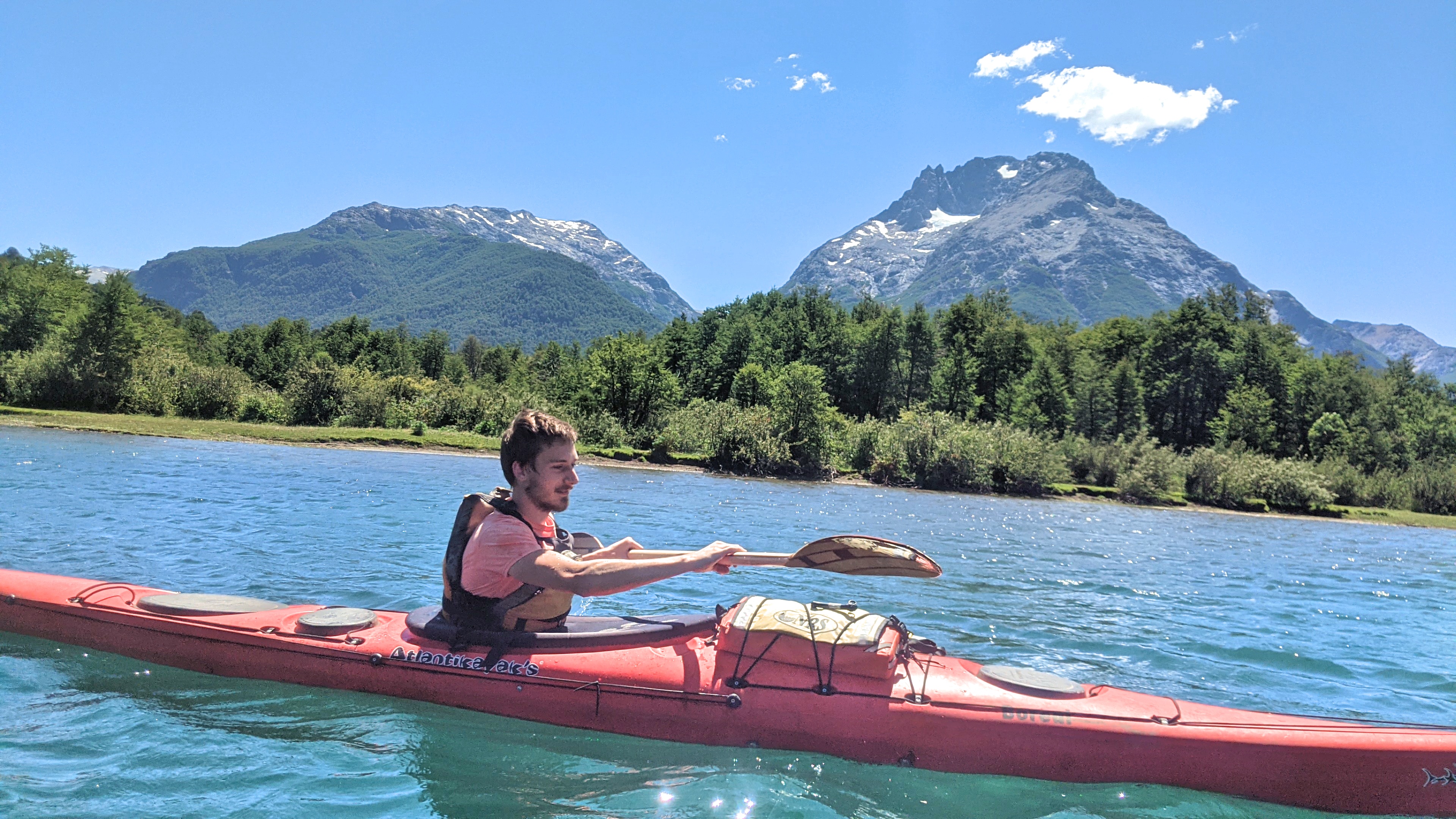
[A paddler moves across a calm lake in a kayak.] Photograph: Wikimedia Commons contributor
Image Credits: Wikimedia Commons
Choosing a kayak for the first time comes down to one question: where will you paddle, and how steady do you need the boat to feel? This article explains how to choose a kayak for a first-time paddler, including sit-on-top versus sit-inside designs, stability, length, weight limits, and the safety gear that matters from day one.
Start with the water, not the kayak
Every good kayak choice starts with the water you will actually use. A calm lake, a slow river, and a choppy coastline ask for different boats, and a kayak built for one can feel wrong on another. Be honest about your first year of paddling, not your dream trip five years from now.
Most beginners spend their first season on flat water near shore, and that is the water to buy for.
Flat water means lakes, ponds, and slow-moving rivers without rapids. These waters reward wide, stable boats that are easy to get into and hard to tip. Moving water with small rapids, and coastal water with wind and waves, reward narrower, longer boats that track straighter and handle chop.
If you buy for rough water you rarely visit, you will own a boat that feels tippy on the lake you paddle every weekend.
Sit-on-top versus sit-inside
The first big choice is whether you sit on top of the boat or inside it. A sit-on-top kayak has an open deck with a molded seat, and you climb on from the side or the shore. A sit-inside kayak has an enclosed cockpit, and you slide your legs under the deck before you sit down.
That single difference shapes stability, comfort, rescue, and weather protection.
Sit-on-top kayaks are the usual recommendation for beginners, and the reasons are practical. Their wider hulls give higher initial stability, which is the steadiness you feel when you first sit down and start paddling. If you capsize, you can flip the boat and climb back on without dealing with a flooded cockpit.
Getting in and out from a dock or a beach is also simpler, which matters when you are still learning to balance.
Sit-inside kayaks trade some of that easy stability for efficiency and protection. Their narrower hulls cut through water with less drag, so they go farther with the same effort. The cockpit shields your lower body from wind, spray, and cold water, and a spray skirt can close it off further.
The cost is a steeper learning curve, because a capsized sit-inside boat fills with water and needs a practiced rescue to empty.
Stability: the two kinds beginners confuse
Stability is not one thing, and confusing its two kinds leads to bad purchases. Primary stability is how steady a boat feels on flat water when you sit still or paddle gently. Secondary stability is how well a boat resists tipping when it leans over, for example when a wave hits from the side.
Wide, flat-bottomed kayaks have high primary stability and feel rock-solid at first. Narrower, rounder hulls can feel twitchy at first but resist capsizing better once leaned.
For a first-time paddler, primary stability is the right priority. You need a boat that feels calm while you learn to paddle, turn, and stop. A boat that feels nervous on your first outing will sit unused in the garage, no matter how good it is in theory.
Once you have a season of paddling behind you, secondary stability becomes more interesting, because you will lean into turns and paddle in rougher water.
Hull shape tells you most of what you need to know. Flat bottoms feel steadiest on calm water but slap in chop and turn slowly. Rounded bottoms feel less steady at first but handle waves more smoothly.
V-shaped hulls track well in a straight line but feel tippiest to a beginner. When you sit in a boat at a shop or a rental dock, rock gently side to side and notice how quickly it settles, because that first feeling is primary stability talking.
Length, width, and weight limits
Length and width work as a pair, and together they set the character of the boat. Short kayaks, around 9 to 10 feet, turn easily and suit small lakes and narrow rivers. Longer kayaks, around 12 feet and up, track straighter and cover distance with less effort, but they are harder to turn and transport.
Most beginner recreational kayaks sit in the 10 to 12 foot range, which balances turning and tracking for flat water.
Width matters more than most first-time buyers expect. A beam of 30 inches or more usually means a stable, confidence-building boat for a beginner. Narrower boats, under 28 inches, tend to feel faster but less steady.
If you are choosing between two boats and one is wider, the wider one is usually the kinder first boat, even if it paddles a little slower.
Weight capacity is a hard limit, not a suggestion. Check the manufacturer's maximum load, then add your body weight, your paddle, your life jacket, water, and any gear you plan to carry. A boat loaded near its limit sits lower in the water, handles worse, and feels less stable.
Leave a comfortable margin, and treat a boat as too small if your total load passes about 80 percent of its rated capacity.
The rest of the kit
A kayak is only part of the purchase. The paddle matters more than beginners expect, because a paddle that is too long or too heavy turns a pleasant outing into arm ache. As a rough guide, wider boats and taller paddlers need longer paddles, and most recreational paddlers land in the 220 to 240 centimeter range.
Borrow or rent paddles in different lengths before buying, because the right length is the one that feels natural after an hour, not after a minute in the shop.
A life jacket is not optional gear, and it is not a box to tick with the cheapest vest available. Wear a properly fitted personal flotation device on every outing, even on calm water and even if you can swim. Cold water, a surprise capsize, and a long swim to shore can overwhelm a strong swimmer, and a life jacket buys you time to recover.
Try it on with the clothes you will paddle in, and make sure it stays snug when you raise your arms.
A few small items complete the kit. A bilge sponge or pump clears water from the cockpit, a dry bag keeps your phone and keys safe, and sun protection matters because water reflects sunlight back at you. A whistle, attached to your life jacket, is a cheap way to signal for help.
None of these items is glamorous, and all of them are the difference between a minor mishap and a bad day.

[A kayaker paddles along a river in calm conditions.] Photograph: Wikimedia Commons contributor
Image Credits: Wikimedia Commons
Rent before you buy
The single best piece of advice for a first-time buyer is to rent first. A rental day on your local lake tells you more than a week of reading reviews. You will learn whether you like sitting on top or inside, whether a wide boat bores you or reassures you, and whether your shoulders ache after an hour.
Many rental shops and clubs also offer short lessons, and a lesson that teaches you how to get back on after a capsize is worth more than any feature list.
Try at least two different boats before spending money. Paddle one sit-on-top and one sit-inside, or one short boat and one longer one, on the same water on the same day if you can. The comparison will teach you what your body prefers, and that preference is more reliable than any guide, including this one.
If a shop will not let you try before you buy, treat that as useful information about the shop.
Frequently asked questions
What type of kayak is best for a beginner?
A wide sit-on-top recreational kayak suits most beginners on calm water. It offers high initial stability, easy entry and exit, and a simple rescue if you capsize.
How long should a beginner kayak be?
Most beginner boats run 10 to 12 feet long, which balances easy turning with decent straight-line tracking. Shorter boats turn faster, while longer boats cover distance more efficiently.
Are sit-on-top kayaks more stable than sit-inside kayaks?
Sit-on-top kayaks usually offer higher initial stability because of their wider hulls. Sit-inside kayaks often offer better secondary stability once leaned, but they can feel less steady to a new paddler at first.
How much weight can a beginner kayak carry?
It depends on the model, so check the manufacturer's rated capacity and add your body weight plus all gear. Leave a margin rather than loading the boat to its limit, because an overloaded kayak handles worse.
Do I need a life jacket if I can swim?
Yes, on every outing. A life jacket keeps you afloat after a capsize, in cold water, or when you are tired, and no swimming ability replaces that safety margin.
The bottom line
Choose the boat for the water you will paddle most, favor stability over speed, and check the weight limit with your full load in mind. A wide sit-on-top kayak is the right first boat for most beginners on calm water, and a sit-inside boat is the right step up when you start paddling farther or in rougher conditions. Rent two different boats, wear a life jacket every time, and let your first season on the water tell you what your second boat should be.
Tags: kayaking, outdoor gear, beginners
Rive News's research desk covers everyday science and pet behavior in plain language, citing public sources for every key claim.
Related
- How to choose a kayak for beginners
- Sit-on-top versus sit-inside kayaks: who each suits
- How to get back in a kayak after capsizing
- Why kayaks tip over and how to avoid capsizing
Subscribe for one plain-language explainer a day, no jargon and no filler.
Rive News publishes research-desk explainers with named sources and a standing corrections policy: errors are corrected openly when readers point them out.
Related stories

Why Is Altitude Sickness Worse for Some People?
Altitude sickness hits some people harder because of genetics, ascent speed, and prior history, not fitness level. Here is what raises risk
Why Do You Get Blisters When Hiking and How to Prevent Them
Friction plus moisture plus heat equals a blister. Learn why hiking breeds all three, and the boots, socks, and tape system that keeps
How to choose hiking boots for beginners: fit, features, and break-in
Beginners should buy for fit first: snug everywhere, tight nowhere, with a thumb's width at the toes. Here is how to size, test,