
Why do kayaks tip over and how to avoid capsizing
By Rive News
Research desk | Rive News
Key takeaways
- Kayaks tip when your center of gravity (your balance point) moves past the hull's tipping point: sudden leans, waves hitting side-on, and uneven loads.
- Wider, shorter hulls with flat bottoms are the most stable for beginners; narrow touring hulls trade stability for speed.
- Learn the brace stroke, keep your head over the boat, and paddle into waves instead of taking them sideways.
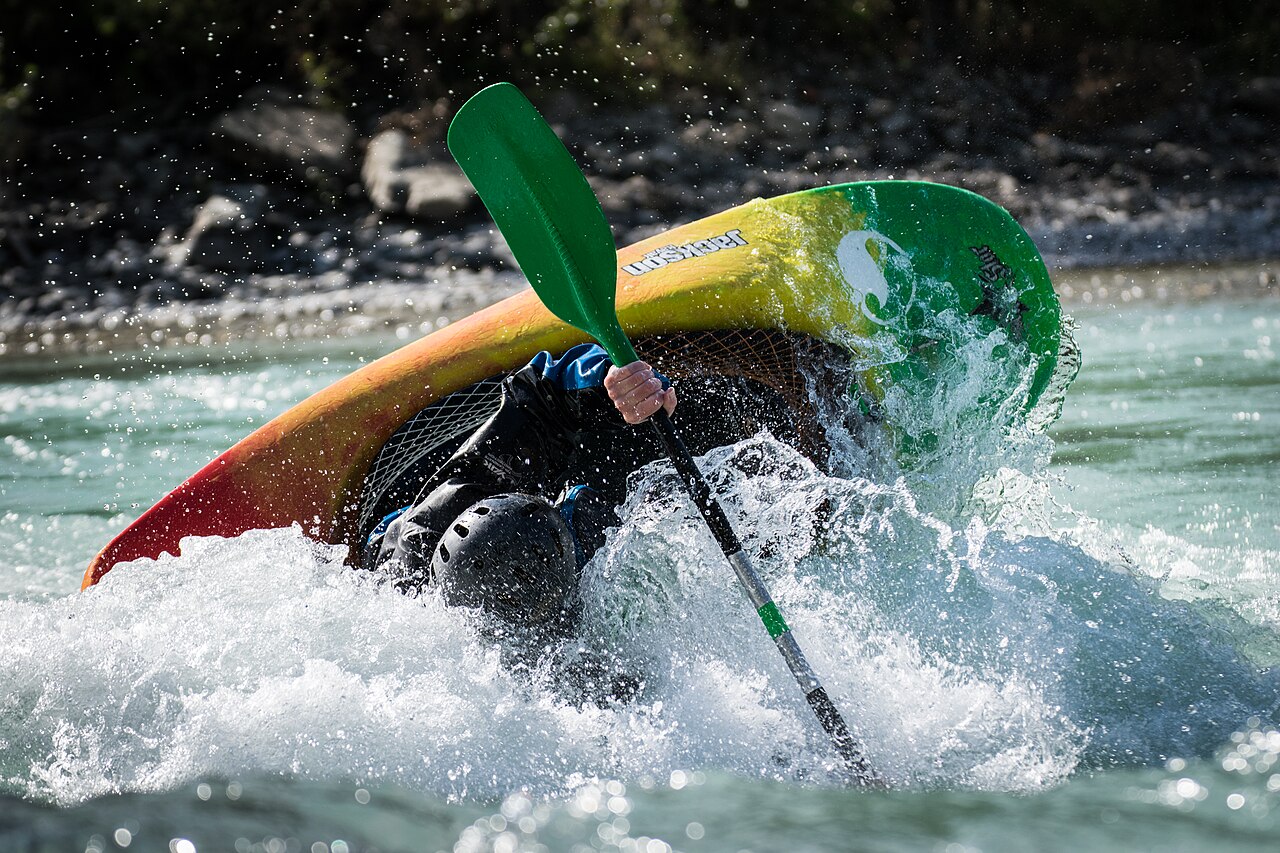
Almost every beginner asks it before the first launch: will this thing flip? The honest answer is that kayaks can tip, but they rarely do it without a reason.
A capsize is physics, not bad luck, and once you understand the physics, the prevention reads like common sense. Kayaks tip when the paddler's center of gravity moves outside the hull's balance point, and almost everything about staying upright is keeping it inside.
This article explains why kayaks tip over, how hull design and paddler position control stability, and the skills and habits that keep you upright.
Why kayaks tip over: the physics
A kayak floats because the hull displaces water, and it stays upright because your weight sits low inside that displacement. Tip it a few degrees and the hull's shape pushes back: this is primary stability, the boat's resistance to small leans. Lean further and you reach the tipping point, the angle beyond which the hull cannot recover and the boat rolls.
Three things push you toward that point.
The first is you. Your body is the tallest, heaviest moving part of the system, and your center of gravity sits well above the waterline.
A sudden lean, a twist to grab something behind you, or standing up shifts that weight sideways faster than the hull can compensate.
The second is the water: waves or boat wakes hitting the kayak side-on lever the hull over, and current pressing against a turned hull tries to rotate the boat, as the Weekend Notes kayaking guide describes.
The third is loading: weight piled high or to one side raises the center of gravity and shrinks the margin for error.
Small, light boats are the most vulnerable. Sea School's capsizing guide puts it bluntly: the smaller and lighter the boat, the easier it is to flip, and canoes and kayaks sit next on the risk list after small open boats because they are narrow and sit low in the water, "which means a single wrong movement or wave can roll them quickly." No vessel is capsize-proof, the guide adds, and knowing your craft's limits is one of the best safety habits you can develop.
There is a reassuring counterpoint that beginners should hear.
Walking Rivers' kayaking instructors note that every kayak feels tippy when you first sit in it, and the rocking vanishes as soon as you start moving forward.
Forward motion, hull in the water, and the paddling action itself, which presses you lower into the boat with each stroke, all stabilize the system.
Within a short distance, natural balance takes over. The tippy feeling at the dock is not a preview of the trip.
Hull design: what makes a kayak stable or tippy
Not all kayaks tip equally, and the differences are designed in.
Width and length. The rule of thumb from Dick's Sporting Goods' buying guide: the longer and narrower the kayak, the faster and straighter it goes; the wider and shorter, the more stable and easier to turn, at the cost of speed. Beginners worried about flipping do best in a wider boat. Recreational kayaks run about 8 to 13 feet long and suit small lakes, rivers, and calm water; touring kayaks run 14 to 18 feet and handle bigger water.
Hull shape. GILI Sports' kayak guide breaks down the four common shapes. A flat hull is stable and maneuverable, the standard beginner choice for flat water. A rounded hull is faster and more maneuverable once moving. A V-shaped hull cuts through water and tracks straight, but feels less stable when you first step in, then more stable once underway; it is the touring shape. A pontoon hull is stable on entry with rounded edges for stability while moving, at the cost of speed.
Capacity and loading. Every kayak lists a weight capacity, and it includes you plus all gear. Overfill the boat and you sit low in the water and become more likely to capsize, GILI warns; staying well under capacity keeps you buoyant and in control. Where the weight sits matters as much as how much: centered and low beats high and off to one side.
Secondary stability. Beyond the initial steadiness (primary stability), boats differ in secondary stability: how the hull behaves when leaned hard over, and how forgiving it is near the tipping point. Softer chines, the edges where hull bottom meets sides, generally mean more secondary stability, per Dick's guide. This is the stability that saves you when a wave catches you leaned over, not the stability you feel sitting still at the dock.
Paddler habits that cause capsizes
Design sets the odds; habits decide the outcome. The classic beginner capsizes:
- Leaning with the upper body instead of the hips. Reaching for a camera, twisting to talk to a paddling partner, or leaning over the side to splash water all move the center of gravity sideways. Keep your head over the boat; where the head goes, the body follows.
- Sitting too high. Perching on the seat edge or kneeling raises your center of gravity. The KMSC kayaking guide offers a drastic fix for a boat that feels too unstable: take the seat out and sit right on the hull bottom, because lowering your center of gravity by a few centimeters makes all the difference.
- Loading unevenly. Coolers, tackle boxes, and dry bags piled on one side or stacked high pull the balance point off center. Center the gear, strap it low, and check that the boat sits level before launching.
- Taking waves side-on. Wind chop and powerboat wakes are manageable head-on and treacherous from the side. Walking Rivers' advice: when waves arrive, steer the bow (the front) directly into them, and it is as though they are no longer there. Learning to balance side-on to waves comes later.
- Fighting current with the wrong lean. On moving water, current hitting the side of a turned boat tries to rotate and flip it. The Weekend Notes guide warns that the instinct to lean upstream, away from the perceived danger, is exactly wrong below a rapid; lean slightly downstream instead.
- Ignoring weather. Wind, surf, and storms roughen water faster than beginners expect. Check the forecast, the surf, and the wind reports before launching, and skip the trip if conditions are building.
How to avoid tipping: skills and habits
Learn the brace. The single most useful capsize-prevention skill is the brace stroke. Jeff Little, writing for Men's Journal, describes it as a downward thrust of the paddle with the blade flat on the water's surface, which brings your center of gravity back over the kayak's seat. Practice the high brace on calm water until the motion is automatic: blade flat, elbow up at roughly 90 degrees over your outer hand, press down hard while driving with your hips. When a wave or lean catches you off guard later, the reflex fires before the thinking starts.
Dress the launch for the swim. Wear a properly fitted PFD (personal flotation device, a life jacket) every time, no exceptions; Sea School's guide singles this out for paddlers. Dress for the water temperature, not the air, and in a sit-inside kayak, practice a wet exit, pulling the spray skirt and sliding out underwater, in shallow, calm conditions before you need it for real.
Launch and land carefully. Most beginner flips happen at the shore, not mid-lake. REI's beginner guide recommends the perpendicular launch: boat floating in shallow water, paddle shaft across the cockpit as an outrigger (a stabilizing support), sit down over the cockpit, then slide your legs in. Getting in from a dock or a steep bank without the outrigger step is where wobbles become swims.
Paddle with the conditions. Start on flat, sheltered water with no wind. Keep trips short while the balance reflex develops. Go with a more experienced paddler when trying moving water for the first time. And if you do tip, the drill is simple: stay calm, stay with the boat, and get back on (sit-on-top) or wet-exit and swim it to shore (sit-inside).
FAQ
Are kayaks easy to tip over?
Recreational kayaks are hard to tip by accident on calm water; they are designed for stability. Narrow touring and whitewater hulls are tippier by design, trading stability for speed and maneuverability. Most beginner capsizes come from sudden leans, side-on waves, or uneven loading, not from the boat itself.
Is a sit-on-top or sit-inside kayak more stable?
Sit-on-tops are generally wider and feel more stable initially, and getting back on after a flip is easier. Sit-insides can feel tippier at first but are efficient once moving. For a nervous beginner on flat water, a wide sit-on-top is the forgiving choice.
What should I do if my kayak starts to tip?
Brace: slap the flat paddle blade on the water's surface on the tipping side and press down while driving your hips back under you. Keep your head over the boat. If it goes over anyway, stay calm and stay with the kayak.
Do I need to know how to roll a kayak?
No, not as a beginner. Rolling is an advanced whitewater and sea-kayak skill. For flat-water paddling, the brace, a wet exit, and a PFD cover your safety needs.
The bottom line
Kayaks tip for physical reasons: the paddler's weight moves past the hull's tipping point through sudden leans, side-on waves, bad loading, or current.
Pick a wide, flat-hulled boat for learning, keep your weight low and centered, paddle into waves rather than across them, and learn the brace stroke on calm water before you need it in rough water.
The tippy feeling at the dock fades within minutes of paddling.
Respect the water, wear the PFD, and the flip you feared becomes a skill you have already practiced.
Rive News's research desk covers outdoor sports and paddling.
Latest in sports
- How to choose a kayak as a beginner
- Sit-on-top vs. sit-inside: which kayak suits you
- How to read river current before swimming or kayaking
- Do you need a wetsuit when the water feels fine
Subscribe for one practical outdoors explainer every week.
Rive News publishes explainers under standing editorial standards. Factual errors are corrected with a visible update note.
Related stories

Why Is Altitude Sickness Worse for Some People?
Altitude sickness hits some people harder because of genetics, ascent speed, and prior history, not fitness level. Here is what raises risk

Why Do You Get Blisters When Hiking and How to Prevent Them
Friction plus moisture plus heat equals a blister. Learn why hiking breeds all three, and the boots, socks, and tape system that keeps hiker

How to choose hiking boots for beginners: fit, features, and break-in
Beginners should buy for fit first: snug everywhere, tight nowhere, with a thumb's width at the toes. Here is how to size, test, and break i