
How to Choose a Kayak Paddle Length for Your Boat
Key takeaways
- Boat width matters more than your height: wider boats need longer paddles to clear the sides.
- Match your stroke style too, since high-angle paddlers typically use paddles 10 cm shorter than low-angle paddlers.
- Skip the knuckle and wrist "hacks"; they ignore the boat, which drives the whole calculation.
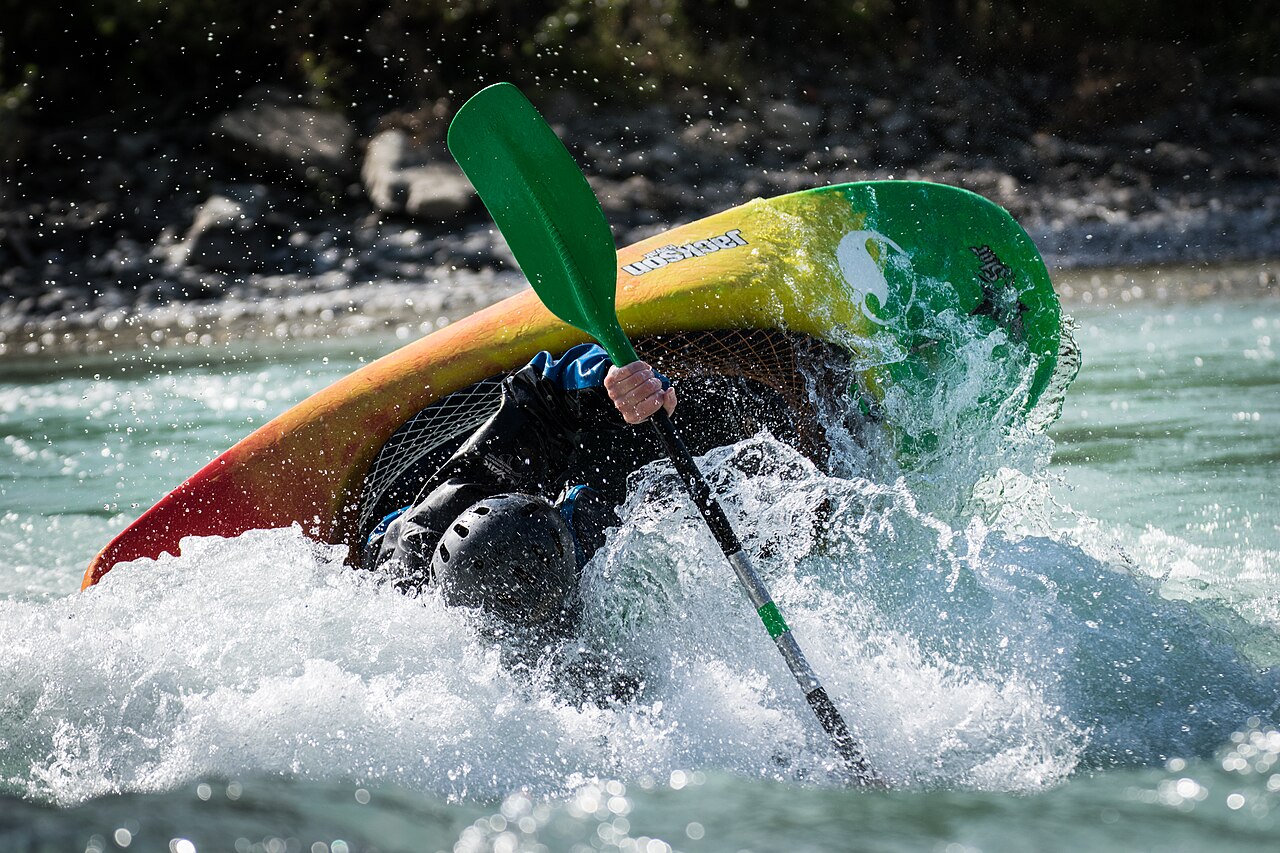
A kayak paddle that is too short forces you to bang the gunwales with every stroke. One that is too long drags extra blade through the water and tires your shoulders. The right length puts the whole blade in the water during the power phase while your body stays comfortable.
Sizing a paddle comes down to three inputs: your boat's width, your body size, and how you paddle. This article takes a closer look at how to choose a kayak paddle length, including why boat width comes first, how height and torso factor in, what high-angle and low-angle styles change, how to read sizing charts, and the bottom line.
Why boat width comes first
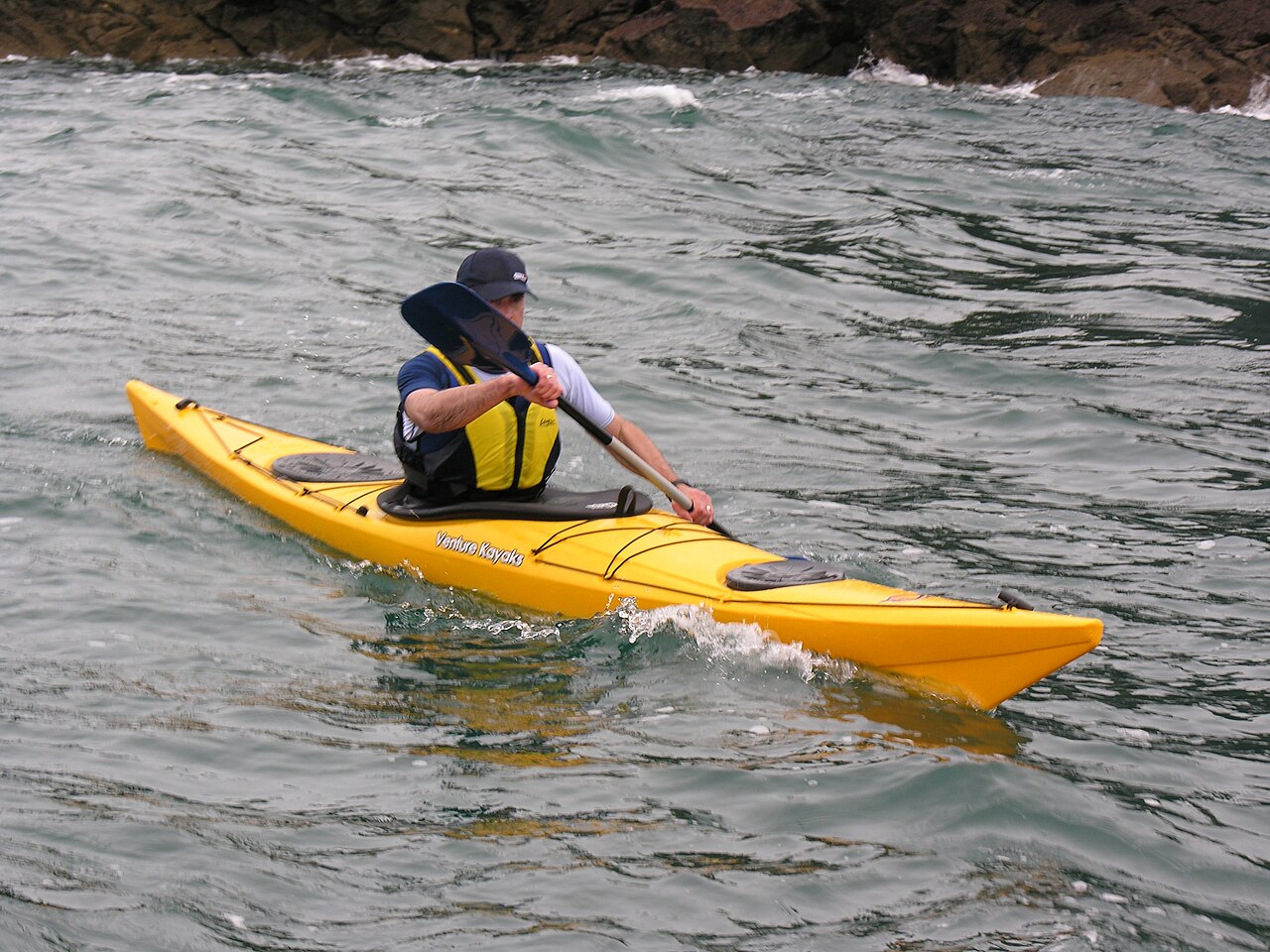
Your kayak's width, also called its beam, decides how far the paddle must reach to enter and exit the water cleanly. A wide recreational kayak at 28 to 30 inches holds your hands far from the water. A narrow sea kayak at 22 inches keeps them close.
The same paddler needs a longer paddle for the wider boat.
Sea Kayak Explorer puts it plainly: using a paddle that is too short on a wide boat means hitting the sides of the kayak with each stroke. That is wasted energy and a miserable day on the water.
This is also why the popular fitting "hacks" fail. As the fitting guide at A Kayak explains, neither the knuckle test (curling your fingers over the blade with your arm raised) nor the wrist test (checking whether the paddle reaches your wrist overhead) traces back to any maker chart or standard. Both ignore your boat entirely, and your boat's width changes everything.
Skip them.
Typical widths help you see where you stand. Recreational kayaks run about 26 to 30 inches wide. Touring kayaks run 22 to 25 inches.
Performance sea kayaks run 19 to 22 inches. Wider fishing kayaks and sit-on-tops can exceed 32 inches and need the longest paddles of all.
How height and torso factor in
Height matters, but it is the secondary input. Taller paddlers have longer reaches and naturally hold a higher stroke, which pairs with a slightly longer paddle. Every major sizing chart crosses paddler height against boat width to land on a length.
Torso length is actually the better body measurement. Two people of the same height can have very different torso lengths, and the torso is what positions your hands over the water. Smith Lake Gifts and Outdoors recommends sitting upright on a flat chair and measuring from the seat surface to the bridge of your nose.
Under about 24 inches, you fit the shorter side of a recommended range. From 24 to 30 inches, you fit the middle. Over 30 inches, you lean toward the longer end, especially with a wide kayak.
Seat height tweaks the answer as well. A low seat keeps your hands close to the water, favoring a shorter paddle. A framed, elevated fishing seat raises your hands and changes the stroke angle, which can call for another 10 cm or more.
If your blade barely clears the gunwale on the catch, the paddle is probably too short for your setup.
What high-angle and low-angle styles change
Paddling style is the third input, and it moves the answer by about 10 cm. Sawyer Paddles and Oars, the paddle maker behind one of the most cited sizing guides, describes two main styles.
Low-angle paddling is the relaxed touring style. The shaft stays closer to horizontal, the stroke runs at a lower cadence, and the blade enters the water farther from the boat. It is efficient for long distances with less fatigue.
Low-angle paddlers use longer paddles.
High-angle paddling is more vertical and aggressive. The top hand drives at about eye level, the cadence is higher, and the blade plants close to the hull for power and maneuverability. It suits rougher water and faster boats.
High-angle paddlers use shorter paddles.
The NRS-derived chart published by PaddlingSpace shows the gap clearly. For a mid-size paddler on a mid-width boat, low-angle sizing lands at 230 cm while high-angle lands at 215 cm. Same person, same boat, 15 cm apart, purely from style.
How to read sizing charts
Charts disagree on details but agree on the method. Sawyer's touring chart crosses height against boat width: a paddler from 5'0" to 5'10" on a 17 to 23 inch boat lands at 220 to 230 cm; a paddler from 5'6" to 6'2" on a 23 to 25 inch boat lands at 230 to 240 cm; anyone over 6'3" on a boat over 25 inches lands at 240 to 250 cm.
Werner and Aqua-Bound, the two biggest paddle brands, publish charts that break their width columns at slightly different points, as A Kayak's side-by-side comparison shows. The rows differ by 5 to 10 cm in places. Treat any chart as a starting point, then fine-tune with experience.
If you use a bent-shaft (crank-shaft) paddle, subtract about 10 cm from the straight-shaft recommendation.
Whitewater paddles live in a different world. They are much shorter because the boats are narrow and the strokes are quick and powerful. Sawyer's whitewater chart runs from about 188 cm for smaller paddlers to 203 cm for taller ones on hard-shell boats.
Recreational and inflatable kayaks, being wider, push whitewater-style paddling back up to 220 to 240 cm.
A sensible default for a first touring paddle on an average recreational kayak is 230 cm. It is the most common length for a reason: it fits the middle of the height range on the most popular boat widths.
Common mistakes to avoid
Buying too long is the classic beginner error. A paddle 10 cm too long feels fine in the shop and exhausting after two hours, because every stroke lifts extra weight and drags extra blade. When in doubt between sizes, most coaches suggest sizing down for touring.
Buying for a child? Do not hand them an oversized adult paddle just because it is available. As Smith Lake Gifts and Outdoors warns, a heavy, overlong paddle makes kids lose interest fast.
Youth paddles have smaller grips and lighter builds for a reason.
Ignoring the boat is the other big one. Borrow a friend's paddle without checking whether their kayak matches your beam, and you may conclude the length is wrong when the boat is the variable. And remember that the paddle is only part of the system.
If you capsize, what matters is knowing how to get back into your kayak, not the extra 5 cm on your shaft.
Blade shape matters too, though it is beyond pure length. Larger blades suit strong paddlers and high-angle strokes; smaller blades suit long days and smaller frames. Length gets you in the right neighborhood; blade size fine-tunes the feel.
Frequently asked questions
What is the most common kayak paddle length?
Most adult touring paddles sold fall between 210 and 230 cm, with 220 and 230 cm the sweet spot for average-height paddlers on recreational boats. Whitewater paddles cluster much shorter, around 190 to 200 cm.
Can I use a paddle that is too long or too short?
You can, but you will pay for it. Too long means sore shoulders and sloppy strokes; too short means hitting the hull and shallow catches that slip through the water. Persistent wrong sizing can even contribute to overuse injuries.
Do I need a different paddle for sea kayaking and whitewater?
Yes. Sea and touring kayaks use longer paddles matched to boat width and stroke style, while whitewater boats use short, stiff paddles built for power strokes and braces. They are different tools for different jobs.
Should I get an adjustable-length paddle?
Adjustable ferrules that span 10 to 15 cm are genuinely useful, especially for beginners still dialing in their fit or for households sharing one paddle. They add a little weight and a potential failure point, but the flexibility is worth it while you learn.
Does paddle weight matter as much as length?
For long days, arguably more. A heavy paddle multiplies every one of the thousands of strokes in a day trip. Within your correct length range, the lightest paddle you can afford is usually the best upgrade.
The bottom line
Choose kayak paddle length in this order: measure your boat's width, note your height and torso, then pick your stroke style. Width is the dominant variable, which is why the knuckle and wrist hacks mislead. Cross your numbers on a maker's chart, subtract 10 cm for a bent shaft, and size down when you are between lengths.
Then get on the water. Charts get you close; an hour of paddling tells you the truth. A paddle that lets the full blade catch clean water without rapping the hull, stroke after stroke, is the right length no matter what the table said.

Tags: kayak paddle, paddling gear, kayaking, buying guide
Latest in Sports
- How Do You Get Back Into a Kayak After Capsizing?
- What Is the Difference Between Snorkeling and Freediving Gear?
- Why Do Trail Running Shoes Have Lugs and Road Shoes Do Not?
- Why Do Down Sleeping Bags Lose Warmth When Wet?
Get one clear outdoors explainer like this in your inbox every morning. Subscribe to the Rive News newsletter.
Related stories

Why Is Altitude Sickness Worse for Some People?
Altitude sickness hits some people harder because of genetics, ascent speed, and prior history, not fitness level. Here is what raises risk

Why Do You Get Blisters When Hiking and How to Prevent Them
Friction plus moisture plus heat equals a blister. Learn why hiking breeds all three, and the boots, socks, and tape system that keeps

How to choose hiking boots for beginners: fit, features, and break-in
Beginners should buy for fit first: snug everywhere, tight nowhere, with a thumb's width at the toes. Here is how to size, test,