
Why Do Down Sleeping Bags Lose Warmth When Wet?
Key takeaways
- Down insulates by trapping warm air in lofted filaments; water collapses that loft and the warmth goes with it.
- Saturated down loses nearly all of its insulating power and dries much slower than synthetic insulation.
- Hydrophobic treatments and waterproof stuff sacks help, but down still needs to stay dry to perform.
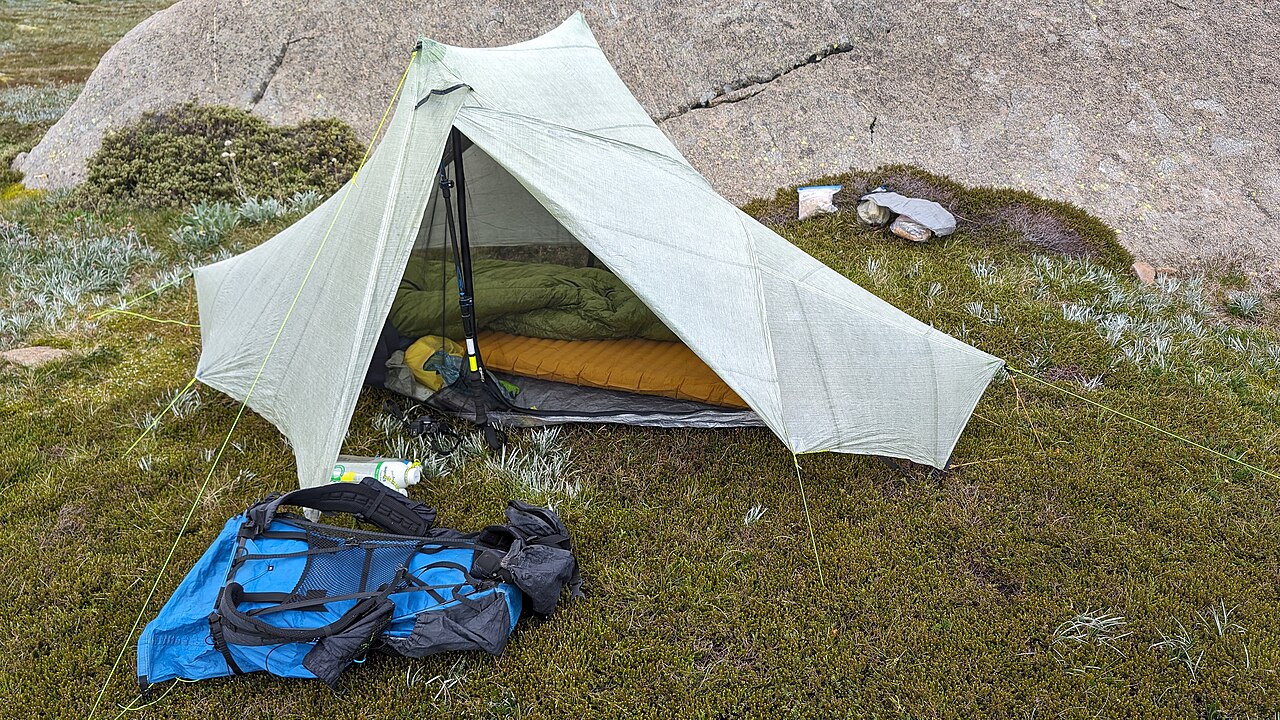
A dry down sleeping bag is one of the warmest things you can carry into the backcountry for its weight. A wet one can be dangerously cold. This is not a minor performance dip.
When down gets truly soaked, it loses nearly all of its ability to insulate, and it takes far longer to dry than the alternatives.
The reason is structural. Down does not warm you the way a heater does. It warms you by stopping your body heat from escaping, and it does that with trapped air.
Add water, and the mechanism breaks. This article explains what down is, how its loft works, why moisture destroys it, what hydrophobic down can and cannot do, and how to keep a down bag working on wet trips.
What down insulation is
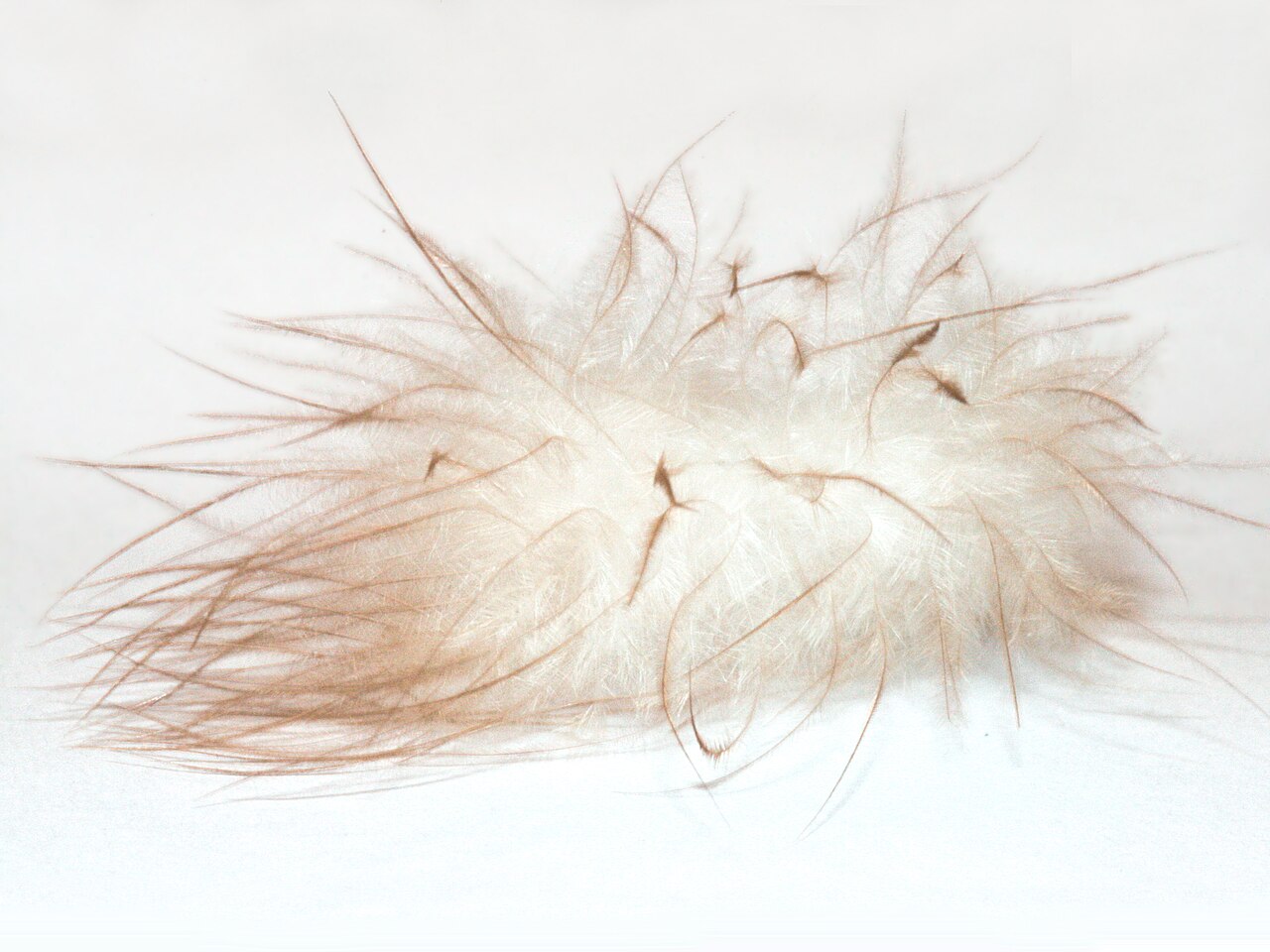
Down is the soft, fluffy layer that sits beneath the outer feathers of ducks and geese. Unlike feathers, down has no quill. Campman's insulation guide describes it as thousands of tiny filaments radiating from a central point, trapping huge amounts of air in the space between them.
That trapped air is the entire point. A sleeping bag does not generate heat; your body does. The insulation's job is to hold a layer of still, warm air around you so heat escapes slowly.
Let's Talk Science, the Canadian science education site, puts it plainly: down protects you from heat loss by trapping warm air among its fine fibers.
Down performance is rated in fill power, which measures how many cubic inches one ounce of down lofts to. Campman explains that higher fill power means more trapped air per ounce, so a 700-fill bag delivers more warmth per ounce than a lower-fill bag of the same weight. Fill power is really a measure of loft, and loft is really a measure of trapped air.
Why water destroys loft
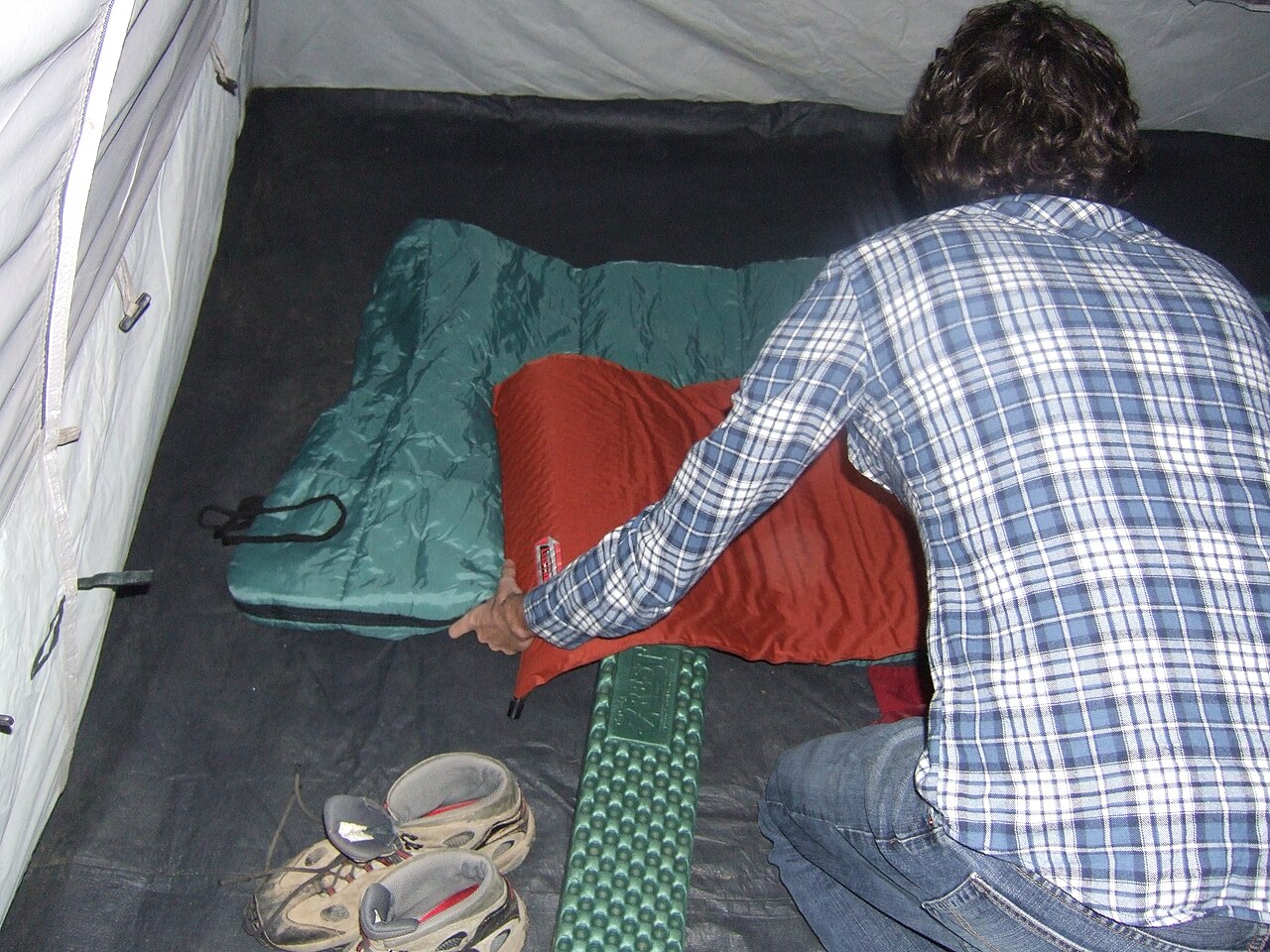
Water attacks down in two ways. First, the fine filaments are not waterproof. When they get wet, they clump together instead of standing apart.
Let's Talk Science describes the result: the feathers all stick together, and when that happens they can no longer trap warm air between their fibers.
Second, water fills the air pockets directly. Even where filaments do not clump, water displaces the still air that was doing the insulating. A soaked bag is heavier, flatter, and full of water where warm air used to be.
GearJunkie calls this down's Achilles heel: when it gets saturated, it becomes a mess, losing nearly all of its insulating properties.
This is also why a wet down bag feels so much colder than a wet synthetic one. Synthetic insulation is built from polyester fibers that do not absorb water the way down does. The fibers stay separated, air pockets survive, and the bag keeps insulating.
Campman's side-by-side comparison notes that synthetic jackets keep insulating even when damp and dry much faster once the weather clears.
The slow drying problem
Losing warmth is only half the trouble. Down also takes a long time to dry, which matters on multi-day trips. Let's Talk Science warns that the long drying time can be a problem if it rains on your camping trip, because you may need the bag again the next night.
The physics is simple. A clumped, waterlogged mass of filaments has little surface area exposed to air, so evaporation is slow. Synthetic fibers shed water from their surfaces and keep their structure open, so air circulates and drying goes faster.
On a trip where you sweat into the bag each night and cannot fully dry it each day, down's disadvantage compounds.
Proper care makes down last, though. Let's Talk Science reports that a down sleeping bag lasts about 10 years on average, compared with about 3 years for a synthetic bag. Down fibers are resilient and re-loft through many stuff-and-unstuff cycles, as long as they are stored uncompressed and kept dry.
What hydrophobic down can and cannot do
In recent years, manufacturers have treated down with hydrophobic coatings that make the filaments repel water. GearJunkie reports that these coatings bind with the filaments and preserve loft in damp conditions, though the treated down is not waterproof.
The evidence is mixed in an honest way. Independent studies found that hydrophobic down lofts slightly less than untreated down in dry conditions, so there is a small tradeoff. Campman notes that most modern down jackets use the treatment to slow moisture damage, but a fully soaked garment still loses its edge.
Treat hydrophobic down as a safety margin against condensation, tent drips, and humidity, not as permission to get the bag wet.
How to keep a down bag dry
The best defense is boring and effective. Pack the sleeping bag in a waterproof stuff sack or a dry bag, separate from the tent and anything else that might leak. Sea to Summit's eVent compression sacks are a popular choice among backpackers for exactly this job.
At camp, pitch the tent with ventilation in mind. Most overnight moisture comes from your own breath and from damp gear inside the tent, not from rain. Leave vents open, keep wet clothes and boots in the vestibule rather than the sleeping area, and air the bag each morning by draping it over the tent or a branch.
If the bag does get damp, break up the clumps by hand to restore some loft, then dry it in sun and wind during the day. If it is soaked through, the honest answer is that it will not recover its rating until it dries fully. Plan your layering and shelter accordingly, and consider whether a synthetic bag suits your climate better.
Campman's rule of thumb is that down wins for cold, dry conditions like alpine climbing and winter hiking, while synthetic is the safer pick for damp climates and high-output trips.
Down vs synthetic at a glance
Choose with your eyes open. Down gives the best warmth for its weight and packs smaller than anything else, which is why backpackers and alpinists love it. Synthetic keeps insulating when wet, dries faster, costs less, and needs less babying.
Synthetic breaks down with repeated compression over the years, while well-cared-for down keeps its loft for a decade.
Neither is universally better. The right fill is the one that matches the weather you will actually sleep in.
FAQ
Can a wet down sleeping bag be dangerous?
Yes. A soaked down bag provides little insulation, and sleeping in one in cold weather risks hypothermia. If your bag is soaked and temperatures are low, get into dry clothes, add every layer you have, and consider it an emergency.
How do I dry a down bag on the trail?
Break up clumps by hand, spread the bag in sun and wind, and flip it regularly. Never use a campfire at close range; nylon shells melt and down can scorch. A laundromat dryer on low heat with clean tennis balls works at home.
Does hydrophobic down make a bag waterproof?
No. It slows moisture absorption and helps the down recover loft faster, but sustained rain or full immersion will still defeat it. Always use a waterproof stuff sack.
Should I store my down bag compressed?
No. Store it loose in a large cotton or mesh sack at home. Long-term compression damages loft.
Compress it only for the trail.
The bottom line
Down sleeping bags lose warmth when wet because water collapses the lofted filament structure that traps warm air. The fill power rating tells you how much air dry down can hold; once wet, that number means nothing. Hydrophobic treatments buy time against dampness, not immunity.
If you choose down, protect it with a waterproof stuff sack, ventilate your tent, and know that in persistently wet climates, synthetic insulation is the more forgiving partner.
Topics: sleeping bags, down insulation, camping, backpacking, outdoor gear
Latest in Sports
- Why do trail running shoes have lugs and road shoes do not?
- How to get back into a kayak after capsizing
- What is the difference between snorkeling and freediving gear?
- How to choose a kayak paddle length
Subscribe for weekly outdoor skills explainers in your inbox.
Related stories

Why Is Altitude Sickness Worse for Some People?
Altitude sickness hits some people harder because of genetics, ascent speed, and prior history, not fitness level. Here is what raises risk

Why Do You Get Blisters When Hiking and How to Prevent Them
Friction plus moisture plus heat equals a blister. Learn why hiking breeds all three, and the boots, socks, and tape system that keeps

How to choose hiking boots for beginners: fit, features, and break-in
Beginners should buy for fit first: snug everywhere, tight nowhere, with a thumb's width at the toes. Here is how to size, test,