
Why do cricketers shine one side of the ball
By Rive News / Research desk | Rive News / Published October 29, 2026 at 9:00 AM PKT
Key takeaways
- Shining one side keeps it smooth while the other roughens, so air flows differently around each side and the ball swings.
- Polishing on clothing with sweat is legal under MCC Law 41.3, but saliva has been banned since the 2022 code took effect on 1 October 2022.
- Unfairly changing the ball brings five penalty runs and a replacement ball, with no warning for that offence.
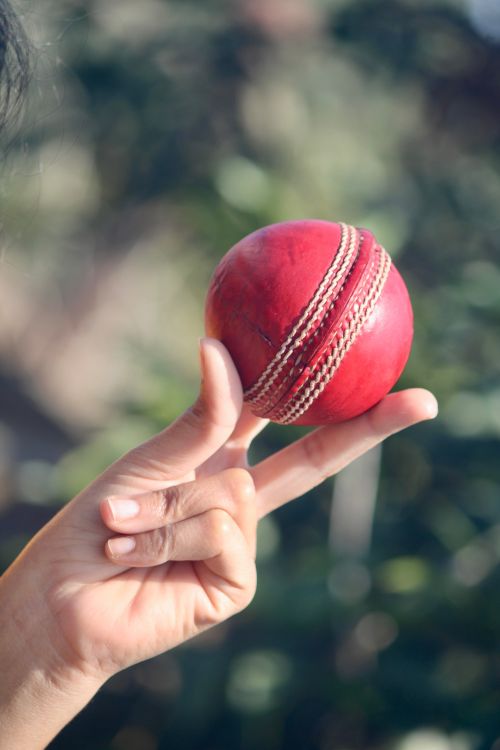
[A hand holds a red leather cricket ball outdoors, showing its seam.] Photograph: Red cricket ball in hand
Image Credits: Pexels
Cricketers shine one side of the ball to make it swing through the air. By keeping one side smooth and letting the other side roughen, they create uneven airflow around the ball, and that imbalance bends its flight toward or away from the batter.
This article explains how that uneven surface produces swing, why the shiny side is polished on trousers rather than with anything else, what the laws allow and forbid, and how reverse swing extends the same idea to an older ball. The distinction between legal polishing and ball tampering runs through all of it.
What swing actually is
Swing is sideways movement of the ball through the air, before it bounces. A fast bowler who can swing the ball late, close to the batter, is hard to play, because the batter must commit to a line that changes at the last moment.
The cause is asymmetry. A cricket ball has a raised seam around its middle, and its two hemispheres wear differently during a match. The side that is polished stays smooth, so air flows over it in a relatively attached, orderly layer.
The side left to roughen, through contact with the pitch, the bat, and the outfield, trips the airflow into a more turbulent, separated pattern.
That difference in airflow creates a pressure difference across the ball, and the ball curves toward the side where the flow separates later, which in conventional swing is generally the rough side's direction of travel as described in popular explanations. Mystery Cricket puts the basic picture simply: when one side is shiny and smooth and the other is rough, air flows differently around each surface, and that imbalance causes the ball to curve in flight.
The seam matters as much as the shine. Bowlers angle the seam toward the direction they want the ball to swing, so the seam itself trips the airflow on one side. Shine and seam work together: the seam sets the direction, and the polished-versus-rough contrast strengthens the effect.
A brand new ball swings partly because its seam is proud and its surface is even. As the match goes on, the shine contrast takes over as the main tool for keeping swing alive.
Why one side only, and why trousers
Polishing both sides would defeat the purpose. Swing needs a difference between the two halves. If both sides were equally smooth, the airflow would be roughly symmetric, and the ball would fly straight.
If both sides were equally rough, the same symmetry would apply, with less swing.
So fielders maintain one side and neglect the other, deliberately. The shiny side gets rubbed, usually on the thigh of the trousers, between deliveries and between overs. The rough side is left to deteriorate naturally through play.
Mystery Cricket notes that players use the smooth fabric of their trousers, usually around the thigh, to buff the shiny side, often applying sweat to add moisture.
Sweat is the legal polishing aid. It moistens the leather slightly and helps the rubbing produce a smooth, reflective surface. The trousers are simply the most convenient polishing cloth a fielder always carries.
They are smooth, always available, and do not count as an artificial substance under the laws, which is the key legal point.
The process is continuous. A ball loses its shine through use, so fielders top it up throughout the innings. The bowler may hand the ball to a fielder, or polish it themselves between overs, always keeping the same side shiny.
Losing track of which side is which would undo the work, so teams are careful to maintain the same hemisphere from the start.
What the laws allow
The Laws of Cricket, written by the Marylebone Cricket Club (MCC), set out exactly what fielders may do to the ball. Law 41.3 covers changing the condition of the match ball, and its permissions are narrow.
A fielder may polish the ball on clothing, provided that no artificial substance is used, that the only natural substance used is sweat, and that the polishing wastes no time. That wording, from Law 41.3.2.1 in the MCC code, is the whole legal basis for the trouser-rubbing ritual viewers see every match. The fielder may also remove mud from the ball under an umpire's supervision, and dry a wet ball on a cloth approved by the umpires.
Anything beyond those permissions counts as unfairly changing the ball. Using an artificial substance, scratching the surface, picking at the seam, or applying anything other than sweat crosses the line. Umpires inspect the ball frequently and irregularly, and they must inspect it immediately if they suspect an attempt to change its condition beyond what the law permits.
The sanctions are immediate. For ball condition offences, there is no warning. If the umpires decide the condition has been unfairly changed, the opposing captain is offered a replacement ball of comparable wear, and five penalty runs are awarded to the batting side.
A second offence by the fielding side in the same match can also see the bowler suspended for the rest of the match, according to summaries of Law 41.
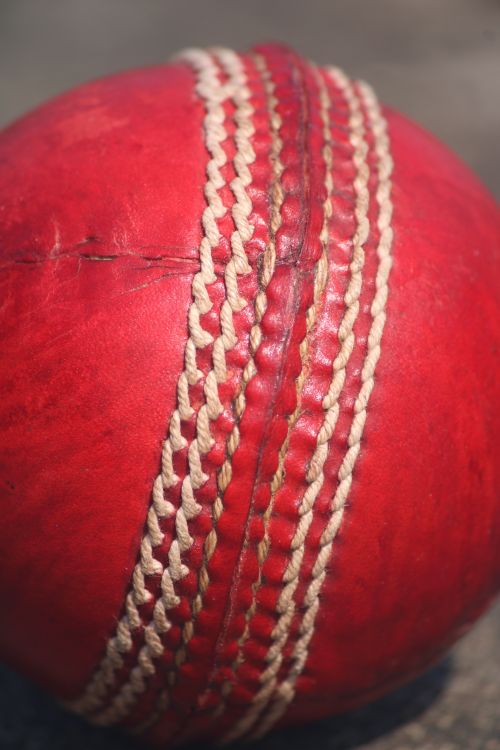
[Close-up of a red leather cricket ball showing its stitches and texture.] Photograph: Red cricket ball close-up
Image Credits: Pexels
The saliva ban
For most of cricket's history, saliva was the other traditional polishing aid alongside sweat. Fielders would apply saliva to the shiny side before rubbing it, in the belief that it helped produce a better shine. The MCC's 2022 code ended that practice permanently.
The ban began as a Covid-19 measure. When men's cricket resumed after its Covid-19 suspension in July 2020, playing conditions in most forms of the game stated that applying saliva to the ball was no longer permitted, for health reasons. The MCC then made the ban permanent in its new laws, which took effect on 1 October 2022.
The MCC's stated reason for permanence was research, not just caution. The club said its research found that the saliva ban over the Covid period had little or no impact on the amount of swing bowlers were getting, because players were using sweat to polish the ball, and sweat was equally effective. Pakistan Today and RNZ both reported that finding, along with the MCC statement that using saliva would be treated the same way as any other unfair method of changing the ball's condition.
Reverse swing: the older ball's version
As a ball ages, the contrast between its sides grows, and a second kind of swing appears. Reverse swing is the movement of an older, rougher ball in the opposite direction to conventional swing, typically late in an innings when the ball has been in use for many overs.
The mechanism is related but distinct. With a very rough side and a still-shiny side, the airflow regime changes at higher speeds. The rough side trips the airflow into turbulence earlier, which can keep it attached longer, while the smooth side separates earlier.
The net pressure difference flips, and the ball swings the other way. Feedinco's explainer describes bowlers keeping one side consistently shiny with sweat and legal polishing, letting the other side roughen naturally, and increasing release speed, because faster deliveries shift the airflow regime and amplify the effect.
Why it looks odd to newcomers
Frequently asked questions
Is shining a cricket ball legal?
Yes, polishing the ball on clothing with sweat is legal under MCC Law 41.3. The law permits polishing provided no artificial substance is used, the only natural substance is sweat, and no time is wasted. Saliva is not permitted.
Why not shine both sides of the ball?
Swing needs asymmetry. If both sides were equally smooth or equally rough, airflow would be roughly symmetric and the ball would fly straight. Keeping one side shiny and letting the other roughen creates the uneven airflow that bends the ball's flight.
When was saliva banned for shining the ball?
Saliva was barred when cricket resumed after the Covid-19 suspension in July 2020, and the MCC made the ban permanent in its 2022 code, effective 1 October 2022. The MCC said research showed sweat was equally effective for swing.
What happens if a team tampers with the ball?
Umpires award five penalty runs to the batting side and offer a replacement ball, with no warning for ball-condition offences. A second offence by the fielding side in the same match can lead to the bowler being suspended for the rest of the match.
What is reverse swing?
Reverse swing is movement of an older ball in the opposite direction to conventional swing. It appears when one side is very rough and the other is still shiny, at higher bowling speeds, and it is produced by natural wear plus legal polishing, not by tampering.
The bottom line
Cricketers shine one side of the ball because swing is an asymmetry game. A smooth side and a rough side make air flow differently around the ball, and the ball curves. Sweat on clothing is the legal way to keep the smooth side smooth, saliva is banned, and anything beyond that is tampering with a five-run penalty attached.
Watch the fielder's trousers next match, and the shine they are protecting is the reason the next delivery might bend late.
Tags: cricket, swing bowling, cricket laws, ball maintenance
Rive News is a research desk that writes plain-English explainers from published sources. It does not report on live matches and does not replace the MCC Laws as the authoritative text.
Related
- Why do footballers wear shin guards
- Why do athletes ice bath after training
- How to improve your balance for any sport
- What to eat before a morning match or race
Subscribe to Rive News for a weekly explainer on how everyday things work.
Rive News publishes explainers based on public sources. Corrections are welcomed and applied with a visible update note.
Related stories

Why Is Altitude Sickness Worse for Some People?
Altitude sickness hits some people harder because of genetics, ascent speed, and prior history, not fitness level. Here is what raises risk

Why Do You Get Blisters When Hiking and How to Prevent Them
Friction plus moisture plus heat equals a blister. Learn why hiking breeds all three, and the boots, socks, and tape system that keeps
How to choose hiking boots for beginners: fit, features, and break-in
Beginners should buy for fit first: snug everywhere, tight nowhere, with a thumb's width at the toes. Here is how to size, test,