
Why Do Sprinters Use Starting Blocks Instead of Standing Starts?
Key takeaways
- Starting blocks give sprinters a solid angled surface to push against, turning leg drive into far greater horizontal acceleration than a standing start allows.
- Force-plate studies show elite sprinters produce peak forces above 2,500 newtons on the blocks, more than three times their body weight.
- World Athletics rules require blocks in sprint races up to 400 metres, and modern blocks carry sensors that detect false starts.
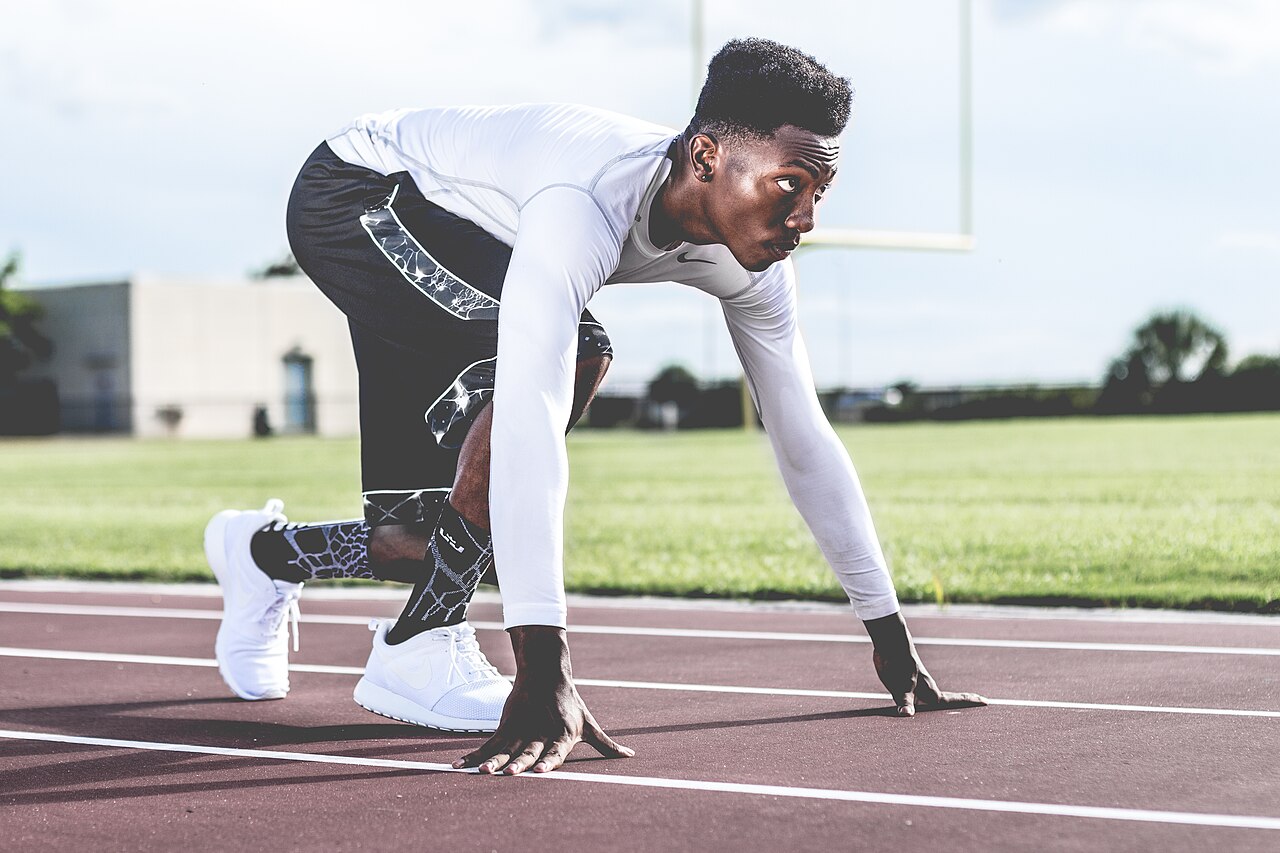
A starting block is a simple device: two angled foot plates mounted on a rail, bolted to the track behind the start line. The sprinter places each foot against a plate, settles into a crouch, and waits for the gun.
It looks like a formality, a ritual before the real running begins. In reality the block phase decides far more of a sprint than most spectators realise. Over 100 metres, the first few steps set the trajectory for everything that follows, and no standing position can generate the same burst.
This article explains what starting blocks do, the physics of why they work, why standing starts cannot compete, the rules that make blocks mandatory, and how sprinters set them up.
What starting blocks actually do
Blocks exist to solve one mechanical problem. A sprinter standing upright has nothing solid behind them to push against. Their first step lands on the track and slides, leaking force.
The angled pedals change that. With feet braced against the plates, the sprinter can drive backward and downward with the full strength of both legs, and the blocks return an equal force in the opposite direction. That reaction force is what launches the body forward.
The plates are adjustable. Sprinters slide them along the rail and tilt the angle, typically between 30 and 45 degrees, to match their leg length and starting style. The goal is a shin angle and body lean that turn leg extension into forward motion with minimal waste.
Blocks also standardise the start. Every lane gets the same equipment, the same rail, the same pedals.
The starter knows each athlete begins from a fixed position, which is why electronic timing and false-start detection can read every lane at once. It is the opposite problem from the one distance runners face late in races, when their legs feel heavy during a run and glycogen runs low, much like marathoners who hit the wall around mile 20.
The physics behind the push
The force a sprinter generates on the blocks is startling. Force-plate studies of block starts have recorded peak forces exceeding 2,500 newtons in elite male sprinters, according to a biomechanics analysis published by Encyclopedia Galactica. That is more than three times the body weight of the athlete producing it.
A textbook example makes the scale concrete. A College Physics problem analysed by Vaia asks what horizontal force a 55-kilogram sprinter must exert on the blocks to accelerate at an essentially horizontal rate.
The answer is 825 newtons. The same problem makes the deeper point: the force that actually propels the sprinter is not the sprinter pushing, but the blocks pushing back, per Newton's third law.
Direction matters as much as magnitude. The reaction force from the blocks has both a vertical component, which lifts the athlete out of the crouch, and a horizontal component, which drives them down the lane. Sprinters and coaches tune their block settings to maximise the horizontal share of that force, because forward velocity is what wins races.
Research on block-start biomechanics has identified where the best push comes from. A narrative review of sprint-start studies summarised on ResearchGate found that greater average force production during the push against the blocks, especially from the rear leg and particularly the hip, is associated with better performance.
The rear leg is not just along for the ride. It contributes a large share of the total impulse that sends the sprinter out of the blocks.
Why a standing start cannot compete
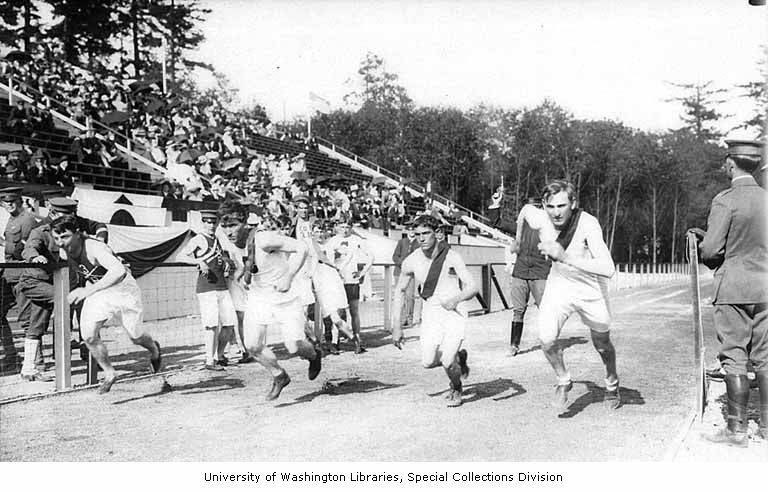
A standing start asks the body to do the same job from a worse position. Upright, the athlete cannot lean far forward without falling, so the first push directs much of its force downward into the track rather than backward. Less horizontal force means slower acceleration.
The crouch changes the geometry. Hips low, shoulders over or slightly ahead of the hands, the body angled forward, the sprinter is already shaped like a sprinter in full flight.
The drive phase that follows, low and powerful through the first ten to twenty metres, flows straight out of that shape. A standing athlete would have to fall into the lean before driving, losing the first precious steps.
Reaction speed adds another gap. From the crouch, the first movement after the gun is a leg extension the body has rehearsed thousands of times.
From standing, the athlete must first shift weight, drop the centre of gravity, and then push. There is no moment later in the race where a second wind can recover those lost fractions, which is why studies cited by sprint coaches consistently show better acceleration and 10-metre split times from blocks than from standing starts.
This is why sprinters treat the start as a discipline of its own. Hours of training go into the "on your marks" and "set" positions, the timing of the first step, and the shape of the drive phase. Standing starts have no equivalent craft, because there is nothing to optimise.
The rules that make blocks mandatory
At the highest level, the choice is not left to the athlete. World Athletics technical rules state that in top-tier competitions, athletes must use the starting blocks provided by the organisers. In other competitions on synthetic tracks, organisers may insist on blocks too.
The rules cover every race up to and including 400 metres, plus hurdles and relays. Longer races, from 800 metres upward, use standing or waterfall starts instead, because endurance pacing matters more than explosive acceleration and a mass of runners cannot share blocks.
Modern blocks are also measuring instruments. At major championships they link to a World Athletics certified Start Information System, with pressure sensors built into the pedals. The system measures each athlete's reaction time to the gun.
That measurement enforces one of the strictest rules in sport. A reaction faster than 0.100 seconds counts as a false start, and at elite level a single false start means instant disqualification. The 100-millisecond threshold comes from research suggesting the human body cannot genuinely react faster than that, so anything quicker is judged to be anticipation rather than reaction.
This sensor system is another reason standing starts vanished from elite sprinting. No sensor can fairly measure a reaction from an upright athlete shifting weight. The blocks make the start legible to the timing system, fair across all lanes, and reviewable when a recall is disputed.
How sprinters set their blocks
Block setup is personal, but it follows a tested framework. The main variable is the antero-posterior distance between the two foot plates, the spacing from front pedal to rear pedal along the rail.
Coaches describe three classic spacings. Bunched puts the plates less than 0.3 metres apart.
Medium spacing sits between 0.3 and 0.5 metres. Elongated stretches beyond 0.5 metres.
According to the biomechanics review on ResearchGate, increasing the distance between the plates lengthens the push phase and increases total impulse, which tends to raise block-exit velocity. The trade-off is time: a longer push spends more of it, so sprinters tune the spacing to their own strength and stride pattern.
Pedal angle is the second variable. Steeper angles near 45 degrees let the athlete push more directly backward, while shallower angles near 30 degrees suit a more upright drive. Sprinters experiment in training, measuring exit speed and first-step length, before locking in a setup for competition.
The setup routine is part of the ritual. At "on your marks," the athlete walks into the blocks and places the hands on the track.
At "set," the hips rise, the body stills, and every muscle loads. Then the gun, and hundreds of hours of rehearsal fire in one motion.
Frequently asked questions
Do sprinters have to use starting blocks?
In races run under World Athletics rules up to 400 metres, yes. Athletes must use the blocks provided by the organisers, and standing starts are not permitted in those events. Distance races of 800 metres and above use standing starts because the start matters far less over a long race.
How much faster are block starts than standing starts?
Force-plate data shows elite sprinters generate peak forces above 2,500 newtons on blocks, and coaching studies report better acceleration and 10-metre split times from blocks than from standing starts. The exact margin depends on the athlete, but in a sport decided by hundredths of a second it is decisive.
What counts as a false start?
Starting before the gun, or reacting faster than 0.100 seconds after it, at meets with sensor-equipped blocks. Since 2010, World Athletics has applied a one-strike policy: a single false start disqualifies the athlete immediately.
Why do sprinters put their hands on the track?
The four-point crouch stabilises the body in the "set" position and keeps weight balanced between hands and feet. It also lets the arms contribute to the first explosive movement, since arm drive is the first detectable event in the start sequence.
Can block settings really change race results?
Yes, within small but meaningful margins. Research shows that wider pedal spacing increases push duration and total impulse, raising exit velocity. Coaches treat setup as a performance variable, tuned per athlete like a bicycle fit, not a one-size setting.
The bottom line
Sprinters use starting blocks because no standing position can do the same job. The angled pedals give the legs something solid to push against, and Newton's third law does the rest, returning forces above 2,500 newtons that launch the body forward. Rules made the advantage mandatory, sensors made it measurable, and a century of coaching turned it into a science.
Watch the next 100-metre final with this in mind. The race is often won in the first second, before the runners are even upright.
Latest in Sports & Outdoors
- What to do if you get caught in the rain on a hike
- Trail vs road running shoes: what is the real difference
- Hardtail vs full-suspension mountain bikes
- Why altitude sickness hits some people harder
Subscribe to the Rive News newsletter for one science-backed sports explainer every week.
Related stories

Why Is Altitude Sickness Worse for Some People?
Altitude sickness hits some people harder because of genetics, ascent speed, and prior history, not fitness level. Here is what raises risk
Why Do You Get Blisters When Hiking and How to Prevent Them
Friction plus moisture plus heat equals a blister. Learn why hiking breeds all three, and the boots, socks, and tape system that keeps
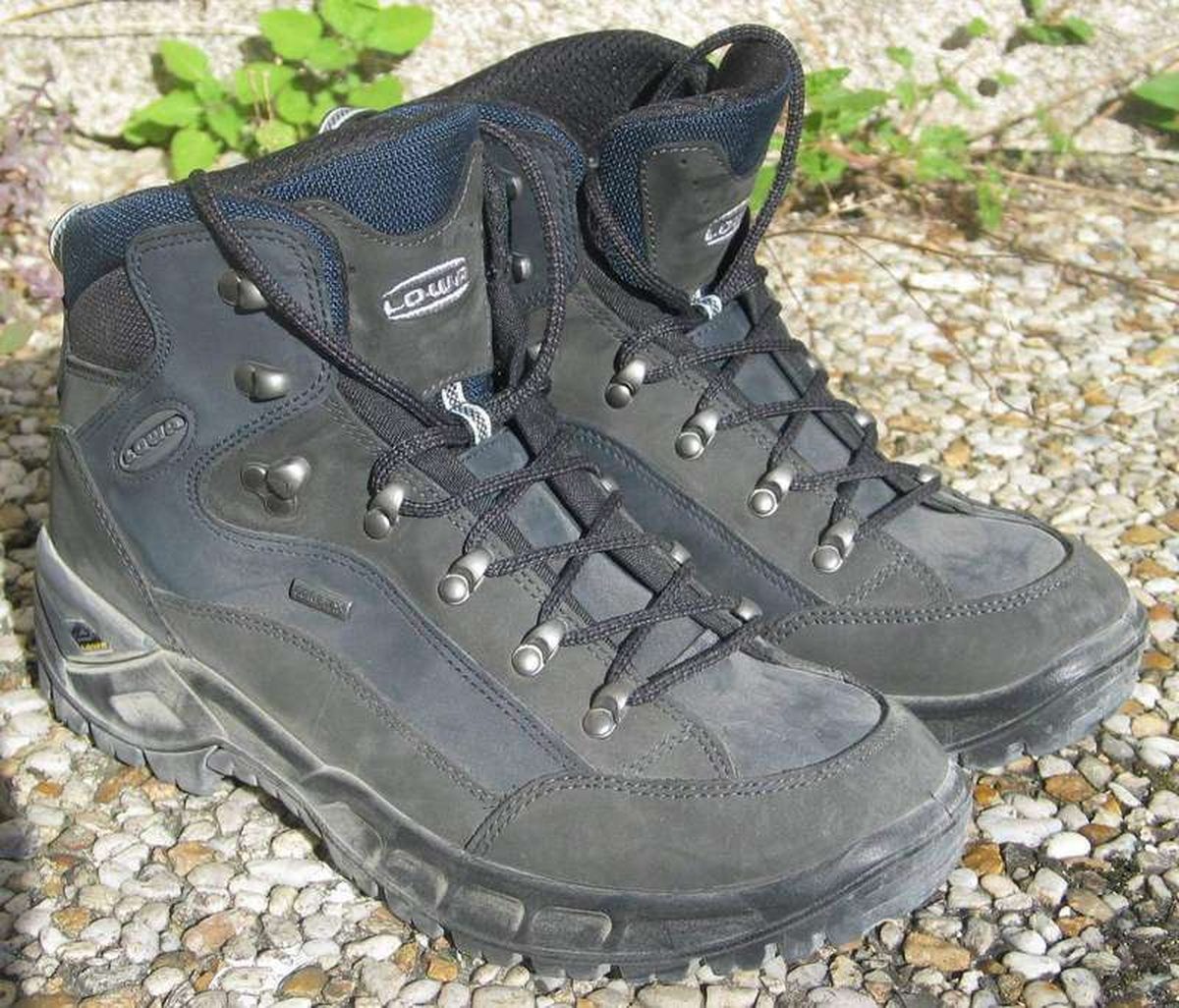
How to choose hiking boots for beginners: fit, features, and break-in
Beginners should buy for fit first: snug everywhere, tight nowhere, with a thumb's width at the toes. Here is how to size, test,