
How to keep a car you rarely drive in good condition
By Rive News / Research desk | Rive News / Published October 26, 2026 at 9:00 AM PKT
Key takeaways
- A parked car still drains its battery, loses tyre pressure and lets fuel age, so inactivity itself is a maintenance problem.
- A proper 20 to 30 minute drive every couple of weeks beats idling in the driveway, which never fully charges the battery.
- For parking beyond a month, add fuel stabiliser, tend the battery and over-inflate the tyres before the car sits.

[Cars parked in a multi-storey car park.] Photograph: Wikimedia Commons
Image Credits: Wikimedia Commons
A car you rarely drive is a car that still ages, just in different ways from one used every day. Rubber dries out, batteries drain, fuel goes stale and brakes can seize, all while the odometer barely moves. The damage is slow and mostly invisible until the day the car refuses to start or the tyres thump down the road.
This article explains how to keep a rarely driven car in good condition, including the battery routine, the fuel and tyre checks, the fluids that degrade on time rather than mileage, and the simple drive that prevents most of the trouble.
Why sitting still hurts a car
A parked car is not a paused machine. Its battery keeps feeding the clock, the alarm and the keyless entry receiver, a slow drain that can flatten a healthy battery in a few weeks. Tyres lose air gradually and, under the car's full weight, the contact patch can take a set that becomes a permanent flat spot.
Moisture condenses inside a half-empty fuel tank and in the exhaust system, and brake discs rust where the pads sit.
None of this means a second car or a weekend car is a bad idea. It means the maintenance schedule has to shift from mileage to time. A car driven 3,000 miles a year still needs an annual oil change, because oil collects moisture and acids even without running, as the Daily Driven guide notes.
The battery: the first thing to fail
The battery is almost always the first casualty of a rarely driven car. A lead-acid battery self-discharges, and the car's electronics add a constant small draw on top. Leave it long enough and the battery goes flat, and a deeply discharged battery may never fully recover.
The best fix depends on how long the car sits. If you drive the car every week or two, that drive usually keeps the battery charged, provided the drive is long enough. If the car will sit for a month or more, Carfax recommends either disconnecting the battery or connecting it to a trickle charger, also called a battery tender, with an automatic shut-off.
A tender holds the battery at full charge without overcharging it, and it is the standard answer for seasonal cars.
For a car you still use occasionally, a battery maintainer left connected in the garage does the same job with less fuss than disconnecting terminals every time. Check the terminals for corrosion while you are there, and clean off any white or blue crust with a wire brush.
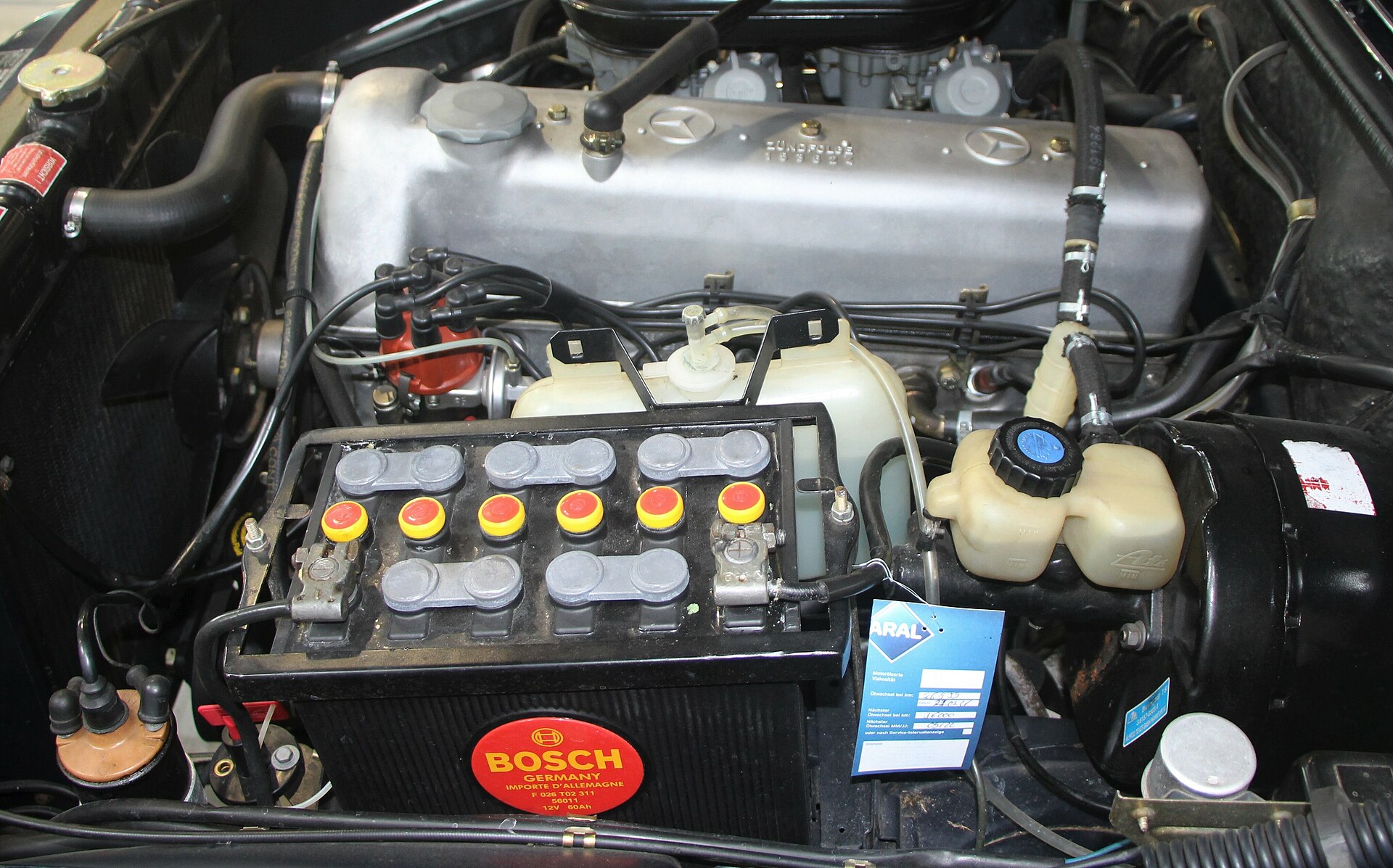
[A car battery fitted in an engine bay.] Photograph: Wikimedia Commons
Image Credits: Wikimedia Commons
Starting it is not the same as driving it
One of the most common mistakes with a rarely driven car is starting it every week and letting it idle for ten minutes. That feels like care, but it does very little good. An idling engine warms up slowly, so condensation in the oil and exhaust never fully burns off, and the alternator at idle speed may not replace the charge used by starting.
The Jamjar storage guide puts it plainly: starting the car occasionally can help, but the vehicle should be driven properly rather than just idled. A proper drive means 20 to 30 minutes at road speed, long enough for the engine to reach full operating temperature, the battery to recharge, and the tyres to warm up and round out. Once every two weeks is a reasonable rhythm for a car that is not in true storage.
On that drive, use the brakes firmly a few times, run the air conditioning for a few minutes, and turn the steering lock to lock once, so seals, brakes and power steering all get exercised.
Fuel: fill it, and stabilise it for long sits
Petrol starts to degrade after about three to six months, forming gums and varnish that can clog injectors. Diesel has its own problems, including water contamination and microbial growth in warm climates. A nearly empty tank makes things worse, because the air space above the fuel lets moisture condense on the tank walls.
For a car driven every couple of weeks, simply keeping the tank reasonably full and refuelling with fresh fuel on each drive is enough. For a car parked for more than a month, Carfax advises adding fuel stabiliser to a full tank and driving a few miles so the treated fuel circulates through the lines and injectors. Stabiliser keeps fuel usable for several months, which covers most seasonal gaps.
Do not overfill the tank to the brim. Leaving a small air gap lets fuel expand and contract with temperature changes without overflowing.
Tyres: pressure, flat spots and age
Tyres lose pressure slowly even when a car never moves, roughly 1 to 2 psi per month in normal conditions, faster in cold weather. Under-inflated tyres on a parked car are doubly bad, because the flat contact patch bears more weight and is more likely to take a permanent set.
Before a long sit, inflate the tyres slightly above the recommended pressure shown on the driver's door jamb, as Carfax suggests, so that gradual loss does not leave them soft.
On your regular drive, check the pressures and look at the sidewalls for cracks. Tyres also age out: rubber hardens with time and sunlight, so a rarely driven car may need new tyres for age even with plenty of tread left.
Fluids and filters run on a clock, not the odometer
Engine oil, coolant and brake fluid all degrade with time. Oil collects acids and moisture, coolant loses its corrosion inhibitors, and brake fluid absorbs water from the air, which lowers its boiling point and encourages internal corrosion.
That is why service intervals always read "every 12 months or 10,000 miles, whichever comes first". The months matter for a rarely driven car.
Change the oil before a long sit rather than after it, so clean oil, not contaminated oil, sits in the engine. The Daily Driven guide recommends an oil and filter change every 12 months for rarely used cars even when the mileage target is nowhere near reached. Check coolant and brake fluid levels monthly, and follow the manufacturer's time-based interval for changing them.
Brakes, handbrake and parking position
Brakes suffer quietly on a parked car. Surface rust forms on discs within days in damp air, and the first few stops scrape it off, which is normal. The real problem is a handbrake left engaged for weeks: pads can bond to the disc, and the mechanism can seize.
For a car parked on level ground for a long sit, Carfax and Jamjar both advise leaving the handbrake off, with the car in gear (or Park for an automatic) and wheel chocks behind the tyres.
If the car has already sat for months, expect the first drive to feel rough. Brake gently at first, listen for grinding that does not clear after a few stops, and have the brakes inspected if a wheel drags or the pedal feels soft. The brake rotors warp myth and the guide to how long brakes last both explain why uneven deposits, not warping, cause most pedal vibration.
A simple routine that covers it
Put it together and the routine for a car driven every couple of weeks is short. Every two weeks, drive it for 20 to 30 minutes at road speed, using the brakes, steering and air conditioning. Monthly, check tyre pressures, fluid levels, lights and battery terminals, and look underneath for leaks or rodent damage.
Annually, change the oil and filter even if the mileage is low, and inspect tyres, belts and hoses for age cracks.
For a true long sit of three months or more, add the storage steps: wash and wax the car, change the oil, fill the tank with stabilised fuel, over-inflate the tyres or use jack stands, release the handbrake, connect a battery tender, and block the exhaust and air intake against rodents, as Carfax recommends. A breathable cover keeps dust off without trapping moisture the way a plastic sheet does.
Before you drive it again after a long sit
Coming back to a car that has sat for months deserves a short check, not just a jump start. Walk around it and look for leaks, chewed wires, nests near the engine bay and flat tyres. Check the oil, coolant and brake fluid levels, and inflate the tyres to the door-jamb pressure.
Reconnect the battery if you removed it, and remove anything blocking the exhaust or intake.
Start the engine and let it idle for a minute while you watch the warning lights and listen for anything unusual. Drive gently for the first few miles, testing the brakes at low speed before joining faster traffic. If the battery is dead, the guide to why a battery dies overnight and the steps for changing a battery safely cover the next moves.
If anything feels wrong, a short inspection at a garage costs far less than the repair that follows ignoring it.
Frequently asked questions
How often should I drive a car I rarely use?
Every two weeks is a good rhythm. Aim for a 20 to 30 minute drive at road speed, not a short trip around the block, so the engine, battery and tyres all reach operating condition.
Is it bad to just start the car and let it idle?
Yes, mostly. Idling warms the engine slowly, leaves condensation in the oil and exhaust, and may not recharge the battery fully. A proper drive does far more good than a weekly idle.
How long can a car sit before the battery dies?
It depends on the battery's age and the car's electronics, but a healthy battery can go flat in three to six weeks of sitting. A battery tender removes the question entirely for long sits.
Do tyres really get flat spots from sitting?
They can. Weeks of sitting under full weight can leave a flat patch that thumps for the first miles, and months of sitting can make it permanent. Over-inflating before a sit and driving regularly both help.
The bottom line
A rarely driven car needs a time-based routine, not a mileage-based one. Drive it properly every couple of weeks, keep the battery tended, keep the tank full with stabiliser for long sits, and change the oil annually whether the miles say so or not. That short routine prevents almost all of the damage that sitting still causes, and it keeps the car ready instead of turning every return into a repair bill.
Tags: car maintenance, car storage, car battery, tyres
The Rive News research desk writes plain-English explainers from published sources, with every key claim traceable to its source.
Related
- Why does my car battery keep dying overnight?
- How to make your tyres last longer
- How often should you really change engine oil?
- How to change a car battery yourself safely
Subscribe for one practical maintenance explainer each week.
Rive News standards: every factual claim is sourced; corrections are published when a source is shown to be wrong.
Related stories

Why Does Tire Pressure Drop in Cold Weather?
Cold weather can cut tire pressure by 1 psi for every 10°F drop, thanks to the ideal gas law. Here is what happens inside the tire and what
Why Do Brake Rotors Warp, or Do They Actually?
Mechanics rarely see a truly warped rotor. The shudder usually comes from uneven pad deposits a few thousandths of an inch thick. Here

How to Buy a Used Car Without Getting Scammed: The Checklist
Over 450,000 cars a year have rolled-back odometers, NHTSA says. This checklist covers VIN checks, title washing, and the inspection that