
Why Does Altitude Make a Football Fly Farther? Thin Air Explained
Key takeaways
- A football flies farther at altitude because thinner air means fewer air molecules colliding with the ball, so drag drops and the kick carries longer.
- Denver sits a full mile above sea level, where air density is about 82 percent of sea level, and kickers gain roughly 5 extra yards of range there.
- Cold air is denser and shrinks that advantage, which is why a 14-degree field goal in Denver was an even bigger feat.
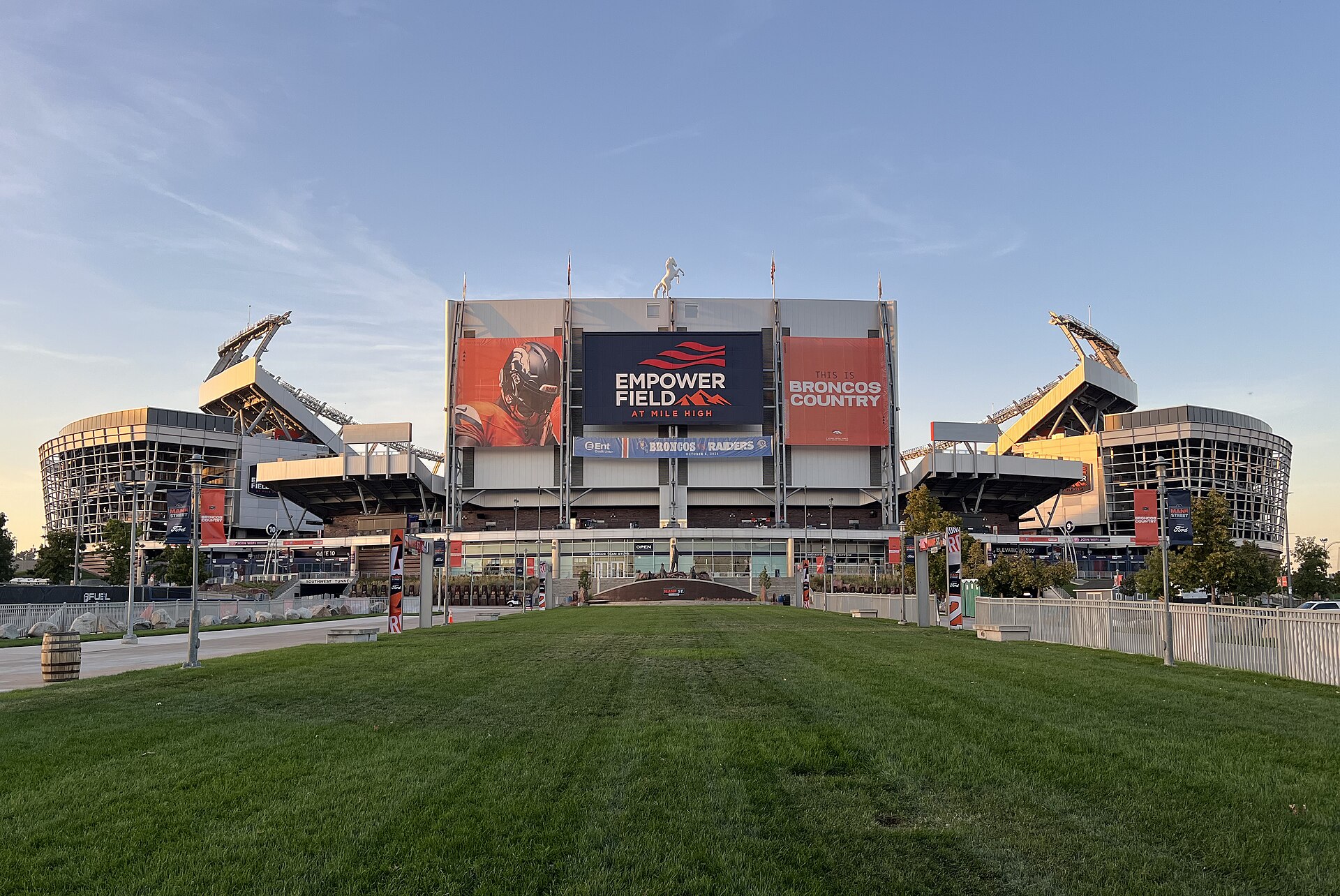
Altitude makes a football fly farther for one simple reason: the air is thinner up high, so the ball meets less resistance on its way downfield.
Every object moving through air has to push molecules aside, and those molecules push back. Fewer molecules in the path means less pushback, which physicists call drag. With less drag, the same kick keeps its speed longer and lands farther away.
This article explains why altitude lengthens kicks, including how air density works, what the evidence from Denver shows, how cold air fights back, and how the same physics appears in other ball sports.
Less air means less drag
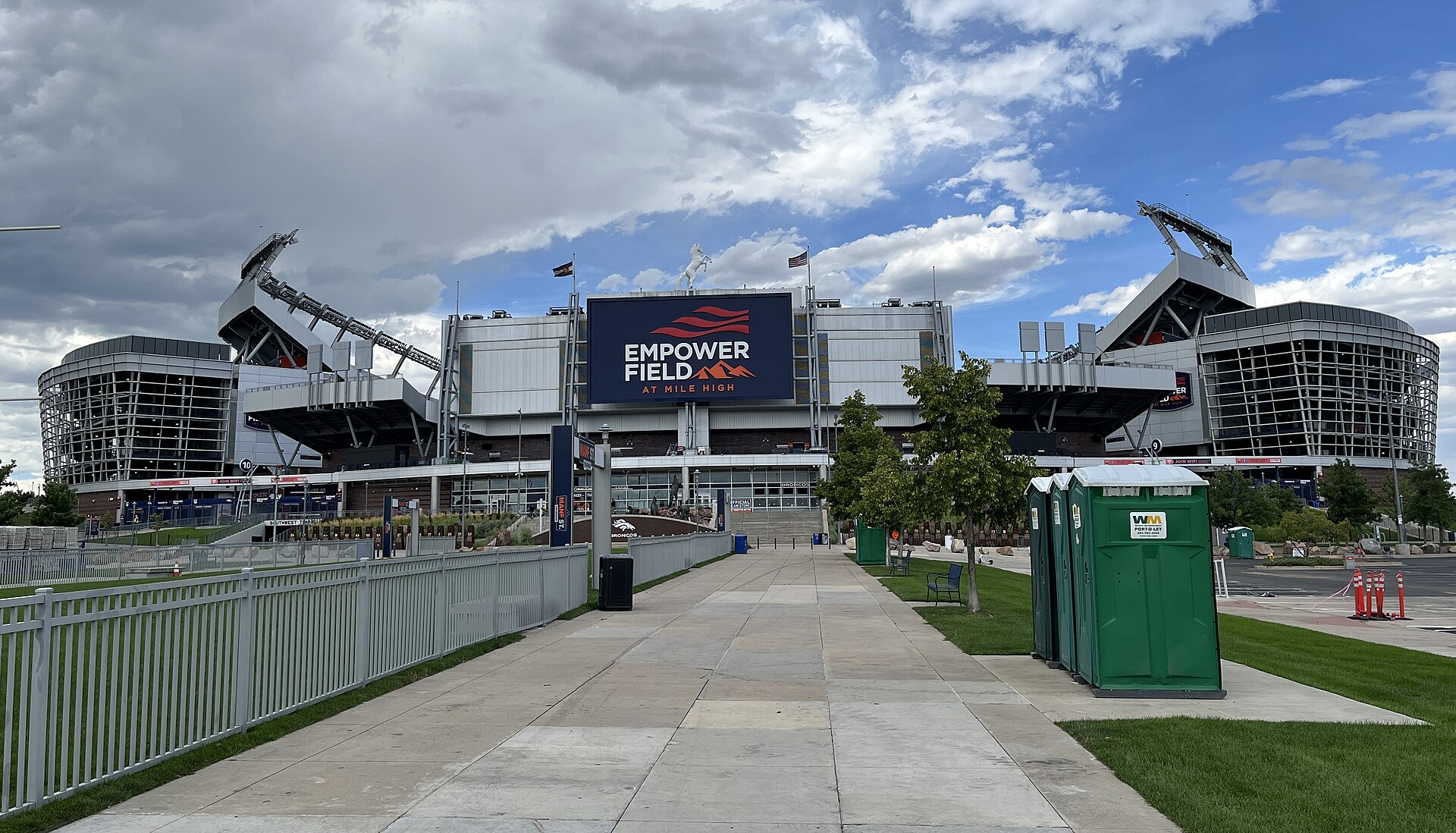
Denver is not called the Mile High City as a figure of speech. The city sits exactly 5,280 feet, or one mile, above sea level, and Empower Field at Mile High shares that elevation.
No other NFL stadium comes close to that height. The next highest, in Glendale, Arizona, sits at roughly 1,000 feet.
The air pressure falls with altitude for the same reason your ears pop on a plane: there is less of the atmosphere's weight pressing down from above. Gravity pulls most of the air's molecules toward sea level, so at a mile up there are simply fewer molecules per cubic meter. The air in Denver is only about 82 percent as dense as sea-level air, according to the Earth Science Guy's analysis of the stadium's atmosphere.
That missing density matters because drag is directly proportional to air density. Physicists write the drag force as one half times air density times velocity squared times the drag coefficient times the cross-sectional area. Because density sits in that equation as a straight multiplier, a roughly one-fifth drop in density means roughly one-fifth less drag on an identical kick.
A computational fluid dynamics handout on football aerodynamics from SimScale makes this concrete: a simulated ball at Quito's altitude faced about 5.3 newtons of drag, compared with about 6.9 newtons at sea level, a drop of roughly 22 percent that tracked the roughly 22 percent drop in air density almost exactly.
Altitude is the biggest single factor
Altitude dominates this effect. A peer-reviewed study published in the International Journal of Sports Science and Engineering found that altitude explains about 80 percent of the variation in air density across stadiums, far ahead of temperature at 13 percent, barometric pressure at 4 percent, and humidity at 3 percent. On a typical July afternoon, the study measured Denver's air density at 0.96 kilograms per cubic meter, against 1.11 to 1.19 at sea-level stadiums.
Denver is the proof
The theory has played out on real NFL scoreboards for decades. Kicker Jason Elam drilled a 63-yard field goal for the Broncos in 1998, a distance matched in Denver by Sebastian Janikowski of the visiting Raiders 13 years later. On December 8, 2013, Matt Prater topped them both with a 64-yard field goal against the Tennessee Titans, an NFL record at the time, kicked with the temperature at just 14 degrees Fahrenheit.
The effect is not limited to field goals. Kickoffs travel deeper in Denver, and punters benefit too.
Jets rookie Steve O'Neal set the NFL's longest-punt record at 98 yards at the old Broncos stadium in 1969. Physicist Timothy Gay, author of Football Physics, has analyzed this same Denver kicking phenomenon.
Statistics back up the anecdotes. Advanced Football Analytics compared field goal results in Denver against other outdoor NFL stadiums, restricting the comparison to visitor kickers and moderate temperatures between 41 and 80 degrees to keep the comparison fair.
Kicks in Denver showed longer effective range, to the tune of about 5 yards. A 55-yard attempt at sea level plays like a 50-yard attempt in Denver, changing the fourth-down math.
Players feel the thin air in their lungs as well as on the scoreboard. Oxygen delivery works harder at a mile up, which is part of why altitude sickness hits some people harder than others. Visiting teams sometimes arrive early to acclimate, and kickers are not the only ones adjusting.
Cold air and spin fight back
Altitude is not a free gift to kickers, because cold air is denser than warm air. A 2011 survey of NFL statistical records found that in outdoor games played at 39 degrees Fahrenheit or colder, field goal accuracy drops by nearly 2 percent and the average punt comes up about a yard shorter than normal. That makes Prater's 64-yarder in 14-degree weather in Denver even more remarkable: he overcame the cold-air penalty on top of using the altitude bonus.
Wind and weather complicate the picture further. Gusts can push a ball sideways or hold it up, and a swirling Denver wind can undo the altitude advantage in a single gust. Kickers and punters in Denver routinely adjust their aim and launch angle for conditions, and coaches weigh the forecast before sending the kicking unit out.
Thin air also changes how spin works on a ball. The Magnus effect, the force that makes a spinning ball curve, depends on air molecules gripping the ball's surface, so it weakens as density falls.
A curveball breaks less at altitude, and a soccer player's bending free kick flattens out too. Kickers notice the same thing: a ball that would fade or draw at sea level flies straighter in Denver.
The players' bodies have to adapt as well. Hearts work harder to move oxygen in thin air, similar to how heart rate stays elevated during intense exercise. Endurance suffers even as kicks travel farther, which is one reason altitude is a trade-off rather than a pure advantage.
The same physics in baseball and soccer
Football is not the only sport where altitude stretches the flight of a ball. Physicist Alan Nathan has reported that fly balls at Denver's Coors Field travel roughly 5 percent farther than at Boston's Fenway Park. The Rockies know it well: baseballs used at Coors Field are stored in a humidor, which keeps them from drying out and becoming livelier in the thin, dry air.
Soccer goalkeepers and strikers deal with the same trade-off. Shots carry longer in thin air but bend less, which changes how free kicks are taken at high-altitude stadiums. Players who rely on curl have to strike the ball differently, because the air that normally grabs the spinning surface is mostly missing.
Golfers see it too. A drive at a mountain course carries noticeably farther than the same swing at the coast, one reason high-altitude courses play shorter than their yardage suggests. Fine-tuning swing tempo matters at any elevation, but the ball itself does more of the work up high.
How much farther does a football fly in Denver?
Advanced Football Analytics found that field goals in Denver carry about 5 extra yards of effective range compared with other outdoor NFL stadiums. That estimate came from visitor kickers in moderate temperatures, so it isolates altitude from home-kicker skill and extreme weather.
Why is the air thinner at high altitude?
Gravity pulls most of the atmosphere's molecules toward sea level, so the higher you go, the fewer molecules each cubic meter of air contains. Lower air pressure means lower density, which is why Denver's air is roughly 82 percent as dense as the air at the coast.
Does cold weather cancel out the altitude advantage?
It shrinks the advantage but does not erase it. Cold air is denser, so it adds drag back, and a 2011 survey found punts run about a yard shorter in freezing weather. Matt Prater's record 64-yard kick at 14 degrees in Denver shows the altitude bonus can still win out.
Do soccer balls also travel farther at altitude?
Yes, but with a catch. Shots carry longer for the same reason kicks do, yet the Magnus effect weakens in thin air, so curled and bending shots straighten out. Players at altitude have to adjust both their power and their expectations of curve.
The bottom line
A football flies farther at altitude because thinner air means less drag, and less drag means the ball holds its speed longer. Denver's mile-high elevation cuts air density by roughly one-fifth and gives kickers about 5 extra yards of range, a real and measurable edge. Cold air and wind can claw some of it back, and thin air flattens the curve on spinning balls, but the physics is unambiguous: the same kick goes farther where the air is thin.
Latest in Sports
- Why altitude sickness is worse for some people
- Why cyclists ride in a peloton
- Why runners get a second wind
- What to do if you get caught in rain on a hike
Subscribe to the Rive News newsletter for a new science explainer every week.
Image Credits: Wikimedia Commons / Pdubs.94 and contributors
Related stories
Why Is Altitude Sickness Worse for Some People?
Altitude sickness hits some people harder because of genetics, ascent speed, and prior history, not fitness level. Here is what raises risk
Why Do You Get Blisters When Hiking and How to Prevent Them
Friction plus moisture plus heat equals a blister. Learn why hiking breeds all three, and the boots, socks, and tape system that keeps
How to choose hiking boots for beginners: fit, features, and break-in
Beginners should buy for fit first: snug everywhere, tight nowhere, with a thumb's width at the toes. Here is how to size, test,